Makran
The Makran is a coastal region of Baluchistan spanning southeastern Iran and southwestern Pakistan. It encompasses a 600-mile (1,000-km) stretch along the…
What are the geographical boundaries of the Makran region in Asia?
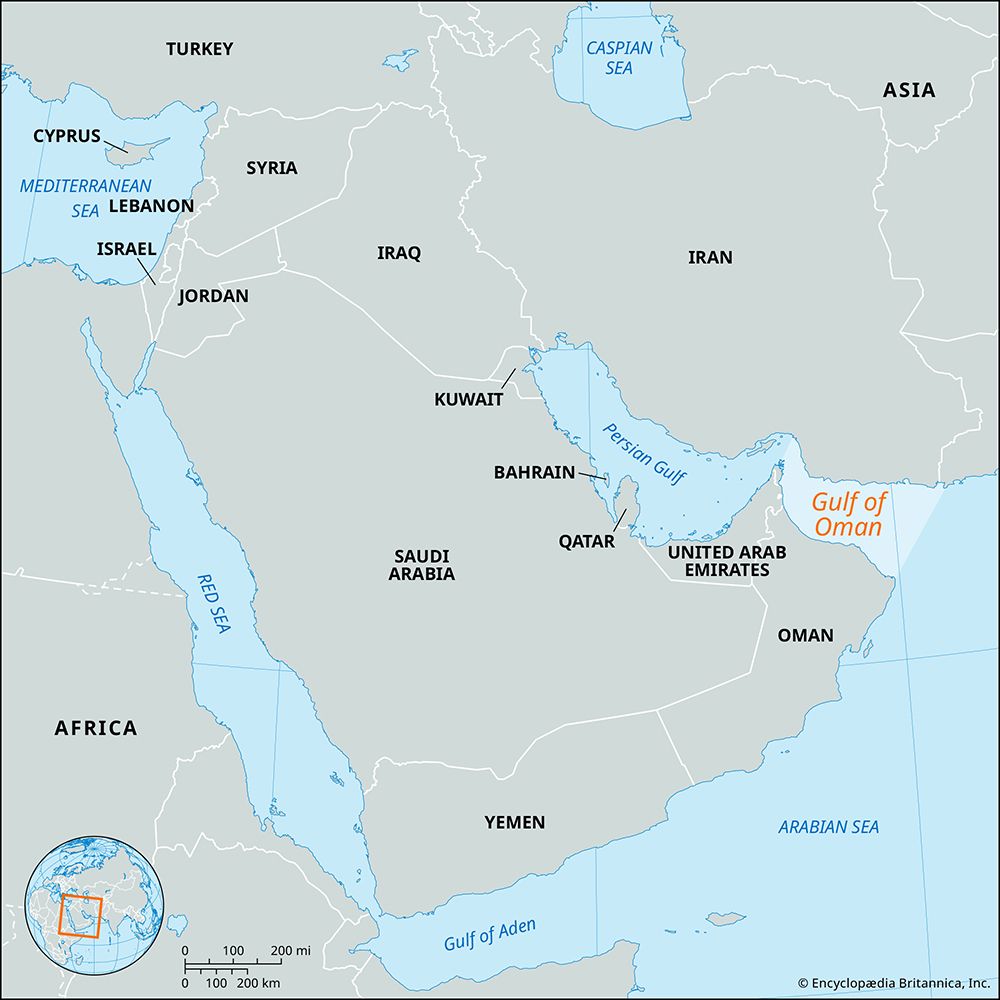
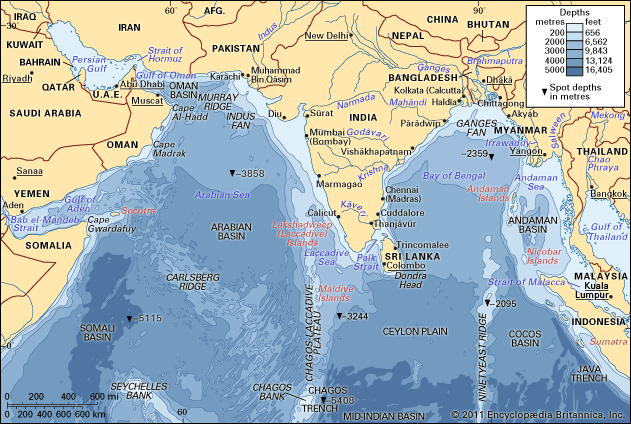
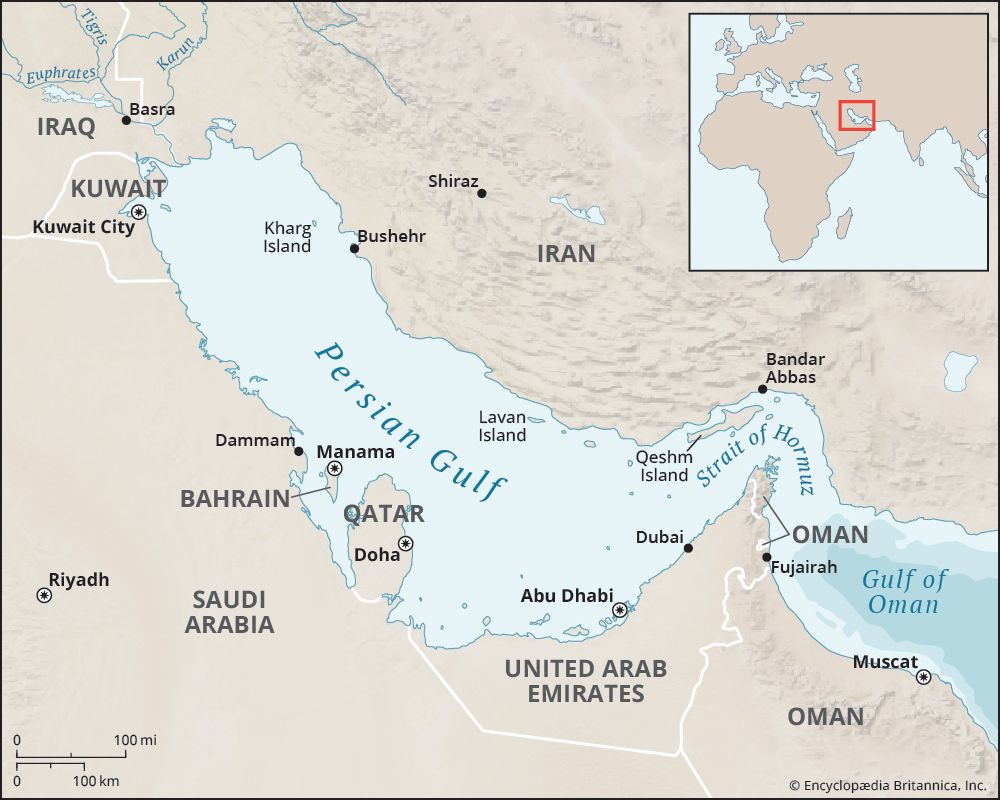
The Makran is a coastal region of Baluchistan spanning southeastern Iran and southwestern Pakistan. It encompasses a 600-mile (1,000-km) stretch along the Gulf of Oman and the Arabian Sea, extending from Ra’s al-Kūh, Iran (west of Jask), to the Lasbela District in Pakistan.1
The Pakistani portion of the region is specifically bounded by the following:
- East: Khuzdār and Lasbela districts.1
- South: The Arabian Sea.1
- West: Iran.1
- North: The Siāhān Range.1
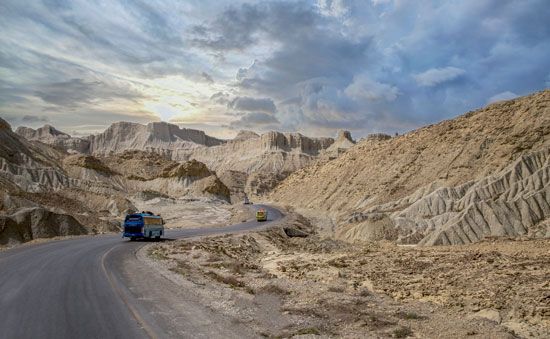
The terrain is characterized by mountainous, east–west parallel ranges that enclose narrow, fertile valleys, transitioning into a sandy coastline marked by hammerhead peninsulas.1
What is the origin of the name ‘Makran’?
The etymology of the name “Makran” remains uncertain, with two primary theories regarding its origin:
- Māhī Khūrān: The name is often regarded as a corruption of the Persian phrase Māhī Khūrān, which translates to “Fish Eaters.” This aligns with the Ichthyophagoi (fish-eaters) mentioned in the Indica by the 2nd-century Greek historian Arrian, a group now represented by the Mēds.1
- Dravidian Origin: Alternatively, it may be a Dravidian name appearing as Makara in the Bṛhat-saṃhitā, a 6th-century work by the astrologer Varāhamihira, which lists tribes located to the west of India.1
Historically, the region was known as Gedrosia during the periods of the Persian and Macedonian empires.1
How has the coastal geography of Makran influenced maritime trade in the region?
The coastal geography of the Makran region has historically presented both significant challenges and strategic advantages for maritime trade.
The coastline is characterized by a 200-mile stretch in Pakistan featuring sandy terrain and numerous hammerhead peninsulas. A major physical impediment to maritime activity has been the presence of offshore sandbars, which make the region’s chief ports—such as Gwadar, Pasni, and Ormara—difficult to approach for larger vessels.1
Despite these navigational difficulties, the region’s location has become increasingly vital for modern commerce. Gwadar, situated on a sandy headland jutting into the Arabian Sea, serves as a critical trade center and a gateway to the Persian Gulf. Its strategic importance is further amplified by its role as the terminal point of the China-Pakistan Economic Corridor, which facilitates significant maritime and naval activity in the region. Historically, the coastal population, including the Mēds and Koras, has long engaged in fishing and maritime-related occupations, forming the backbone of the local economy.3415
What are the major ethnic groups and languages spoken in the Makran region?
The population of the Makran region is ethnically diverse, reflecting a long history of migration and settlement. The population is predominantly Arab, a legacy of the period before the Arab conquest of Sind in the 5th century. Other significant ethnic groups include:1
- Mēds: A group of fishermen who are historically identified with the Ichthyophagoi (fish-eaters) mentioned by the ancient historian Arrian.16
- Koras: A group traditionally engaged in seafaring occupations.1
- Darzadis: Regarded as being of aboriginal descent.1
- Coastal populations: Includes descendants of formerly imported slaves.1
Regarding linguistic composition, the region is primarily associated with the Balochi language, specifically the Makrani (or Southern Balochi) dialect. While Balochi is a prominent Indo-Iranian language, the broader region of Balochistan also features the Brahui language, an isolated member of the Dravidian language family. Due to the region’s linguistic complexity and the influence of neighboring areas, many inhabitants are bilingual, often incorporating elements of Sindhi and Persian into their local parlance.7859
Sources
- Makran — Encyclopædia Britannica
- Namib - Physiography — Encyclopædia Britannica
- Gwadar port: Top Questions — Encyclopædia Britannica
- Gwadar — Encyclopædia Britannica
- Makrān — Encyclopædia Britannica
- Pakistan - Linguistic composition — Encyclopædia Britannica
- Brahui language — Encyclopædia Britannica
- Balochi language — Encyclopædia Britannica
- Brahui — Encyclopædia Britannica
Published on · 3 min read