Kharg Island
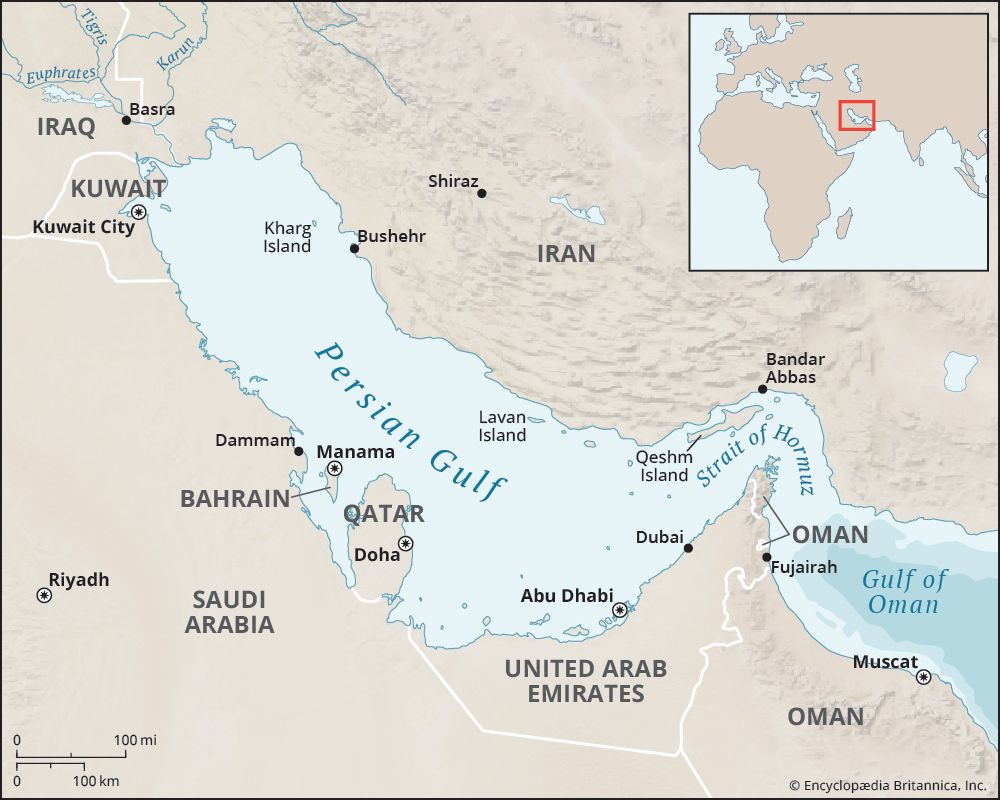
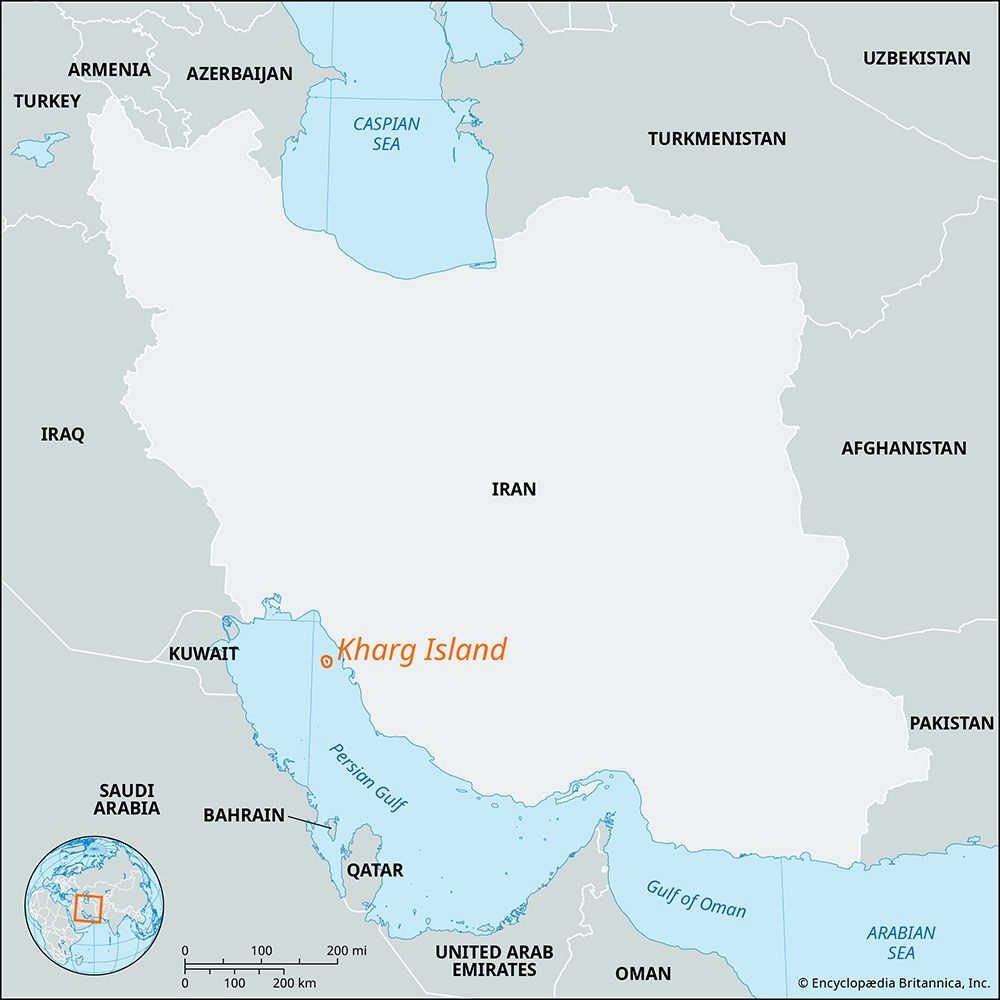
Kharg Island is a small coral island located in the northern Persian Gulf, approximately 34 miles (55 km) northwest of the Iranian port of Bushehr.
What is Kharg Island?
Kharg Island is a small coral island located in the northern Persian Gulf, approximately 34 miles (55 km) northwest of the Iranian port of Bushehr.12
Historically, the island served as a strategic trading post due to its rare natural freshwater resources, which allowed it to sustain small populations. Archaeological evidence indicates human activity dating back to the Achaemenid period, with later ruins including a Church of the East monastic complex and remnants of Dutch East India Company operations.12
In the modern era, Kharg Island is vital to Iran’s economy as the country’s primary crude-oil terminal. Surrounded by deep waters that accommodate large vessels, the facility has the capacity to load 10 supertankers simultaneously, handling approximately 7 million barrels of oil per day. During the Iran-Iraq War, the terminal was a target of military strikes, and it remains a site of strategic significance in regional conflicts.12
How do supertankers navigate the deep waters of the Persian Gulf?
Supertankers navigate the deep waters of the Persian Gulf and the Strait of Hormuz using a combination of established maritime infrastructure and advanced technology.
To manage the high volume of traffic, vessels follow designated inbound and outbound shipping lanes. In the Strait of Hormuz, these lanes are 2 miles (3 km) wide and separated by a two-mile buffer zone, governed by international maritime law and the United Nations Convention on the Law of the Sea.3
Despite the heavy traffic and the presence of offshore oil installations, navigation is supported by a system of radio-navigational stations and other technological advancements. While the depth of the strait—ranging from 200 to 330 feet (60 to 100 meters)—is generally sufficient for oil tankers, the sheer size of supertankers (such as ULCCs and VLCCs) requires careful coordination with port facilities. These massive ships, which can reach lengths of over 400 meters, rely on specialized equipment located in the stern, including sophisticated propulsion and navigation systems.435
What are the historical origins of the Dutch East India Company’s presence in the region?
The Dutch East India Company (VOC) was founded in 1602 to protect the Dutch Republic’s trade in the Indian Ocean and support its war of independence against Spain. By consolidating individual ventures into a single entity, the company gained quasi-sovereign powers, including the authority to build forts, maintain armed forces, and conclude treaties with local rulers.82
In the East Indies, the VOC established a vast commercial empire by displacing Portuguese and British competitors. It utilized a network of factories to monopolize the spice trade, eventually transitioning from a shipping enterprise to a territorial power that controlled much of the Indonesian archipelago.92
In the Persian Gulf, the company’s presence was more localized. Notably, in the 18th century, it established a trading station on Kharg Island following an agreement with a local Arab ruler. However, this presence was tenuous; the company was expelled in 1765 after becoming embroiled in regional political conflicts. By the end of the 18th century, the VOC faced severe financial decline due to corruption and administrative costs, leading the Dutch government to dissolve it in 1799.11092
Why is the Strait of Hormuz considered a critical global shipping route?
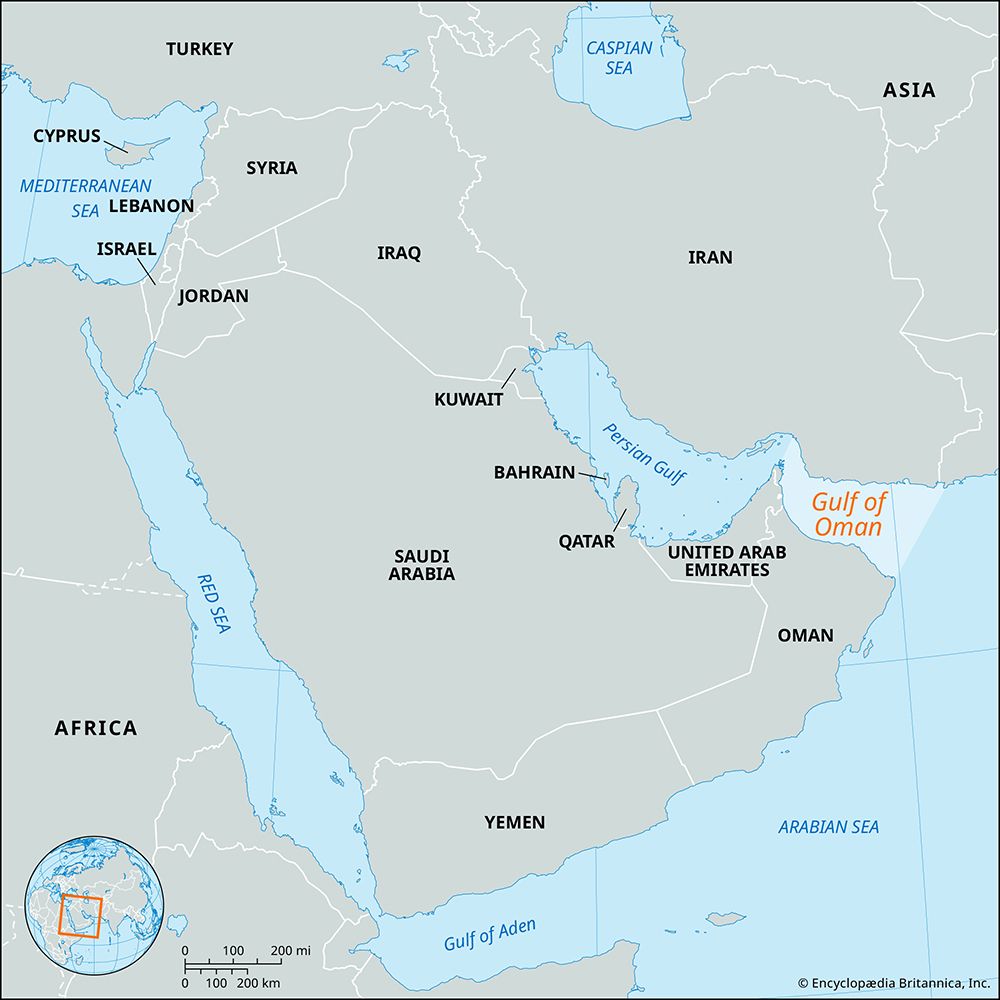
The Strait of Hormuz is considered a critical global shipping route because it serves as the sole maritime gateway linking the oil-rich Persian Gulf to the Gulf of Oman and the Arabian Sea. It is one of the world’s most vital oil chokepoints, with more than 20 percent of global crude oil and liquefied natural gas exports passing through its waters.127
The strait is essential because, unlike other chokepoints, it lacks logistically viable alternatives for the massive volume of exports from major producers like Iran, Iraq, Kuwait, Qatar, and the United Arab Emirates. While some pipelines allow for limited diversions, the vast majority of these nations’ energy exports rely on sea transit. Because global oil prices are highly sensitive to supply fluctuations, any disruption in this narrow channel—such as those experienced during the 2026 Iran war—can trigger immediate global price surges and fuel shortages, particularly in Asia.37
Sources
- Kharg Island: Top Questions — Encyclopædia Britannica
- Kharg Island — Encyclopædia Britannica
- Strait of Hormuz — Encyclopædia Britannica
- Persian Gulf - Conflicts and shipping disruptions — Encyclopædia Britannica
- Persian Gulf - Transportation — Encyclopædia Britannica
- tanker — Encyclopædia Britannica
- How Much Oil Passes Through the Strait of Hormuz? — Encyclopædia Britannica
- Indonesia - Growth and impact of the Dutch East India Company — Encyclopædia Britannica
- East India Company - Early activities — Encyclopædia Britannica
- history of the Netherlands - The economy — Encyclopædia Britannica
- Dutch East India Company — Encyclopædia Britannica
- Strait of Hormuz: Top Questions — Encyclopædia Britannica
Published on · 3 min read