Gulf of Saint-Malo
Maritime trade in Saint-Malo has been a cornerstone of the city's development since its early history. While the island was initially settled in the 8th…
How has maritime trade in the Gulf of Saint-Malo evolved over the centuries?
Maritime trade in Saint-Malo has been a cornerstone of the city’s development since its early history. While the island was initially settled in the 8th century as a refuge from the Normans, the port later transformed into a significant hub for maritime activity.1
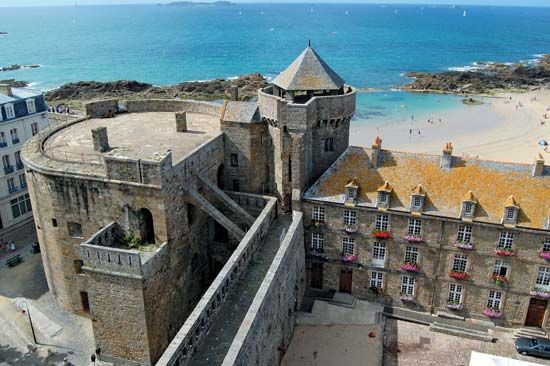
During the 17th and 18th centuries, the city achieved notable prosperity, driven by the success of its navigators, traders, and privateers. This era established the city’s reputation for seafaring, a legacy honored today in the museum housed within the fortress, which commemorates famous mariners such as the 16th-century explorer Jacques Cartier.1
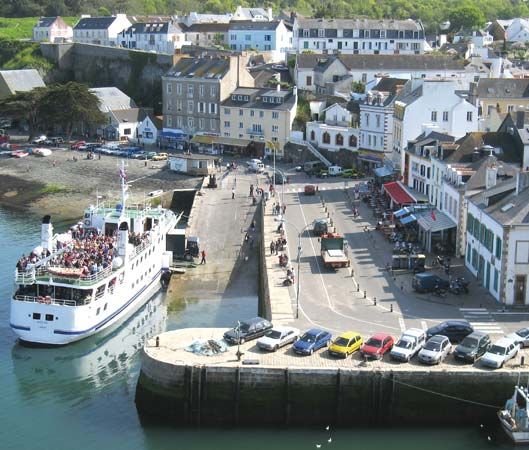
In the modern era, the port has evolved to support diverse economic functions. It currently serves as a vital link for freight and passenger ferries connecting France to England, Ireland, and the Channel Islands. Additionally, the harbor area now incorporates a yachting facility and supports industries such as shipbuilding and shellfish processing.1
How does the Gulf of Saint-Malo contribute to the local economy, particularly in terms of fishing and tourism?
The Gulf of Saint-Malo significantly influences the local economy through its maritime infrastructure and natural features. While the broader French fishing industry faces challenges such as overfishing and modernization needs, the port of Saint-Malo remains an active industrial hub, specifically supporting food processing focused on shellfish.21
Tourism is a major economic driver for the region, bolstered by the gulf’s unique geography and historical landmarks. The coastline is lined with numerous small resorts, and the area is home to the famous rocky islet of Le Mont-Saint-Michel, renowned for its medieval architecture. Furthermore, the port of Saint-Malo enhances local activity by serving as a yachting harbour and a transit point for passenger ferries connecting France to England, Ireland, and the Channel Islands. The region’s dramatic tidal variations—which can reach up to 49 feet—also support unique infrastructure, such as the world’s first large-scale tidal plant, which generates electricity from the Rance River estuary.32
What is the geographical location and extent of the Gulf of Saint-Malo?
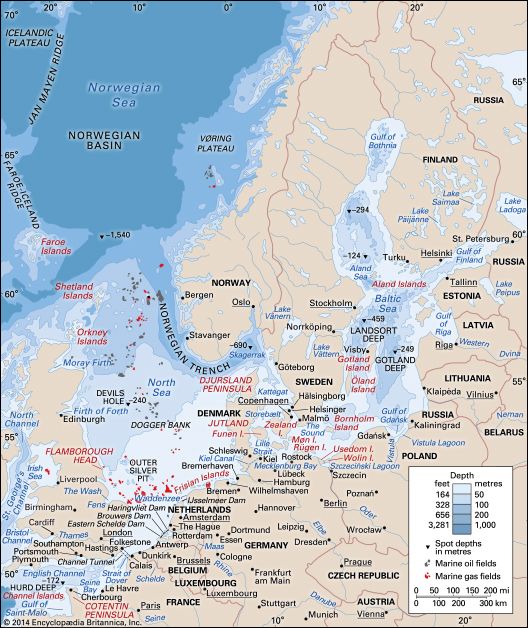
The Gulf of Saint-Malo is an arm of the English Channel that indents the northern coast of Brittany, France.
Geographically, the gulf is situated in northwestern France between the Cotentin Peninsula of Normandy to the east and the island of Bréhat to the west. Its physical extent measures approximately 60 miles (100 km) in width from east to west and 20 miles (32 km) in length from south to north. The gulf encompasses the bays of Saint-Brieuc and Mont-Saint-Michel and receives the waters of the Trieux, Rance, Couesnon, and Sélune rivers.
The area is characterized by dramatic tidal activity, with levels rising between 23 and 26 feet (7 to 8 m) under normal conditions and reaching up to 49 feet (15 m) during spring and autumn tides, which exposes vast tracts of land at low water.
How has the Gulf of Saint-Malo influenced the culture and traditions of the surrounding areas?
The Gulf of Saint-Malo has profoundly shaped the cultural and historical identity of the surrounding region through its unique geography and strategic maritime position.
Maritime Heritage and Resilience
The city of Saint-Malo serves as a testament to the region’s long-standing maritime traditions. Named after a 6th-century Welsh monk, the city became a refuge for populations fleeing Norman invasions in the 8th century. By the 17th and 18th centuries, it achieved significant prosperity through its navigators, traders, and privateers. This legacy is preserved today in local museums, which honor famous mariners such as the 16th-century explorer Jacques Cartier.
Religious and Architectural Significance
The gulf is home to Le Mont-Saint-Michel, a site of immense cultural and religious importance. Established as a pilgrimage center in the 8th century following a vision of the archangel St. Michael, the site features a Benedictine abbey that has survived centuries of conflict, including the Hundred Years’ War. Its architecture, blending military fortification with religious design, remains a defining cultural landmark and a UNESCO World Heritage site.
Sources
- Saint-Malo — Encyclopædia Britannica
- Gulf of Saint-Malo — Encyclopædia Britannica
- France - Fishing — Encyclopædia Britannica
- Douarnenez — Encyclopædia Britannica
- Saint-Malo, Gulf of — Merriam-Webster
- Mont-Saint-Michel — Encyclopædia Britannica
Published on · 3 min read