Jersey
Jersey, the largest of the Channel Islands, is a popular destination known for its mild climate, scenic coastline, and rich history.
What are some of the most popular tourist attractions and natural landmarks on Jersey?
Jersey, the largest of the Channel Islands, is a popular destination known for its mild climate, scenic coastline, and rich history.12
Natural Landmarks
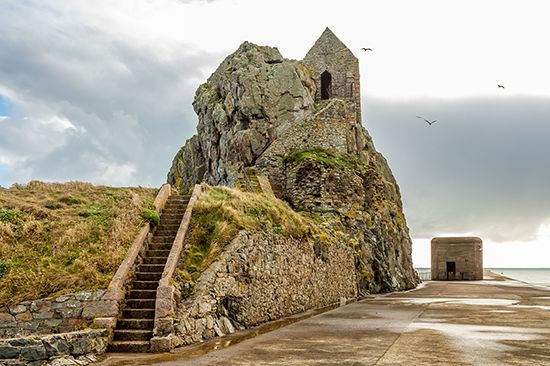
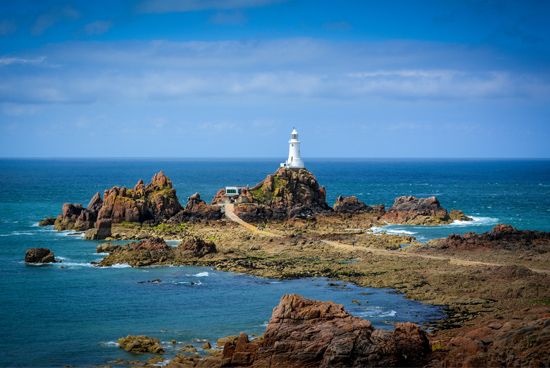
The island’s geography is defined by a plateau with deeply incised valleys. Key natural features include:1
- Northern Coast: Characterized by picturesque cliffs reaching up to 485 feet (148 meters) in height.1
- Coastal Bays: The island features numerous sandy bays bordered by rocky headlands and infilled lagoons.1
- St. Ouen’s Bay: Located on the western coast, this area is notable for its extensive sand dunes.1
Tourist Attractions
- St. Helier: The island’s capital and primary hub for culture and commerce. Visitors often explore the historic Royal Square, the site of the 1781 Battle of Jersey, and the nearby Fort Regent.13
- Elizabeth Castle: Situated on the tidal island of L’Islet, this historic fortress is accessible by causeway at low tide. It served as a refuge for Charles II during the 17th century.3
- Jersey Zoological Park: Founded in 1959 by naturalist Gerald Durrell, this park is dedicated to the protection of endangered species.1
What unique wildlife and plant species can be found on Jersey?
The provided search results do not contain specific information regarding unique native plant species or wild animal populations living freely on the island of Jersey.
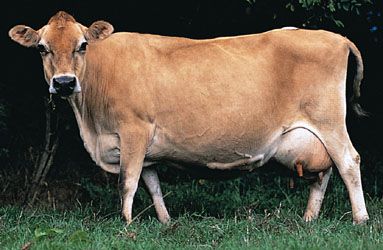
While the Jersey Zoological Park is located on the island and is dedicated to breeding endangered species—such as various marmosets, Mayotte brown lemurs, colobus monkeys, gorillas, spectacled bears, tenrecs, and the rare Rodrigues fruit bat—these animals are part of a managed conservation collection rather than the island’s indigenous wildlife. Additionally, the island is well-known for its Jersey dairy cattle, which have been the only breed permitted on the island since 1789.61
Please note that information regarding the plant and animal life provided in the search results for “New Jersey” refers to the U.S. state and is not applicable to the island of Jersey.7
What is the geographical location of Jersey in relation to the Channel Islands and the English Channel?
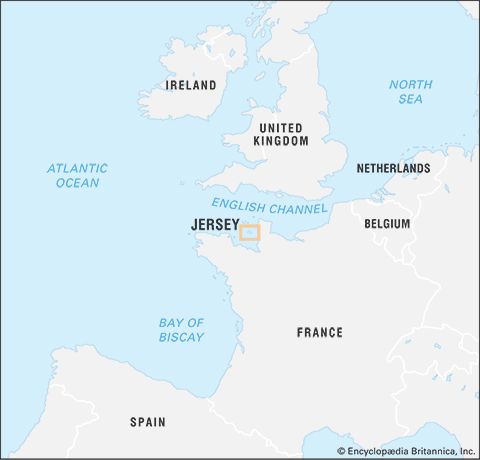
Jersey is the largest and southernmost island of the Channel Islands, an archipelago situated within the English Channel.21
Geographically, the island is located approximately 12 miles (19 km) west of the Cotentin Peninsula of France and lies south of the coast of England. While the Channel Islands as a whole are positioned about 80 miles (130 km) south of the English coast at the entrance to the Gulf of Saint-Malo, Jersey specifically serves as a distinct bailiwick within this island group.12
What languages are spoken on Jersey, and how has this influenced the island’s culture?
The official languages of Jersey are English and French. While English is the primary language used for most official proceedings, French remains an official language, reflecting the island’s deep historical ties to Normandy1. Additionally, a local Norman-French patois survives among some inhabitants, serving as a linguistic link to the island’s heritage.812
This bilingual environment is a direct result of Jersey’s unique history as a British crown dependency with roots in the medieval Duchy of Normandy. Although the island has been separated from Normandy since 1204, it has maintained its own legal traditions, such as the Royal Court, which preserves medieval origins and terminology. The cultural landscape is further shaped by the island’s Norman descent, with influences from Breton, English, and various European populations that have settled there over the centuries.12
Sources
- Jersey — Encyclopædia Britannica
- Channel Islands — Encyclopædia Britannica
- New Jersey - Cultural life — Encyclopædia Britannica
- Saint Helier — Encyclopædia Britannica
- New Jersey - Relief — Encyclopædia Britannica
- Jersey Zoological Park — Encyclopædia Britannica
- New Jersey - Plant and animal life — Encyclopædia Britannica
- Jersey: Country Facts — Encyclopædia Britannica
- Channel Islands — Merriam-Webster
Published on · 3 min read