Gunnel
The term "gunnel" refers to two distinct concepts depending on the context:
What is gunnel?
The term “gunnel” refers to two distinct concepts depending on the context:
- Nautical: It is a less common spelling of gunwale, which is the upper edge of the side of a boat or ship. Historically, the term originated from its use as a support for guns on a vessel.12
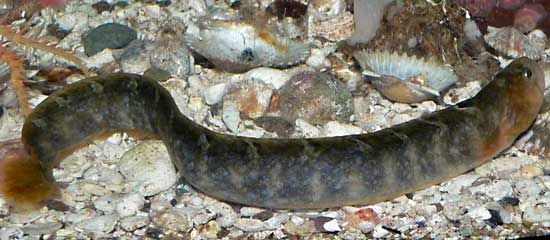
- Zoology: It refers to any of the long, eel-like fishes belonging to the family Pholidae. These fish typically inhabit northern Atlantic and Pacific coastal regions and possess a long, spiny dorsal fin that runs the length of their bodies. A well-known species is the rock gunnel (Pholis gunnellus), also called a butterfish due to its slippery skin.3
Why was the gunwale originally used to support guns?
The term gunwale (often pronounced “gunnel”) originated in the 15th century and derives from the Middle English gonne-wale, a combination of gonne (gun) and wale (a structural planking on a ship’s side).3
The gunwale was originally used to support guns because it served as the reinforced upper edge of a ship’s hull, providing a stable location to mount or rest early naval weaponry. As naval warfare evolved, the placement and mounting of these weapons changed significantly. While early guns were often small swivel pieces or deck-mounted weapons, the structural design of ships eventually shifted to accommodate heavier artillery. By the 16th century, the introduction of gunports—cut directly into the hull rather than relying solely on the upper rail—allowed for the development of the true heavy-gun warship, moving away from the need to mount guns exclusively on the top edge of the vessel.34
What are some other parts of a boat’s structure?
Beyond the gunwale, a boat’s structure consists of several essential components that provide strength, stability, and buoyancy. These parts work together to form a rigid, watertight hull capable of withstanding various forces at sea.89
Key Structural Components
- Keel: The primary backbone of a boat, running longitudinally along the center of the bottom from bow to stern. It serves as the foundation to which the ribs and other structural members are attached.109
- Frames and Ribs: These are the internal “skeleton” of the boat. They provide the shape of the hull and support the outer plating or planking.811
- Bulkheads: These are vertical partitions or walls within the hull. They provide transverse strength and divide the interior into watertight compartments, which is critical for safety.9
- Beams: These structural members support the decks and help maintain the shape of the hull by connecting the tops of the frames.89
- Stringers: These are longitudinal stiffeners that run fore and aft along the inside of the hull. They help prevent the shell plating from buckling under stress.8
- Rudder: A critical component for steering, usually located at the stern, which directs the flow of water to turn the vessel.10
- Skeg: An aftward extension of the keel that helps the boat track straight and protects the propeller and rudder from underwater obstructions.10
How do butterfish adapt to living in rocky shore environments?
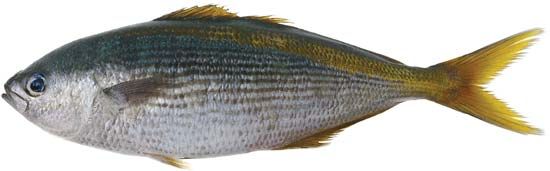
The premise that butterfish (family Stromateidae) live in rocky shore environments is inaccurate. According to the provided information, butterfishes are thin, deep-bodied, oval, and silvery fish typically found in warm and temperate seas, often noted for sheltering among jellyfish tentacles rather than rocky shores.16
The confusion likely arises because the rock gunnel (family Pholidae) is sometimes colloquially referred to as a “butterfish”. The gunnel is a distinct type of fish adapted to rocky shore environments, where it uses its elongated, eel-like body to hide in crevices and under rocks during low tide.16
Sources
- gunnel — Merriam-Webster
- gunnel — Encyclopædia Britannica
- gunwale — Merriam-Webster
- warship - Gun-armed warships — Encyclopædia Britannica
- warship - Armament — Encyclopædia Britannica
- inwale — Merriam-Webster
- warship - Ship of the line — Encyclopædia Britannica
- keel — Encyclopædia Britannica
- naval architecture - Structural configurations — Encyclopædia Britannica
- list of boats, ships, and submarines — Encyclopædia Britannica
- naval architecture - Materials of construction — Encyclopædia Britannica
- In the Sea-Language: Sailing Terms in Britannica’s First Edition — Encyclopædia Britannica
- naval architecture - Jointing, connections, and attachments — Encyclopædia Britannica
- ship - Structural integrity — Encyclopædia Britannica
- ship construction - Fabrication and assembly — Encyclopædia Britannica
- butterfish — Encyclopædia Britannica
Published on · 3 min read