Ragfish
The ragfish (Icosteus aenigmaticus) is a unique marine fish and the sole member of the family Icosteidae. Found throughout the North Pacific, it earns its…
What is ragfish?
The ragfish (Icosteus aenigmaticus) is a unique marine fish and the sole member of the family Icosteidae. Found throughout the North Pacific, it earns its name from its exceptionally flexible, limp body, which lacks a rigid, bony skeleton and is instead composed primarily of cartilage.1
Adult ragfishes can reach lengths of up to 2 meters (6.5 feet) and are characterized by a laterally compressed shape, a lack of pelvic fins and scales, and the absence of spines in their fins. While juveniles typically exhibit a brownish-yellow coloration, adults are deep brown. These predators primarily feed on squid and other fish.1
How does a cartilaginous skeleton help a fish survive in the deep sea?
In the deep sea, where hydrostatic pressure increases significantly with depth, a cartilaginous skeleton offers distinct advantages over a rigid, bony one. Because water is a supportive medium, great structural rigidity is not essential for maintaining body configuration in an aquatic environment.2
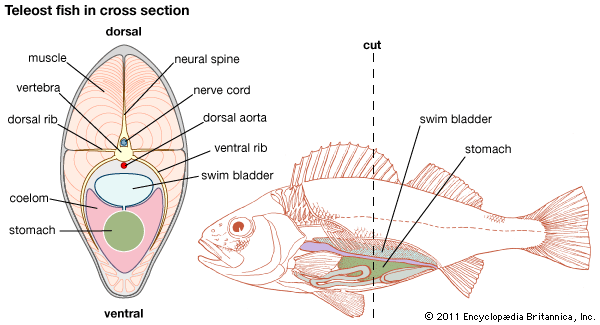
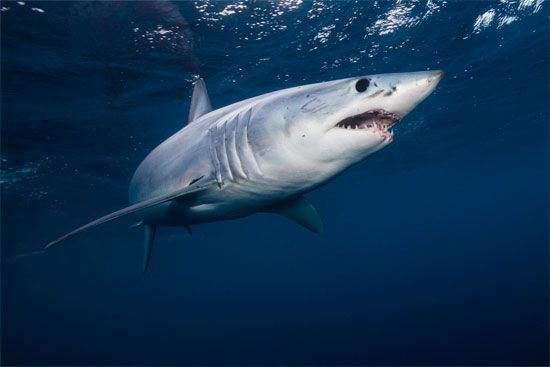
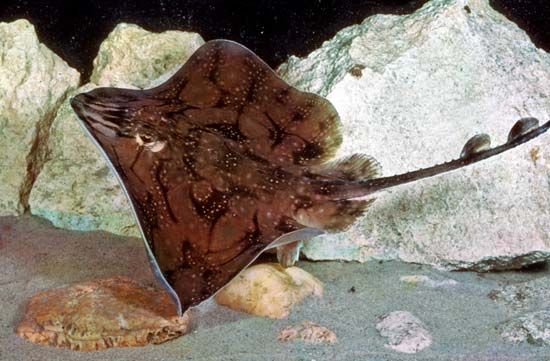
A primary challenge for deep-sea life is managing extreme pressure. Many deep-sea fishes lack air-filled compartments, such as swim bladders, which would be subject to dangerous compression or expansion under high pressure. While bony fish often rely on a swim bladder to regulate buoyancy, this organ is absent in all cartilaginous fish, such as sharks, skates, and rays. By utilizing a skeleton composed of noncalcified or calcified cartilage rather than dense, heavy bone, these animals maintain a flexible and efficient body structure that is well-suited to the extreme conditions of the deep ocean. This nonbony endoskeleton has proven to be a highly successful evolutionary adaptation, allowing these species to thrive in their specialized habitats for millions of years.342
What other types of fish are found in the North Pacific?
The North Pacific Ocean hosts a vast and diverse array of fish species, ranging from commercially significant populations to specialized deep-sea inhabitants.
Commercially Important Species
The North Pacific is home to several species that support massive global fisheries:
- Salmon: Five species of the genus Oncorhynchus thrive here, including sockeye, coho, chum, chinook, and pink salmon.89
- Groundfish: Bottom-dwelling species are abundant, most notably the Alaska pollock and the North Pacific hake.910
- Cod: The Pacific cod (G. macrocephalus) is a key species found throughout the northeastern and northwestern Pacific.10
- Pelagic Fish: Plankton-feeding fishes, such as members of the herring family and the Japanese sardine, exist in dense concentrations where nutrient-rich waters upwell.9
Diverse Coastal and Deep-Sea Fauna
The region also supports a wide variety of other fish families:
- Coastal and Benthic: The North Pacific contains numerous species of pricklebacks, gunnels, and wolffishes, as well as unique species like the prowfish and the graveldiver.11
- Deep-Sea: In extreme depths, specialized deep-sea fish have evolved, including anglerfishes, viperfishes, and bristlemouths.3
Why do some fish lose their scales and pelvic fins as they grow into adults?
The provided search results do not contain information explaining why some fish lose their scales or pelvic fins as they transition into adulthood. While the documents discuss the general evolution of the appendicular skeleton and various locomotor adaptations in fish, they do not address the specific developmental loss of these features during maturation.
Sources
- ragfish — Encyclopædia Britannica
- bone - Evolutionary origin and significance — Encyclopædia Britannica
- deep-sea fish — Encyclopædia Britannica
- Biosphere - Hydrostatic pressure — Encyclopædia Britannica
- skeleton - Buoyancy devices — Encyclopædia Britannica
- skeleton - Lower chordates and fishes — Encyclopædia Britannica
- swim bladder — Encyclopædia Britannica
- salmon — Encyclopædia Britannica
- perciform - Annotated classification — Encyclopædia Britannica
- Pacific Ocean - Biological resources — Encyclopædia Britannica
- Pacific Ocean - Fisheries — Encyclopædia Britannica
- cod — Encyclopædia Britannica
- ostariophysan - Swimming — Encyclopædia Britannica
- clupeiform - Growth and mortality — Encyclopædia Britannica
- atheriniform - Natural history — Encyclopædia Britannica
- skeleton - General features — Encyclopædia Britannica
Published on · 2 min read