Why Do Sharks Attack?
Shark attacks are rare, and contrary to popular belief, they are rarely motivated by a desire to consume humans. Instead, these encounters often stem from a…
Why Do Sharks Attack?
Shark attacks are rare, and contrary to popular belief, they are rarely motivated by a desire to consume humans. Instead, these encounters often stem from a variety of specific behaviors and environmental factors:1
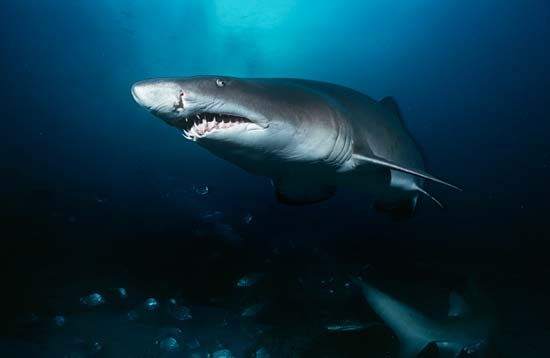
- Curiosity and Investigation: As apex predators, sharks are naturally curious. Because they lack hands, they use their highly sensitive mouths to “mouth” or investigate unfamiliar objects in their environment to determine their potential food value.1
- Confusion: In turbid or shallow waters, sharks may become confused by the erratic movements of humans or the contrast between skin and attire. They are hardwired to react to the vibrations of thrashing fish, and a human foot or limb can be mistaken for prey in these conditions.12
- Territoriality: While not territorial in the traditional sense, sharks exhibit a dominance hierarchy around prime feeding areas. Some encounters may result from a shark defending its food source against perceived intruders.12
- Provocation: Interactions can be triggered by human activity, such as thrashing, the presence of bait or speared fish, or the presence of blood in the water.2
Which shark species are considered the most dangerous to humans?
While over 400 species of sharks exist, only about 30 have been implicated in unprovoked attacks on humans, and only about 15 are considered dangerous. These species are typically large with significant cutting teeth, though size is not the only factor, as smaller sharks can also inflict hazardous wounds.62
The most dangerous shark species frequently cited in attacks include:
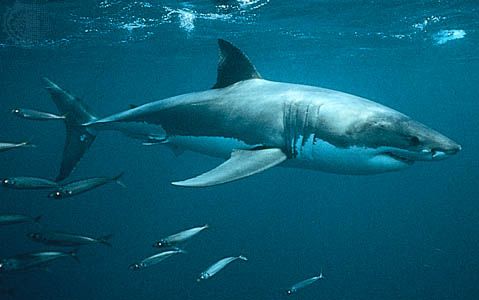
- Great white shark: Widely considered the most dangerous, it is responsible for numerous unprovoked and sometimes fatal attacks on swimmers, divers, and small boats.623
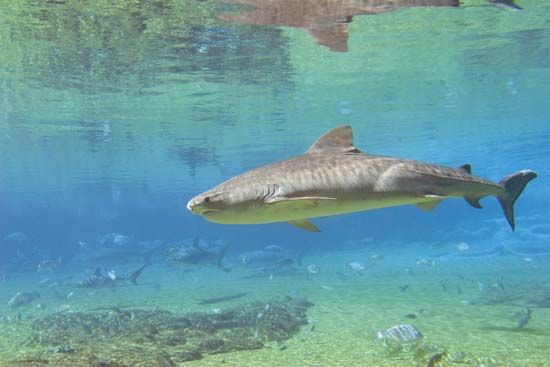
- Tiger shark: A large, tropical species frequently implicated in attacks.62
- Bull shark: Known for its presence in tropical waters and its involvement in human encounters.62
- Other species: Hammerhead sharks, blue sharks, oceanic whitetip sharks, and various requiem sharks are also documented as being involved in attacks on humans or boats.62
It is important to note that shark attacks remain exceedingly rare, and humans pose a far greater threat to shark populations than they do to us.12
How do sharks use their mouths to sense and explore their environment?
Sharks utilize their mouths as sophisticated sensory tools to explore their environment and assess potential food sources. Because sharks lack hands, they often “mouth” unfamiliar objects to examine them, using the high sensitivity of their gums and slightly mobile teeth to gauge the texture and potential fat content of an item.7
Beyond this investigative behavior, the mouth and surrounding areas are equipped with specialized sensory structures:
- Taste Buds: Sensory organs identified as taste buds are located on the roof, sides, and floor of the mouth, as well as on the throat and tongue, allowing sharks to discriminate between different types of food.8
- Electroreception: Groups of pores known as ampullar organs are found around the jaws, head, and snout. These organs allow sharks to detect minute electrical impulses, such as those produced by the muscular activity of nearby prey.8
- Mechanical Sensitivity: The lateral line system and associated sensory pores help sharks detect vibrations and pressure changes in the water, which assist in locating prey even in low-visibility conditions.82
What are some ways that humans can stay safe while swimming in the ocean?
Staying safe while swimming in the ocean involves awareness of both environmental hazards and marine life. To minimize risks, consider the following practices:
Managing Rip Currents
Rip currents are powerful, narrow streams of water that can pull swimmers away from shore. They are often mistaken for calm patches of water between breaking waves.
- If caught in a rip current: Do not attempt to swim directly back to shore against the flow, as this can lead to exhaustion. Instead, swim parallel to the shoreline until you are out of the current, then return to land.69
- Observation: Be cautious of areas that appear unusually calm or discolored by sand, as these may indicate the presence of a rip current.69
Reducing Shark Encounter Risks
While shark attacks are rare, you can reduce the likelihood of an encounter by avoiding behaviors that may attract them:
- Avoid erratic movement: Kicking or thrashing in the water can mimic the movements of a wounded fish, which may attract sharks.10
- Minimize attractants: Do not swim with open wounds or in areas where there is bait or speared fish in the water.10
- Be aware of surroundings: In areas known for shark activity, look for public safety measures such as lookout towers, sirens, or protective netting.1110
General Water Safety
Sources
- white shark - Attacks on humans — Encyclopædia Britannica
- Why Do Sharks Attack? — Encyclopædia Britannica
- shark - Hazards to humans — Encyclopædia Britannica
- shark - Shark behaviour — Encyclopædia Britannica
- white shark - Social behavior — Encyclopædia Britannica
- chondrichthyan - Danger to human life — Encyclopædia Britannica
- chondrichthyan - Senses — Encyclopædia Britannica
- chondrichthyan - Sharks — Encyclopædia Britannica
- Why are rip currents dangerous? — Encyclopædia Britannica
- lifesaving — Encyclopædia Britannica
- rip current — Encyclopædia Britannica
- drowning — Encyclopædia Britannica
Published on · 4 min read