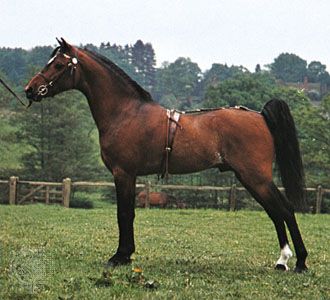
Hackney
Hackney is an inner borough of London, England, located in the historic county of Middlesex. Established in 1965, the borough was formed by merging the…
What is Hackney?
Hackney is an inner borough of London, England, located in the historic county of Middlesex. Established in 1965, the borough was formed by merging the former metropolitan boroughs of Shoreditch, Hackney, and Stoke Newington.12
Geographically, it sits north of the City of London and Tower Hamlets, with the River Lea forming its eastern boundary. While Shoreditch is primarily industrial and commercial, the rest of the borough is largely residential. Hackney has a rich history, featuring sites like the 16th-century Sutton House and the Hackney Empire theatre.1
The area is known for its diverse population, serving as a historic reception point for immigrants, including significant Afro-Caribbean and Orthodox Jewish communities. It also offers extensive public green spaces, such as Hackney Marshes and Clissold Park.1
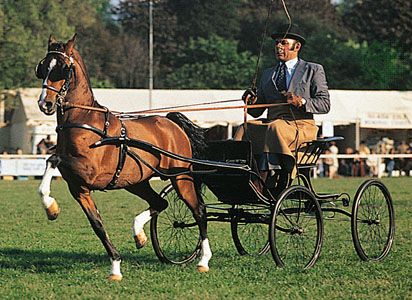
What is the significance of the Domesday Book in English history?
The Domesday Book is widely considered one of the most remarkable administrative achievements of the Middle Ages. Commissioned by William I in 1086, this comprehensive survey of England served as a definitive record of landholdings, resources, and feudal obligations.34
Its significance lies in several key areas:
- Administrative Innovation: The survey utilized a rigorous “sworn inquest” method, collecting detailed data on manors, agricultural capacity, and assets from every village and hundred.3
- Feudal Foundation: By organizing landholdings under the king and his tenants-in-chief, the document solidified the Norman conception of a feudal society, clearly defining rights and duties across the realm.34
- Historical Resource: For most English towns and villages, the Domesday Book serves as the primary starting point for their recorded history. It remains an invaluable, unique resource for historians studying the social and economic structure of Anglo-Norman England.34
Though it was a multipurpose document likely intended for tax assessment, it remains a testament to William’s ability as an administrator, linking England more closely to continental Europe.4
How did the Globe Theatre influence Elizabethan drama?
The Globe Theatre, opened in 1599, was a cornerstone of the English Renaissance and profoundly influenced Elizabethan drama. Its unique design and commercial model shaped how plays were written, performed, and experienced.
Architectural Influence
The Globe’s open-air, circular structure featured a large, raised platform stage that extended into the audience. This layout fostered intimacy and fluid movement, allowing actors to engage directly with spectators surrounding them on three sides. Because the stage lacked elaborate scenery, the emphasis was placed firmly on the playwright’s language and the actor’s performance. This simplicity challenged dramatists to use vivid, high-quality language to capture the audience’s imagination, a requirement that pushed writers like William Shakespeare to new heights of creativity.67
Commercial and Artistic Impact
The Globe was the first playhouse built specifically for an existing acting company—the Lord Chamberlain’s Men—and financed by the actors themselves. This partnership model provided financial stability and artistic freedom, allowing Shakespeare to write plays tailored to the specific capabilities of his troupe and the unique features of the Globe’s stage, such as its trapdoors and balcony levels.89
What role has the East End played in London’s history?
The East End has played a pivotal role in London’s history, evolving from a medieval parish into a vital hub of industry, immigration, and urban transformation.
Industrial and Social Identity
Historically, the area’s identity was defined by the London Docklands, which served as the engine of the local economy until the mid-20th century. The wharves along the River Thames supported shipbuilding and trade, notably hosting the launch of Isambard Kingdom Brunel’s Great Eastern in 1859. The region also became a center for social reform; in the late 19th century, William Booth founded the Salvation Army there to address the area’s persistent poverty.1213
A Gateway for Immigration
The East End has long been a landing point for successive waves of immigrants. French Huguenots established silk weaving in Spitalfields after 1685, followed by Irish laborers in the 19th century and Jewish refugees fleeing European pogroms in the 1880s. By the 1960s, the area saw significant settlement by the Bengali community.12
Wartime Impact and Modern Renewal
During World War II, the East End’s industrial importance made it a primary target for the Blitz. The resulting devastation prompted massive urban renewal, shifting the area from its industrial roots toward service industries and modern developments like the Canary Wharf project in the 1980s.1312
Sources
- Hackney — Encyclopædia Britannica
- Hackney — Merriam-Webster
- Domesday Book — Encyclopædia Britannica
- United Kingdom - William ’s accomplishments — Encyclopædia Britannica
- Domesday Book — Merriam-Webster
- Globe Theatre — Encyclopædia Britannica
- Globe Theatre - The design of the Globe — Encyclopædia Britannica
- Globe Theatre - The success of the Globe — Encyclopædia Britannica
- Globe Theatre: Top Questions — Encyclopædia Britannica
- Western theatre - Elizabethan theatre — Encyclopædia Britannica
- theatre - The Elizabethan stage — Encyclopædia Britannica
- East End — Encyclopædia Britannica
- the Blitz - The raids — Encyclopædia Britannica
- Tower Hamlets — Encyclopædia Britannica
Published on · 3 min read