Haddock
The haddock (Melanogrammus aeglefinus) is a highly valued food fish belonging to the cod family, Gadidae. Found on both sides of the North Atlantic, this…
What is haddock?
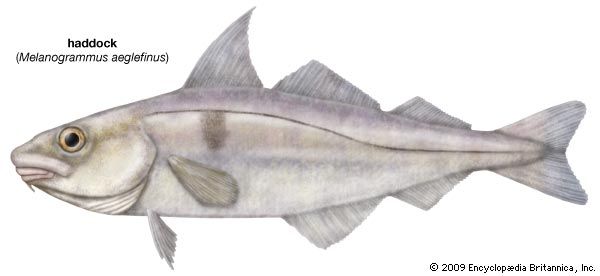
The haddock (Melanogrammus aeglefinus) is a highly valued food fish belonging to the cod family, Gadidae. Found on both sides of the North Atlantic, this bottom-dwelling carnivore feeds primarily on invertebrates and other fish.12
Physically, the haddock resembles the cod, featuring a chin barbel, two anal fins, and three dorsal fins. It is distinguished by a dark lateral line and a characteristic dark spot located on each shoulder, just above the pectoral fin. Typically gray or brownish in color with a paler underside, the species can grow to approximately 90 cm (3 feet) in length and weigh up to 11 kg (24.5 pounds). In culinary contexts, it is frequently smoked and sold under the name “finnan haddie”.12
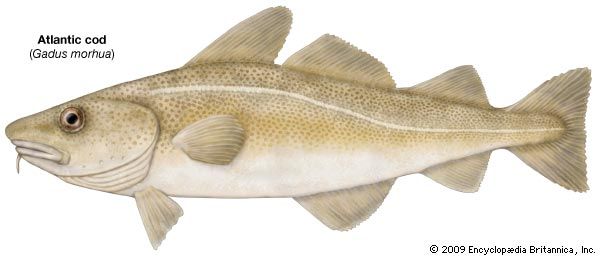
How does the haddock’s habitat differ from other cod species?
The provided search results do not contain specific information comparing the habitat of the haddock to that of other cod species. Both haddock and cod are identified as demersal, or deep-dwelling, species that inhabit the continental shelf of the North Atlantic, but the available data does not detail how their specific environmental preferences or ranges differ from one another.13
What are the most common ways to prepare haddock for eating?
Haddock is a versatile and highly valued food fish known for its mild flavor and firm texture. One of the most traditional and common ways to prepare it is by smoking the fish, a product widely known as “finnan haddie” or “Findon haddock.”14
The term “finnan haddie” originates from the village of Findon, Scotland, which became historically famous for its method of curing haddock over smoke. Beyond smoking, haddock is frequently used in various culinary applications similar to other members of the cod family, such as frying, baking, or poaching, though the provided information specifically highlights its prominence as a smoked delicacy.451
Why is the haddock’s lateral line a useful way to identify it?
The haddock (Melanogrammus aeglefinus) is a member of the cod family that can be distinguished from its relatives by its unique physical markings. While many similar species possess a light-colored lateral line, the haddock is specifically identified by a dark lateral line that runs along its body.16
This feature, combined with a distinctive dark spot located on each shoulder above the pectoral fin, serves as a reliable diagnostic tool for identification. While the lateral line system itself is a sensory organ used by aquatic vertebrates to detect water pressure and movement, the specific pigmentation of the haddock’s line provides a clear visual marker for distinguishing it from other gadids.162
Sources
- haddock — Encyclopædia Britannica
- haddock — Merriam-Webster
- Atlantic Ocean - Fisheries of the Atlantic Ocean — Encyclopædia Britannica
- finnan haddie — Merriam-Webster
- Findon haddock — Merriam-Webster
- lateral line system — Encyclopædia Britannica
Published on · 2 min read