Hamster
There are 18 recognized species of hamsters, which are classified into 7 distinct genera within the subfamily Cricetinae.
How many species of hamsters exist, and where are they naturally found?
There are 18 recognized species of hamsters, which are classified into 7 distinct genera within the subfamily Cricetinae.1
These rodents are native to Eurasia, with a geographic range that spans from central Europe through Siberia, Mongolia, and northern China to Korea in the north, and from Syria to Pakistan in the south. They typically inhabit dry, open environments, including desert borders, sand dunes, rocky foothills, plateaus, river valleys, and mountain steppes.1
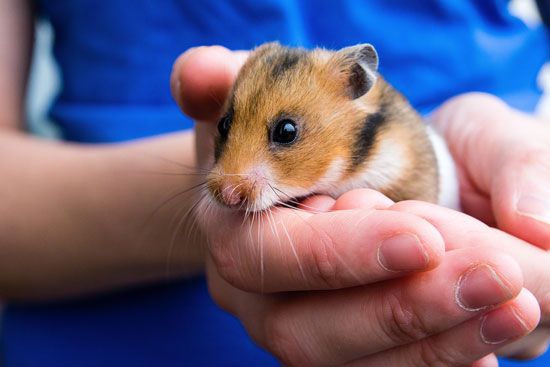
The distribution of these species varies significantly; for example, the common hamster is found across a wide area from central Europe to western Siberia, while the golden hamster has a very restricted natural range in northwestern Syria.12
What are the most popular hamster breeds kept as pets?
While many people assume there are numerous types of hamsters commonly kept as pets, the golden hamster (Mesocricetus auratus)—also frequently referred to as the Syrian hamster—is the species most widely recognized and kept as a pet.213
Although there are 18 distinct species of hamsters in the wild, the golden hamster is the primary species associated with domestic ownership. These animals have become popular pets due to their tractable nature, though they are not considered truly domesticated. Breeders have developed more than 120 varieties of this species, resulting in a wide range of fur colors, patterns, and textures.21
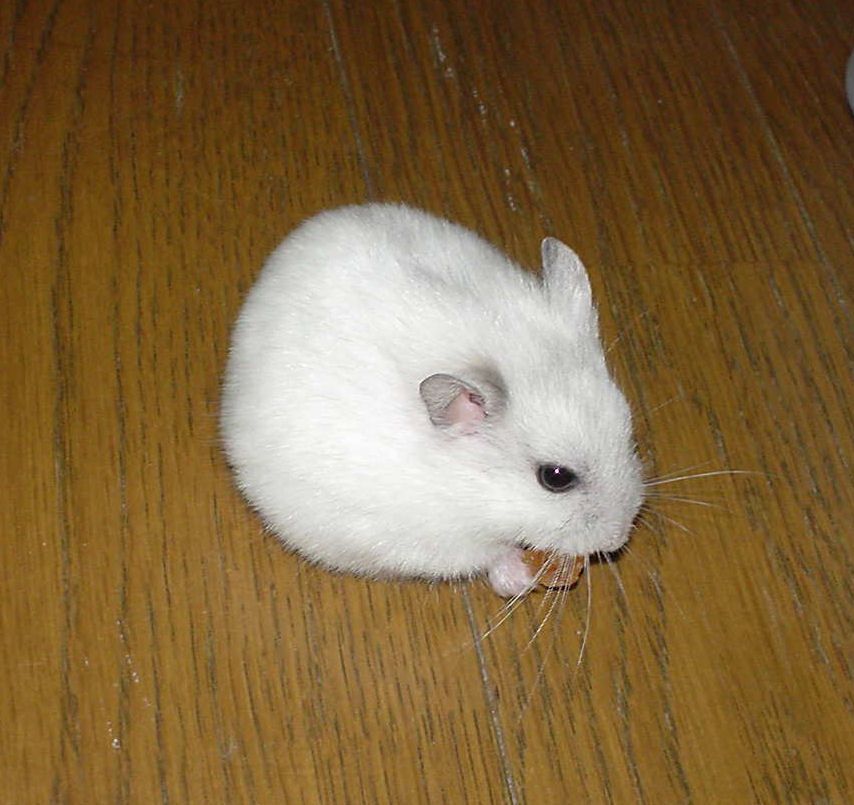
Other species, such as the Dzhungarian hamster (Phodopus sungorus) and the striped dwarf hamster (Cricetulus barabensis), are also sometimes encountered in the pet trade, but the golden hamster remains the most prominent.1
What is the natural diet of hamsters in the wild?
In the wild, hamsters are opportunistic feeders with a varied diet. While their intake consists primarily of grains, they also consume a wide range of other plant materials, including fruit, roots, and the green parts of various plants.1
Beyond vegetation, their natural diet includes invertebrates and other small animals, as well as carrion. Hamsters are well-adapted for foraging; they utilize their spacious internal cheek pouches to transport collected food back to their burrows. These caches serve as a vital food supply, particularly during periods of torpor when the animals are less active during colder months.12
What is a hamster?
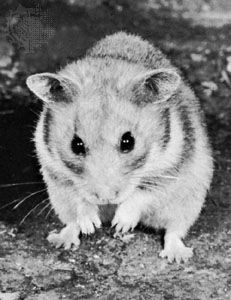
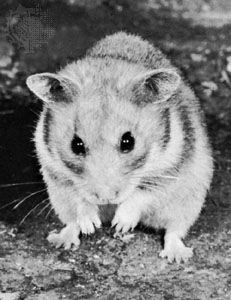
A hamster is any of 18 Eurasian species of rodents belonging to the subfamily Cricetinae. These animals are characterized by their stout bodies, short legs, wide feet, and, most notably, their internal cheek pouches, which they use to transport food to their burrows.14
Physically, hamsters range in size from the small dwarf desert hamsters (5 to 10 cm) to the common hamster, which can reach up to 34 cm in length. While they are primarily nocturnal and solitary, they are skilled diggers that construct complex burrows for nesting and food storage. Their diet is omnivorous, consisting of grains, fruit, roots, invertebrates, and small animals.1
Although they do not hibernate, some species experience periods of torpor during colder months. The golden hamster is the most well-known species, frequently kept as a pet and used in biological research, though the species remains undomesticated in the strict sense.12
Sources
- hamster — Encyclopædia Britannica
- golden hamster — Encyclopædia Britannica
- golden hamster — Merriam-Webster
- hamster — Merriam-Webster
Published on · 2 min read