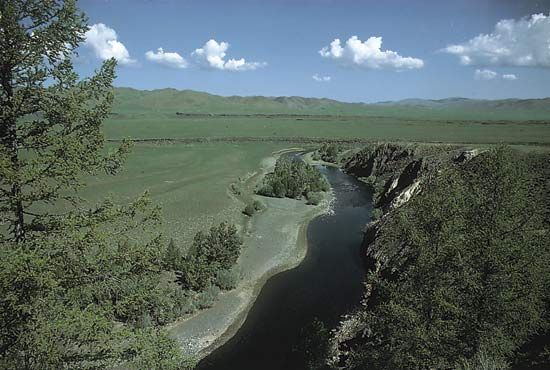
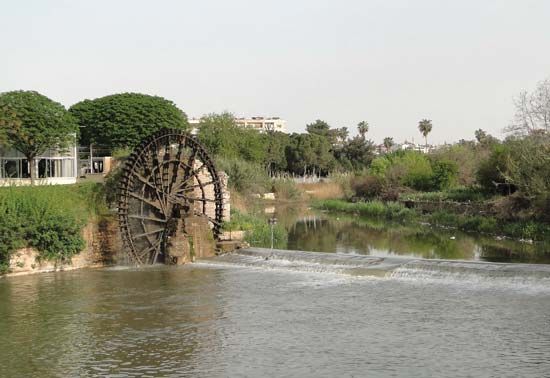
Han River
The Han River serves as a vital waterway in eastern Guangdong and southwestern Fujian, flowing from the Wuyi Mountains to the sea at Shantou. While the river…
How has the Han River influenced the development of local cuisines in Guangdong and Fujian?
The Han River serves as a vital waterway in eastern Guangdong and southwestern Fujian, flowing from the Wuyi Mountains to the sea at Shantou. While the river is a crucial geographic feature that facilitates transport and irrigation in these regions, the provided search results do not contain specific information regarding how the Han River directly influenced the development of local cuisines in Guangdong or Fujian.123
Chinese cuisine is generally shaped by broader factors, including regional climate, geography, and cultural traditions. For instance, Min (Fujian) cuisine is noted for utilizing ingredients from both mountains and seas to create umami-rich profiles, while Yue (Cantonese) cuisine in Guangdong emphasizes fresh, in-season ingredients.3
What role does the Han River play in transportation and trade between Guangdong and Fujian provinces?
The Han River, located in eastern Guangdong and southwestern Fujian, serves as a significant local waterway that facilitates regional transport.1
While the river’s delta plain near Shantou features shallow channels often obstructed by sandbanks and mudflats, the river remains navigable for smaller vessels. Above Chao’an, small steamboats and junks can travel as far as Sanheba1. Furthermore, the river’s tributaries extend this reach: vessels can navigate the Mei River up to Meixian, and the upper course of the Han River itself is accessible to small craft as far as Changting in Fujian.1
It is important to note that this Han River is distinct from the larger Han River that flows through Shaanxi and Hubei provinces to join the Yangtze River.4
How long is the Han River, and what are some of the major cities it flows through?
It is important to clarify that there are two distinct rivers in China known as the Han River. The information provided in the search results does not specify a total length for the Han River in Guangdong and Fujian, but it does provide details for the larger Han River that is a tributary of the Yangtze.
The Han River (Tributary of the Yangtze)
This river, which flows through Shaanxi and Hubei provinces, has a total length of approximately 950 miles (1,530 km). Major cities and locations along its course include:1
- Hanzhong: Located in an alluvial basin where the river takes the name “Han River”.1
- Ankang: Situated upstream before the river enters a series of deep gorges.1
- Xiangfan: A key city on the lower course where the river receives the Baishui River.1
- Wuhan: The city where the Han River joins the Yangtze River.1
The Han River (Guangdong and Fujian)
This river rises in the Wuyi Mountains and flows through eastern Guangdong and southwestern Fujian. While its total length is not provided, it flows through or near the following areas:4
- Changting: Located near the river’s upper course (known as the Ting River).4
- Sanheba: A junction point where the river meets the Mei River.4
- Meixian: Located along the Mei River tributary.4
- Chao’an: Situated near the river’s delta.4
- Shantou: Located at the southwestern corner of the river’s delta plain.4
How does the Han River compare to other major rivers in China in terms of size and importance?
In China, the term “Han River” refers to two distinct waterways, both of which are significant at a regional level but differ greatly in scale and national importance compared to the country’s primary river systems.
The Han River (Tributary of the Yangtze)
This river, flowing through Shaanxi and Hubei provinces, is a major tributary of the Yangtze River. With a length of approximately 950 miles (1,530 km), it serves as a vital waterway that forms the backbone of a dense transport network in the southern North China Plain. Its importance is underscored by its role in irrigation, flood control, and hydroelectric power generation, particularly following the construction of major dams and retention basins.4
The Han River (Guangdong and Fujian)
This river is a separate, smaller waterway that serves as the most important river in Guangdong province outside of the Pearl River system10. While it facilitates local transport and trade, it is not comparable in national scale to China’s three principal rivers: the Yangtze, the Huang He (Yellow River), and the Xi River.18
In the broader context of Chinese geography, the Yangtze remains the country’s principal waterway, containing nearly one-third of the national population within its basin. By contrast, the Han rivers function primarily as essential regional arteries for their respective provinces.948
Sources
- Han River — Encyclopædia Britannica
- Fujian - Drainage — Encyclopædia Britannica
- Chinese cuisine — Encyclopædia Britannica
- Han River — Encyclopædia Britannica
- Jiulong River — Encyclopædia Britannica
- Guangdong - Settlement patterns — Encyclopædia Britannica
- China - Waterways of China — Encyclopædia Britannica
- Yangtze River — Encyclopædia Britannica
- China - Drainage — Encyclopædia Britannica
- Guangdong - Drainage — Encyclopædia Britannica
Published on · 3 min read