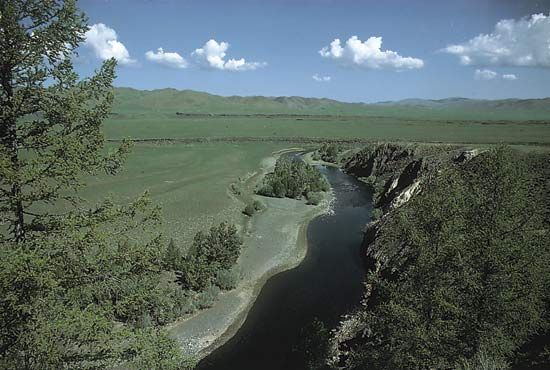
Orhon River
The Orkhon River played a pivotal role in the development of the Mongol Empire primarily as the location of its ancient capital, Karakorum.
What role did the Orkhon River play in the development of the Mongol Empire?
The Orkhon River played a pivotal role in the development of the Mongol Empire primarily as the location of its ancient capital, Karakorum.
In 1220, Genghis Khan established his headquarters along the upper Orhon River, utilizing the site as a strategic base for his military campaigns, particularly the invasion of China. His successor, Ögödei, further developed the city by constructing defensive walls and a grand palace, transforming it into a significant administrative and cultural center that featured diverse religious structures, including shamanistic shrines and mosques.1
The region’s historical significance extends beyond the Mongol era; the Orkhon Valley has long been a center of power for various nomadic empires, including the Orkhon Turks, who centered their authority there centuries earlier. Today, the area is recognized for its historical importance as the Orkhon Valley Cultural Landscape.234
How does the Orkhon River compare to other major rivers in Mongolia?
The Orkhon River holds a unique status among Mongolian waterways as the country’s longest river that lies entirely within its borders, stretching approximately 700 miles (1,130 km).56
In comparison to other major rivers in Mongolia, the Orkhon is distinguished by the following characteristics:
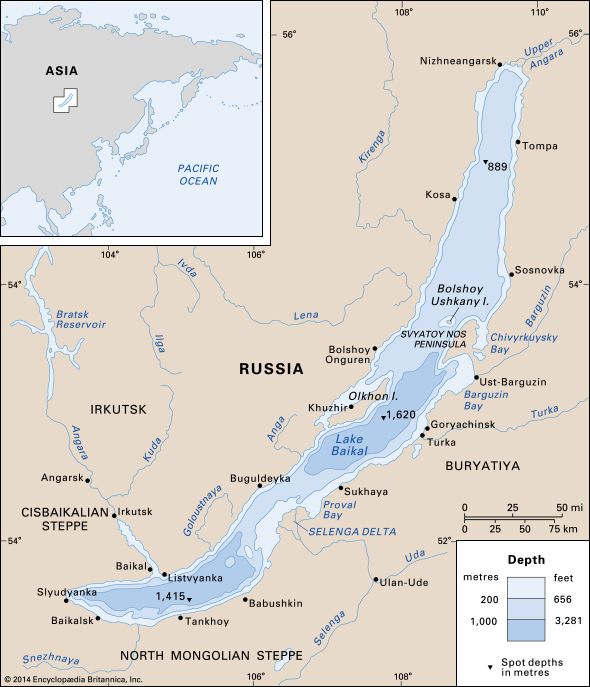
- Drainage and Flow: Along with the Selenge River, the Orkhon dominates the drainage pattern of northern Mongolia. While the Orkhon flows northward to join the Selenge near the Russian border, the Selenge continues into Russia to reach Lake Baikal/Russia) to reach Lake Baikal.56
- Regional Contrast: Unlike the Kherlen River, which flows eastward into China, or the rivers of the western and southern interior basins that terminate in salt lakes or desert sands, the Orkhon is part of the northern system that contributes to the Arctic Ocean drainage.6
- Utility: Like many Mongolian rivers, the Orkhon is characterized by a steep gradient or meandering path, making its hydroelectric potential difficult to exploit. Navigation is limited to shallow-draft vessels during only two months of the year (July and August), and agriculture remains restricted to subsistence farming due to harsh winters and unreliable rainfall.56
How does the Orkhon River contribute to the local ecosystem and biodiversity?
The Orkhon River is a vital component of the northern Mongolian ecosystem, serving as a primary drainage artery that supports a diverse range of flora and fauna. Rising from the heavily forested slopes of the Hangayn Mountains, the river and its tributaries—including the Tuul, Haraa, and Yöröö rivers—create a fertile corridor that contrasts with the arid landscapes found in other parts of the country.57
The river’s contribution to biodiversity is significant, as it provides essential habitat for various species:
- Aquatic Life: The river system supports a variety of freshwater species, contributing to the country’s total of approximately 70 fish species, which include salmon, trout, grayling, perch, and pike.6
- Avian Diversity: The river serves as a habitat for numerous bird species, including geese, ducks, gulls, pelicans, swans, and cormorants, which rely on the river’s freshwater environment.6
- Surrounding Habitats: The river’s path through volcanic regions, characterized by hot springs and deep vents, creates unique micro-environments. Furthermore, the broader northern region, which the Orkhon helps sustain, provides a home for diverse mammals such as lynx, elk, roe deer, musk deer, brown bears, and wild boars.76
The government of Mongolia has recognized the ecological importance of these regions by establishing national parks and nature reserves to protect the country’s rich wildlife.6
Are there any notable archaeological sites along the Orkhon River?
The Orkhon River valley is home to some of the most significant archaeological sites in Mongolia, reflecting its historical role as a center of power for successive nomadic empires. The region is so culturally and historically important that the Orkhon Valley Cultural Landscape is recognized as a UNESCO World Heritage site.1
Notable archaeological sites include:
- Karakorum: Located on the upper Orkhon River, this was the ancient capital of the Mongol Empire. Established as a base by Genghis Khan in 1220, the site features the ruins of Ögödei Khan’s palace and the historic Erdeni Dzu Buddhist monastery, which was built on the city’s ruins in 1585.9
- Kosho-Tsaidam: This site is famous for its monumental stone inscriptions dating to the early 8th century CE. These records, which include both Turkic and Chinese text, provide invaluable insights into the history, social structure, and shamanistic customs of the Turk dynasty that controlled the region.4
These sites highlight the valley’s long history as a political and cultural hub, serving as the seat of power for the Orkhon Turks, the Uyghurs, and later the Mongol Empire.32
Sources
- Karakorum — Encyclopædia Britannica
- Mongolia - Ethnography and early tribal history — Encyclopædia Britannica
- history of Mongolia - Ethnography and early tribal history of Mongolia — Encyclopædia Britannica
- list of World Heritage sites - Mongolia — Encyclopædia Britannica
- Orhon River — Encyclopædia Britannica
- Mongolia - Drainage — Encyclopædia Britannica
- Mongolia - Animal life — Encyclopædia Britannica
- Mongolia - The northern intermontane basins — Encyclopædia Britannica
- epigraphy - The Turkic peoples — Encyclopædia Britannica
Published on · 3 min read