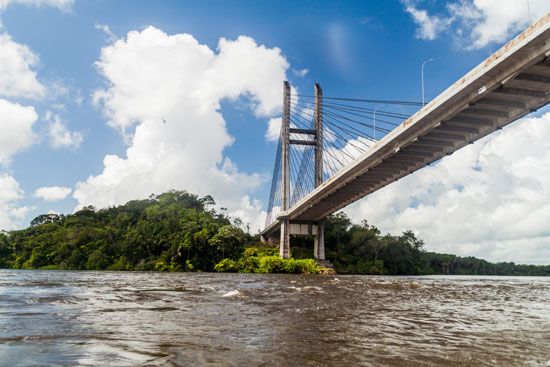
Han River
It is important to clarify that there are two distinct rivers in China named the Han River. One is a major tributary of the Yangtze River flowing through…
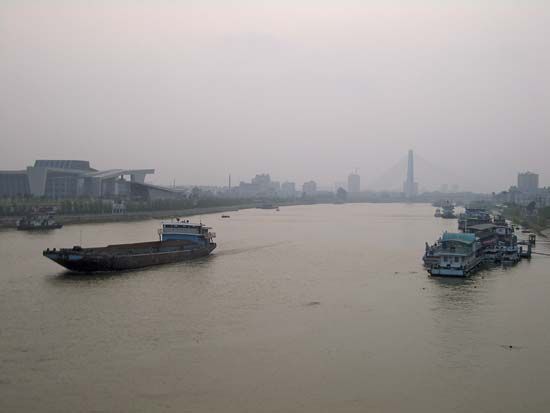
How has the Han River played a role in Chinese history and culture?
It is important to clarify that there are two distinct rivers in China named the Han River. One is a major tributary of the Yangtze River flowing through Shaanxi and Hubei provinces, while the other is located in eastern Guangdong province. The Han River in South Korea is a separate geographic entity.123
The Han River (tributary of the Yangtze) has been historically significant as a vital waterway. Its lower course serves as the spine of a dense network of canals and small waterways, facilitating transport across the southern North China Plain. Historically, junks utilized these routes to travel between cities like Jingzhou and Wuhan, providing a more efficient alternative to the main Yangtze stream. The river’s fertile basins, such as the one near Hanzhong, have supported regional agriculture for centuries. Modern engineering, including dams and retention basins built since the 1950s, has been essential to manage the river’s frequent flooding and support irrigation and hydroelectric power generation.1
What are some of the major cities located along the Han River?
Because there are two distinct rivers in China named the Han River, the major cities located along them vary by region:
The Han River (Tributary of the Yangtze)
This river flows through Shaanxi and Hubei provinces and is a vital waterway for central China. Major cities along its course include:1
- Hanzhong: Located in a fertile basin in southwestern Shaanxi, this city has served as a strategic administrative and transportation hub for centuries.14
- Ankang: Situated along the river’s path as it moves toward the central Yangtze basin.1
- Wuhan: A major metropolis located at the confluence of the Han and Yangtze rivers. It was formed by the merger of three former cities: Hankou, Hanyang, and Wuchang and Wuchang.5
The Han River (Guangdong Province)
This river flows through eastern Guangdong and empties into the sea near the coast. Significant cities and towns along this river include:2
- Shantou: Located at the southwestern corner of the river’s delta plain.2
- Chaozhou: Situated near the delta region.26
- Meizhou: Located along the Mei River, a principal tributary of this Han River.26
What are the main tributaries of the Han River?
To provide an accurate answer, it is necessary to distinguish between the two major rivers in China named the Han River, as each has its own distinct set of tributaries.
The Han River (Tributary of the Yangtze)
This river, flowing through Shaanxi and Hubei provinces, receives water from several key sources:1
- Xun River: Identified as the largest tributary entering from the north.1
- Daba Mountain Tributaries: A large number of north-flowing streams that originate in the Daba Mountains to the south.1
- Dan River: Joins the Han at Jun Xian, where a dam was constructed to stabilize flow.1
- Baishui River: Recognized as the largest tributary of the Han, joining the river at Xiangfan.1
The Han River (Guangdong Province)
This river in eastern Guangdong is formed by different primary tributaries:2
- Yongding River: Joins the upper course (known as the Ting River) below Fengshi.2
- Mei River: The principal tributary of this Han River, which joins the main stream at Sanheba and drains northeastern Guangdong.2
- Daqing River: An eastern tributary that drains a small basin in southern Fujian.2
What is the geographical location and course of the Han River in China?
In China, there are two distinct rivers known as the Han River, each with its own unique geographical course.
The Han River (Tributary of the Yangtze)
This major waterway, spanning approximately 950 miles (1,530 km), is a vital tributary of the Yangtze River. It originates in the Shenqiong Mountains of the Micang range in southwestern Shaanxi province1.
- Upper Course: Known initially as the Yudai, Yang, and Mian rivers, it becomes the Han River at Hanzhong. It flows eastward through rugged, mountainous terrain, passing Ankang before cutting through deep gorges into the central Yangtze basin.1
- Lower Course: Emerging in Hubei province, the river flows through a flat, fertile lowland. Due to the frequent shifting of its course and flood risks, the river is managed by extensive dikes and retention basins. It eventually joins the Yangtze at Wuhan.1
The Han River (Guangdong Province)
This river is located in eastern Guangdong province. It rises in the Wuyi Mountains of Fujian province, where its upper course is known as the Ting River.2
- Course: It flows south into Guangdong, where it is joined by the Mei River at Sanheba. It continues southward, eventually emptying into the sea through an extensive delta plain near Shantou.2
Sources
- Han River — Encyclopædia Britannica
- Han River — Encyclopædia Britannica
- Han River — Encyclopædia Britannica
- Hanzhong — Encyclopædia Britannica
- Hubei — Encyclopædia Britannica
- List of cities in China - Guangdong (province) — Encyclopædia Britannica
- Yangtze River - The lower course — Encyclopædia Britannica
- Henan - Drainage — Encyclopædia Britannica
Published on · 4 min read