Oyapock River
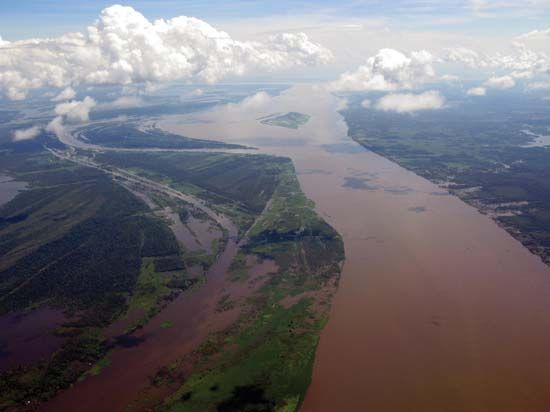
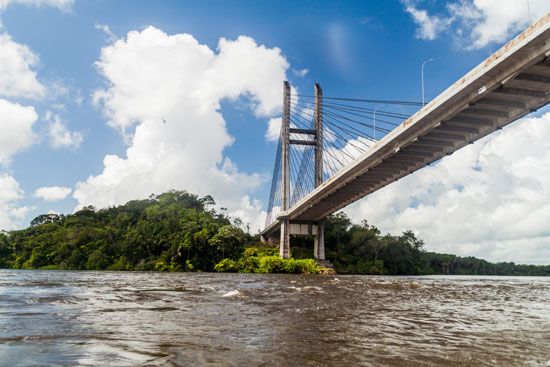
The Oyapock River is a 311-mile (500 km) waterway that serves as the international border between French Guiana and the Brazilian state of Amapá.
What is Oyapock River?
The Oyapock River is a 311-mile (500 km) waterway that serves as the international border between French Guiana and the Brazilian state of Amapá1.
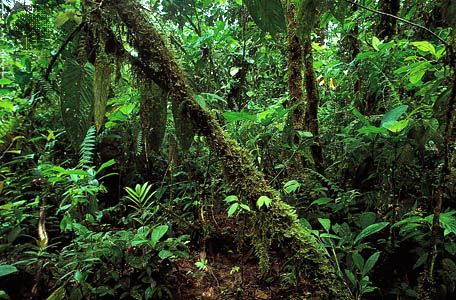
Rising in the Tumuc-Humac Mountains, the river flows northeast through a sparsely populated region dominated by tropical rainforest. Near its mouth at the Atlantic Ocean, the river features the ports of Saint-Georges in French Guiana, as well as Oiapoque and Ponta dos Índios in Brazil. Additionally, the term “oyapock” is sometimes used as a synonym for the yapock, a type of aquatic opossum.12
What are the Tumuc-Humac Mountains?
The Tumuc-Humac Mountains (also known as the Serra Tumucumaque) are a range of low mountains located in northeastern South America. They form the border between Brazil and the territories of French Guiana and Suriname.34
Key features of the range include:
- Geography: As an eastern extension of the Acarai Mountains, the range stretches approximately 180 miles (290 km) in an east-west direction, reaching elevations of about 2,800 feet (850 m).3
- Watershed: The mountains serve as part of the northern watershed for the Amazon River basin.3
- History: During the Spanish colonial period, the range was famously rumored to conceal the mythical city of El Dorado. The region remained largely unexplored until the 20th century, with the first recorded crossing from French Guiana into Brazil not occurring until 1952.3
What is the climate like in a tropical rainforest?
The climate of a tropical rainforest is characterized by consistently high temperatures and significant, well-distributed rainfall throughout the year.56
Temperature and Humidity
- Temperature: Mean temperatures typically range between 20 and 29 °C (68 and 84 °F), with no month averaging below 18 °C (64 °F). Daily highs often reach about 30 °C (86 °F), while nighttime lows hover around 20 °C (68 °F).56
- Humidity: Atmospheric humidity is high, usually exceeding 50 percent during the day and approaching 100 percent at night. This high humidity, combined with light winds, often makes the heat feel more intense.5
Precipitation
- Rainfall: Annual precipitation generally exceeds 1,800 to 2,500 mm (70 to 100 inches). While rainfall is typically distributed fairly evenly, some regions experience seasonal variations based on the movement of weather systems.567
- Microclimate: Within the forest, the dense canopy moderates the climate by filtering sunlight, reducing wind speeds, and increasing humidity compared to the area above the trees.56
How do rivers serve as international borders?
Rivers often serve as international borders by providing a clear, natural physical boundary between nations. However, because rivers are dynamic systems that can change course or flow across multiple jurisdictions, their use as borders frequently necessitates formal treaties to manage water rights, usage, and sovereignty.8
When a river acts as a border, it creates a shared resource that requires cooperation to prevent conflict. For example, the Indus Waters Treaty between India and Pakistan was established to delimit the rights and obligations of both countries regarding the Indus River system. This agreement was necessary because the river system was bifurcated by political borders, leaving headworks in one country and canals in another. Such treaties often establish commissions to resolve disputes, manage infrastructure like dams, and ensure equitable water distribution.8
While rivers provide convenient geographic markers, they are not static. Their morphology—including the development of deltas and shifting channels—means that the physical boundary may evolve over time, sometimes leading to complex legal and diplomatic challenges regarding the precise location of the border.98
Sources
- Oyapock River — Encyclopædia Britannica
- oyapock — Merriam-Webster
- Tumuc-Humac Mountains — Encyclopædia Britannica
- Tumuc-Humac Mountains — Merriam-Webster
- Tropical rainforest - Environment — Encyclopædia Britannica
- Rainforest — Encyclopædia Britannica
- South America - Tropical climates — Encyclopædia Britannica
- river - Morphology of deltas — Encyclopædia Britannica
- Indus Waters Treaty — Encyclopædia Britannica
Published on · 3 min read