Happy 100th Birthday, National Park Service!
The "Happy 100th Birthday" reference pertains to the centennial anniversary of the National Park Service (NPS), which was observed throughout 2016.…
What is Happy 100th Birthday, National Park Service!?
The “Happy 100th Birthday” reference pertains to the centennial anniversary of the National Park Service (NPS), which was observed throughout 2016. Established by an act of Congress in 1916, the agency is tasked with conserving natural and historic resources for the enjoyment of future generations.12
To mark this milestone, the NPS hosted a yearlong series of events and initiatives, including:
- Free Access: The agency designated 16 days of free admission at all NPS properties and provided free entry for fourth-grade students and their families for the entire year.1
- Infrastructure and Outreach: Projects were launched to improve sites using federal and private funding, with a renewed focus on increasing the accessibility and use of urban park sites.1
- Centennial Act: The proposed “National Park Service Centennial Act” aimed to strengthen the agency’s future by establishing an endowment for the National Park Foundation and expanding volunteer programs.1
Who was the first director of the National Park Service?
The first director of the National Park Service was Stephen Mather.3
After writing to the secretary of the interior in 1914 regarding the poor condition of parks in the Sierra Nevada, Mather joined the department in Washington, D.C. Alongside his assistant, Horace Albright, he was instrumental in the passage of the “Organic Act” in 1916, which authorized the formation of the agency. Together, Mather and Albright established a professional corps of superintendents and rangers, bringing stability and centralized guidance to the management of national parks and monuments.3
How does the Every Kid Outdoors program work for students?
The Every Kid Outdoors program is a federal initiative designed to encourage students to explore America’s natural and historic treasures. As part of the National Park Service’s centennial outreach efforts, the program provides free admission to all National Park Service sites for fourth-grade students and their families for an entire year.1
By focusing on this age group, the program aims to foster a lifelong connection to the environment and public lands. Families can utilize this benefit to visit hundreds of sites across all 50 states and U.S. territories, ranging from national parks to historic monuments, without the cost of entrance fees.1
What is the difference between a national park and a national monument?
The primary difference between a national park and a national monument lies in the process of their establishment and their intended scope.
National Parks
National parks are areas set aside by an act of Congress to preserve the natural environment, often for public recreation and enjoyment, while maintaining landscapes, plants, and animals in their natural state. These sites are typically recognized for their broad scenic, scientific, or historical significance.45
National Monuments
National monuments are areas reserved to protect specific objects or places of historical, prehistoric, or scientific interest. Under the Antiquities Act of 1906, the U.S. president has the authority to designate these sites by proclamation to protect federal land deemed significant and in imminent danger. While Congress can also establish national monuments, the presidential process is generally faster and more direct than the legislative process required for national parks.67
Key Distinctions
- Establishment: National parks require an act of Congress, whereas national monuments can be created by presidential proclamation.75
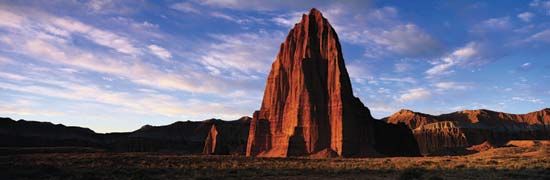
- Evolution: Many national parks actually began as national monuments. For example, Grand Canyon National Park and Capitol Reef National Park were both originally designated as national monuments before being redesignated as national parks.78
- Management: Both are managed by federal agencies, most notably the National Park Service, which oversees their rules and permits.76
Sources
- National Park Service - The contemporary NPS — Encyclopædia Britannica
- National Park Service — Encyclopædia Britannica
- National Park Service - Establishment of the NPS — Encyclopædia Britannica
- Antiquities Act of 1906 — Encyclopædia Britannica
- national monument — Encyclopædia Britannica
- National Park Service - Origins of the U.S. national park system — Encyclopædia Britannica
- Capitol Reef National Park — Encyclopædia Britannica
- national park: Top Questions — Encyclopædia Britannica
Published on · 3 min read