Hedgehog
Hedgehogs are native to a wide range of regions, including Eurasia (south of the taiga and tundra), most of Africa (excluding tropical rainforests), Asia…
Where are hedgehogs typically found in the wild, and what habitats do they prefer?
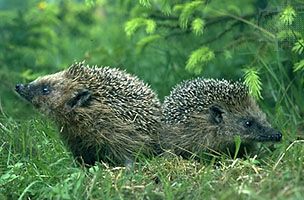
Hedgehogs are native to a wide range of regions, including Eurasia (south of the taiga and tundra), most of Africa (excluding tropical rainforests), Asia Minor, the Arabian Peninsula, and parts of India. One species has also been introduced to New Zealand.12
These insectivores are primarily terrestrial and occupy diverse environments depending on the species:1
- Forest and Grassland: The western European hedgehog typically inhabits forest margins, grasslands, scrub, hedgerows, and suburban gardens.1
- Arid Regions: Desert species, such as the desert hedgehog, survive in extremely arid areas like the Sahara and the Arabian Peninsula, where they concentrate around oases and vegetated wadis.1
Hedgehogs are nocturnal and shelter during the day beneath vegetation, in rock crevices, under overhanging rock ledges, or in burrows they either excavate themselves or occupy from other mammals like foxes and hares. They also construct large nests of dry vegetation in these sheltered locations.1
What is the diet of a hedgehog, and how do they forage for food?
Hedgehogs are opportunistic omnivores with a diverse diet. They primarily consume insects and other arthropods, including venomous spiders and scorpions. Their menu also extends to snails, slugs, frogs, toads, lizards, and snakes—even venomous ones—as well as bird eggs, nestlings, and fallen fruit.2
When foraging, hedgehogs rely heavily on their acute sense of smell to locate food. As they move through their environment, they root around in leaf litter and among plant roots, snuffling and snorting as they search. Once they detect prey, they grab it directly with their mouths. They manipulate their food solely with their mouths, often chewing with a noisy smacking of the jaws.2
Interestingly, hedgehogs exhibit a behavior known as “self-anointing” when they encounter unfamiliar substances or objects. They will lick or chew the item to produce copious, frothy saliva, which they then plaster over their spines and other parts of their body. The exact purpose of this behavior remains unknown.2
How do hedgehogs use their spines for protection, and what other defense mechanisms do they have?
Hedgehogs utilize their spines as a primary defense mechanism, but they also employ specific behavioral tactics to protect themselves from predators.
Defensive Use of Spines
Hedgehogs are covered in thousands of short, smooth spines, which are modified hairs. When threatened, a hedgehog will crouch, hiss, and erect these spines to deter attackers. Their most effective defense is the ability to curl into a tight, protective ball. This action is facilitated by a specialized muscle that encircles the body from neck to rump. When this muscle contracts, it acts like a drawstring, pulling the skin over the animal’s upperparts and tucking the head, legs, and soft belly inside. In this configuration, the spines become fully erect, creating a formidable, sharp barrier that protects the hedgehog’s vulnerable areas from most mammalian predators.12
Other Defense Mechanisms
Beyond their physical armor, hedgehogs rely on the following:
- Avoidance and Stealth: While they are not fast, hedgehogs are primarily nocturnal, which helps them avoid many diurnal predators. They spend their days hidden in secure locations such as burrows, rock crevices, or beneath dense vegetation.1
- Vocalizations: Hedgehogs may hiss when they feel threatened, serving as an initial warning to potential aggressors.1
- Limitations: Despite these defenses, hedgehogs remain vulnerable to certain predators, such as hawks, eagles, and owls, whose long, sharp talons and scaly legs allow them to bypass the hedgehog’s spiny exterior.1
How long do hedgehogs typically live in the wild versus in captivity?
Sorry, the Britannica knowledge base does not contain this information.
Sources
- Did you know? — Merriam-Webster
- hedgehog — Encyclopædia Britannica
- Avoidance behaviour - Protection reflexes, armour, and spines — Encyclopædia Britannica
Published on · 3 min read