Henequen
From the 1880s until the 1950s, henequen served as the primary crop and a cornerstone of the economy in the state of Yucatán. Extracted from the leaves of…
How did henequen impact the economy of the Yucatan Peninsula in the past?
From the 1880s until the 1950s, henequen served as the primary crop and a cornerstone of the economy in the state of Yucatán. Extracted from the leaves of the agave cactus, this fiber was essential for the global manufacture of rope and twine, products widely used in agriculture and shipping.123
During this period, production was largely concentrated on expansive plantations, though it later shifted to include cooperative ejidos (common lands) starting in the 1930s. The industry was so significant that it integrated many local Yucatec Maya people into the regional economy, often transitioning them from traditional subsistence farming into the fiber-processing workforce. While henequen remains a part of the region’s agricultural output today, the economy of the Yucatán Peninsula has since diversified, with services, manufacturing, and tourism becoming the dominant economic drivers.145
What role does henequen play in sustainable agriculture and eco-friendly product manufacturing?
Henequen (Agave fourcroydes) is a significant leaf fiber crop that offers potential benefits for sustainable agriculture and eco-friendly manufacturing due to its biological adaptations and material properties.36
Environmental Adaptations
As a member of the Agave genus, henequen is naturally suited to arid and semiarid environments. It utilizes a specialized photosynthetic pathway known as crassulacean acid metabolism (CAM), which allows the plant to fix carbon dioxide at night. This adaptation significantly limits water loss through leaf stomata, making the plant highly water-efficient and potentially suitable for cultivation in regions where water scarcity is a concern. Furthermore, various Agave species are currently being researched for their potential as bioenergy crops, which could contribute to renewable energy efforts.6
Eco-Friendly Material Applications
Henequen fiber is a durable, natural material that serves as a sustainable alternative to synthetic fibers in several applications:
- Agriculture and Shipping: The fiber is traditionally processed into rope and twine, which are essential for various agricultural and shipping needs.34
- Biodegradable Products: Locally produced coarse fabrics are used to create items such as bags, hammocks, and shoe soles, offering a natural, biodegradable option compared to plastic-based alternatives.3
What are the botanical characteristics of the henequen plant?
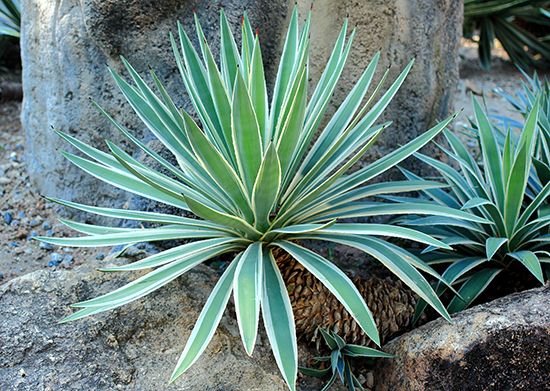
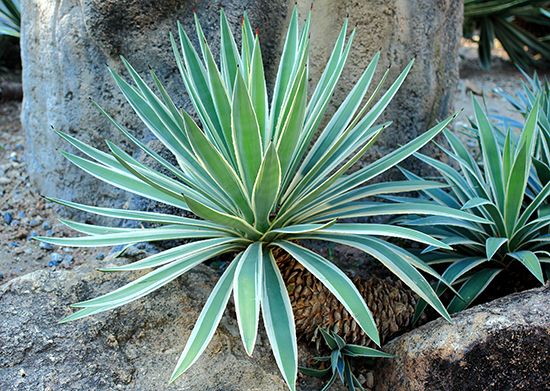
The henequen plant (Agave fourcroydes) is a leaf fiber species belonging to the asparagus family (Asparagaceae). Native to Mexico and Guatemala, it is a monocotyledonous plant characterized by the following features:
- Stalk and Leaves: The plant features a central stalk that grows to approximately 0.9 meters under cultivation. Its grayish-green, lance-shaped leaves grow directly from the stalk in a dense rosette. These leaves can reach up to 1.8 meters in length and 10–15 cm in width, edged with sharp teeth and tipped with a terminal spine.
- Flowering and Reproduction: The plant produces a flower stalk reaching up to 6 meters in height, bearing sterile, greenish-white flowers. Like other Agave species, the plant dies after flowering. While the stalk produces bulbils, commercial propagation is typically achieved by replanting clonal pups found at the base of the stalk.
- Fiber Composition: The leaves are strengthened by fiber bundles composed of sclerenchyma cells, which are rich in cellulose and lignin.
What is henequen and where does it primarily grow?
Henequen (Agave fourcroydes) is a fiber plant belonging to the asparagus family (Asparagaceae). It is a monocotyledonous plant that produces a strong, lustrous leaf fiber used primarily for manufacturing rope, twine, and various coarse fabrics like bags and hammocks.38
The plant is native to Mexico and Guatemala. In Mexico, it is particularly associated with the northern Yucatán region, which served as the primary commercial source for the fiber for many years following its introduction there in the 1880s. Additionally, the plant was introduced to Cuba during the 19th century, where it became a significant fiber crop by the 1920s.34
Sources
- Yucatán Peninsula — Encyclopædia Britannica
- Yucatán — Encyclopædia Britannica
- henequen — Encyclopædia Britannica
- henequen — Merriam-Webster
- Yucatec Maya — Encyclopædia Britannica
- agave — Encyclopædia Britannica
- Leaf fiber — Encyclopædia Britannica
- Mexico - Agriculture — Encyclopædia Britannica
Published on · 3 min read