Monocotyledon
The leaves of monocotyledons and eudicots (formerly known as dicots) differ significantly in their development, venation, and overall anatomy.
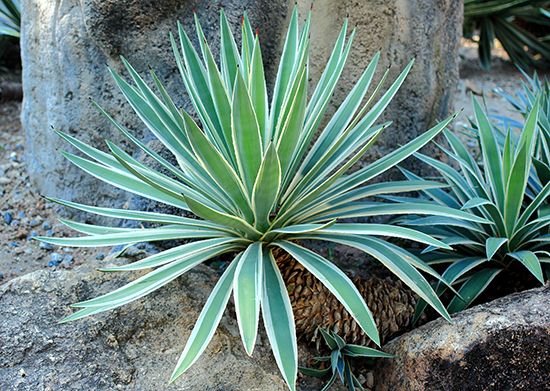
How do the leaves of monocotyledon plants differ from those of dicotyledons?
The leaves of monocotyledons and eudicots (formerly known as dicots) differ significantly in their development, venation, and overall anatomy.12
Key Differences
- Venation: Eudicot leaves typically exhibit a netlike venation pattern, whereas monocot leaves are characterized by longitudinally parallel veins.12
- Development: Eudicot leaves grow from a leaf primordium and mature from the tip toward the base. In contrast, monocot leaves grow from a basal intercalary meristem, which allows them to continue growing even after the tip is removed, such as when mowing grass.1
- Stomata: In eudicots, stomates are generally scattered across the leaf surface in various orientations. In monocots, they are typically arranged in rows between the parallel veins.12
- Morphology: Monocot leaves often develop from a ring-shaped buttress that encloses the stem, resulting in leaves that may be radial or oriented in the same plane as the stem. Eudicot leaves typically expand at a right angle to the stem.1
What are the key characteristics that distinguish monocotyledons from dicotyledons?
Monocotyledons (monocots) and eudicotyledons (eudicots) are the two primary groups of angiosperms. While they share many fundamental biological processes, they are distinguished by several key physical and developmental characteristics.
Key Distinctions
Characteristic
Monocotyledons
Eudicotyledons
Seed Leaves
One
cotyledon
Two cotyledons
Leaf Venation
Longitudinally parallel veins
Netlike (meshlike) pattern
Root System
Fibrous root system
(adventitious)
Taproot
system
Vascular Bundles
Scattered throughout the
stem
Arranged in a continuous ring
Flower Parts
Multiples of three
Multiples of four or five
Pollen
Single aperture (monosulcate)
Three apertures (tricolpate)
Structural and Evolutionary Context
The fundamental differences between these groups extend to their internal anatomy and growth patterns. Monocots lack a typical vascular cambium, meaning they generally cannot undergo secondary thickening to increase stem diameter, unlike many woody eudicots. Additionally, monocot leaves develop from a basal meristem, which allows them to continue growing even after the tip is damaged or removed.314
In contrast, eudicots are characterized by a more complex vascular arrangement that supports secondary growth, enabling many species to become woody trees or shrubs. While these categories were once simply divided into monocots and dicots, modern evolutionary studies have clarified that “typical” dicots evolved within a broader lineage, leading to the classification of eudicots as a distinct, monophyletic group.15

What are some common examples of monocotyledon plants in everyday life?
Monocotyledons are a diverse group of flowering plants that play a vital role in our daily lives, particularly as primary food sources and ornamental plants.
Common Examples in Everyday Life
- Cereal Crops: Many of the world’s most important staple foods belong to the Poaceae (grass) family. This includes rice, wheat, corn, barley, oats, millet, and sugarcane.389
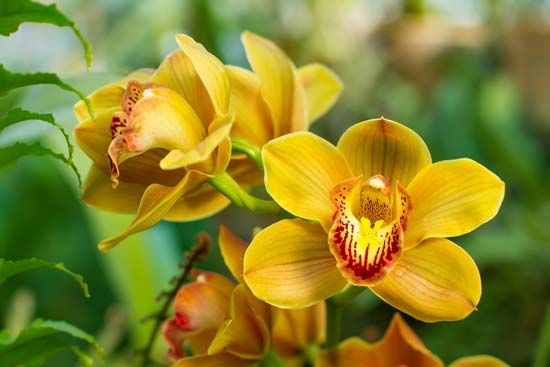
- Ornamental and Garden Plants: Many popular flowers and garden staples are monocots, such as lilies, orchids, and irises.3
- Houseplants: Several common indoor plants are monocots, including various philodendrons, peace lilies, and bromeliads.10
- Landscaping: The grasses used for lawns and turf, such as Bermuda grass and bluegrass, are also members of the monocot group.8
- Other Notable Plants: Bamboo and palms are also prominent examples of monocotyledons.38
What is the significance of the term ‘monocotyledon’ and how does it relate to seed structure?
The term monocotyledon (often shortened to monocot) is significant because it identifies one of the two primary classes of angiosperms, defined by the structure of the plant embryo within the seed.1213
Relation to Seed Structure
The classification is based specifically on the number of cotyledons—or “seed leaves”—present in the embryo. While eudicots possess two cotyledons, monocotyledons are characterized by having only a single cotyledon.131412
This structural difference is fundamental to how the seedling accesses nutrients during germination:
- Nutrient Mobilization: In many monocots, the single cotyledon functions as a specialized absorbing organ. It secretes enzymes to mobilize stored reserves from the endosperm and delivers them to the developing plant.1314
- Specialized Adaptations: In grasses, for example, this cotyledon is modified into a “shield” known as a scutellum, which sits between the embryo and the endosperm to facilitate the transfer of nutrients.1314
Beyond the seed, this distinction typically correlates with other developmental traits, such as parallel-veined leaves and floral organs arranged in multiples of three.12
Sources
- Angiosperm - Leaves — Encyclopædia Britannica
- Eudicotyledon — Encyclopædia Britannica
- Monocotyledon — Encyclopædia Britannica
- Vascular system — Encyclopædia Britannica
- Angiosperm - Eudicots — Encyclopædia Britannica
- Seed - Angiosperm seeds — Encyclopædia Britannica
- Root — Encyclopædia Britannica
- list of plants in the family Poaceae — Encyclopædia Britannica
- monocot — Merriam-Webster
- houseplant - Foliage plants — Encyclopædia Britannica
- Poaceae — Encyclopædia Britannica
- monocotyledon — Merriam-Webster
- Cotyledon — Encyclopædia Britannica
- Angiosperm - General characteristics — Encyclopædia Britannica
Published on · 3 min read