Hida Range
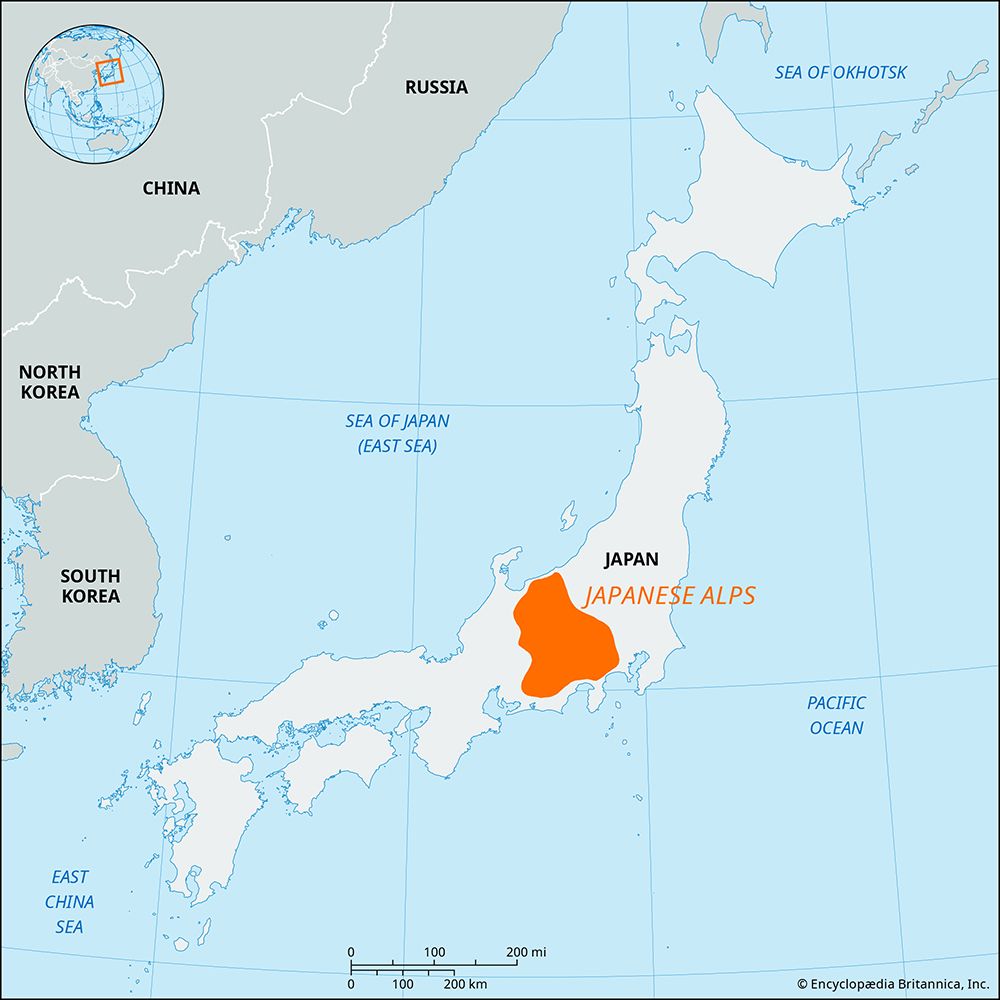
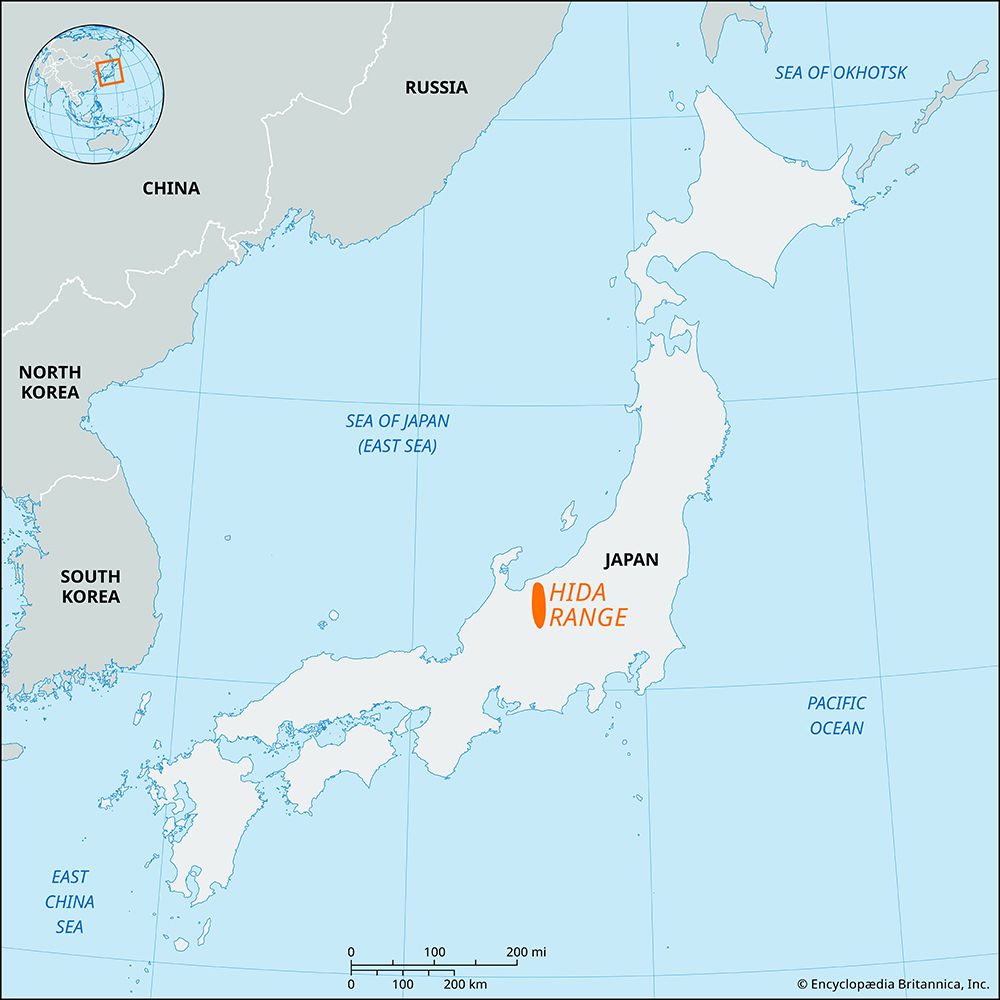
The Hida Range, often referred to as the Northern Alps, holds significant cultural and recreational importance for the local Japanese population. Primarily…
What is the cultural significance of the Hida Range to the local Japanese population?
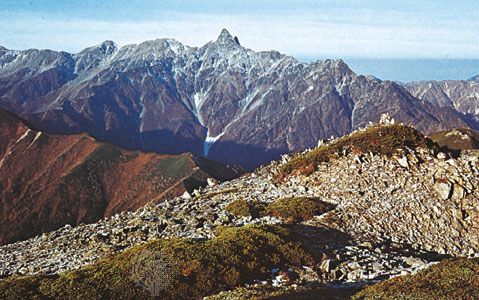
The Hida Range, often referred to as the Northern Alps, holds significant cultural and recreational importance for the local Japanese population. Primarily protected within the Chūbu Sangaku National Park, the range serves as a premier destination for mountaineering and skiing, drawing outdoor enthusiasts to its rugged peaks and deep river gorges.1
Beyond its role in recreation, the range is integral to the region’s infrastructure and natural identity. Its rivers, including the Ōtaki and the Kurobe, are vital for the production of hydroelectric power, supporting the energy needs of the surrounding prefectures. While the mountains are geologically defined by their granitic foundation and volcanic activity, such as Mount Ontake, they are culturally recognized as a central pillar of the “Central Mountain Knot” of Japan.1
Are there any notable hiking trails or tourist attractions in the Hida Range?
The Hida Range, widely known as the Northern Alps, is a premier destination for outdoor enthusiasts, with nearly its entire area protected within Chūbu Sangaku National Park.12
The region is celebrated for its rugged terrain, which offers extensive opportunities for:
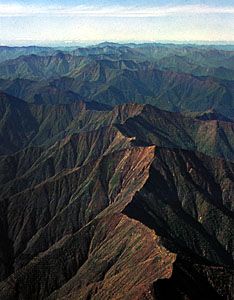
- Mountaineering: The range features some of Japan’s highest and most challenging peaks, including Mount Hotaka (3,190 meters) and Mount Yariga (3,180 meters). The landscape is defined by dramatic geological features such as deep river gorges, cirques, and moraines.12
- Skiing: As a central hub for winter sports, the mountains provide significant terrain for skiing, supported by the region’s high elevation and heavy snowfall.12
- Volcanic Exploration: Visitors can explore volcanic peaks such as Mount Ontake and Mount Norikura, which rise above the range’s granitic foundation.1
The area is also noted for its striking natural scenery, ranging from precipitous cliffs at the Sea of Japan to the steep fault scarps along its eastern margin.1
What are the major peaks in the Hida Range, and how tall are they?
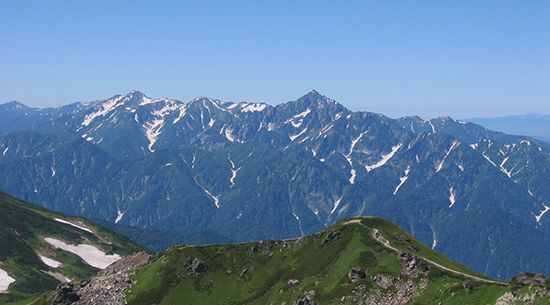
The Hida Range, often called the Northern Alps, contains several prominent peaks located primarily in the center of the mountain group.
The major peaks and their elevations are as follows:
Peak
Elevation (Feet)
Elevation (Meters)
Mount Hotaka
10,466
3,190
Mount Yariga
10,433
3,180
Mount Ontake
10,049
3,063
Mount Norikura
9,928
3,026
These mountains are characterized by their rugged, granitic foundations, with recent volcanic activity contributing to the formation of peaks like Mount Ontake and Mount Norikura.1
How does the Hida Range affect the local climate and weather patterns in the region?
The Hida Range, often referred to as the Northern Alps, acts as a significant physical barrier that profoundly influences the regional climate of central Japan.13
As part of the mountainous backbone of the islands, the range interrupts the flow of monsoonal winds, creating a stark contrast in weather between the two sides of the mountains:1
- Sea of Japan Coast: During the winter, cold and dry air masses originating from the Asian mainland travel across the Sea of Japan, where they pick up significant moisture. When this air encounters the Hida Range, it is forced to rise and cool, resulting in heavy snowfall and gloomy, overcast conditions along the western coast.14
- Pacific Coast: Conversely, as the air descends the eastern slopes of the mountains, it loses its moisture and warms, leading to bright, dry, and windy weather on the Pacific side of the range.1
While annual precipitation and temperature averages are relatively similar on both coasts, these values drop noticeably within the high-altitude, mountainous interior of the range itself.1
Sources
- Hida Range — Encyclopædia Britannica
- Japanese Alps — Encyclopædia Britannica
- Japan - Climate — Encyclopædia Britannica
- Sea of Japan / East Sea: Top Questions — Encyclopædia Britannica
- Japan - The major physiographic regions — Encyclopædia Britannica
Published on · 3 min read