Hogweed
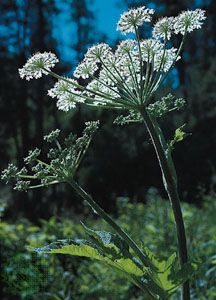
Hogweed refers to two primary species within the cow parsnip genus, both of which have established themselves beyond their native ranges.
How widespread are hogweed plants, and in what types of environments do they typically grow?
Hogweed refers to two primary species within the cow parsnip genus, both of which have established themselves beyond their native ranges.1
- Giant hogweed: Native to the Caucasus, this species was introduced to Canada and the United States as an ornamental plant in the early 1900s. It is now considered an invasive species in those regions as well as parts of Europe, including the United Kingdom.12
- Common hogweed: Native to Eurasia, this species has naturalized in eastern North America.1
While specific environmental preferences are not detailed in the provided text, these plants are herbaceous biennials or perennials that thrive in various landscapes where they have been introduced. Due to the presence of toxic furocoumarins, which can cause severe phytophotodermatitis upon contact with sunlight, caution is essential when encountering these plants.12
What are the key physical characteristics of hogweed plants in the Heracleum genus?
Plants in the Heracleum genus, which includes hogweed and cow parsnip, share several distinct physical characteristics:
- Growth Habit: These plants are herbaceous biennials or perennials that can grow quite tall, ranging from approximately 1.8 meters (6 feet) for common hogweed to 4 meters (13 feet) for giant hogweed.13
- Leaves and Stems: They possess large compound leaves. Stems are often stout and hollow, with giant hogweed specifically noted for having a red-spotted stem, while common hogweed features hairs on its stems.1
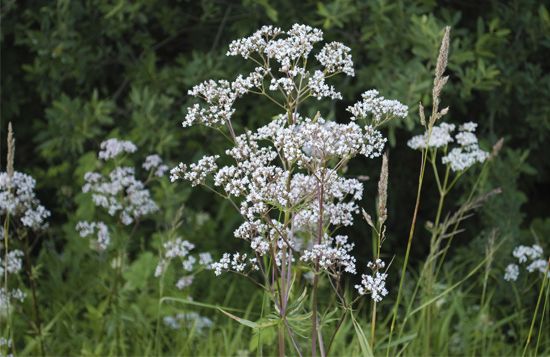
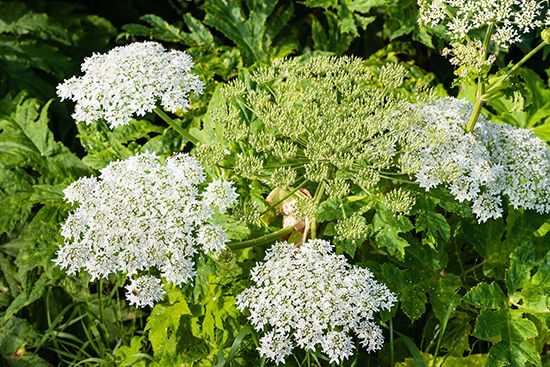
- Flowers: The plants produce small, five-petaled flowers arranged in large, dense, flat-topped clusters known as umbels. These inflorescences can be white, pinkish, or purplish, with giant hogweed clusters reaching up to 0.5 meters (20 inches) in diameter.134
- Fruit: The genus is characterized by having wing-margined fruit.4
Because these plants contain toxic furocoumarins, they can cause severe skin irritation or blistering when sap contacts the skin and is exposed to sunlight.13
What are the differences between common hogweed and giant hogweed species?
Common hogweed (Heracleum sphondylium) and giant hogweed (Heracleum mantegazzianum) are both members of the parsley family, but they differ significantly in size, appearance, and toxicity.
Feature
Common Hogweed
Giant Hogweed
Height
Reaches about 1.8 meters (6 feet)
Can reach 4 to 6 meters (13–20 feet)
Stem
Large, hollow, and hairy
Stout, hollow, and red- or purple-spotted
Flower Clusters
Pink to white; up to 20 cm (8 inches) in diameter
White; up to 0.5–0.8 meters (20–30 inches) in diameter
Toxicity
Can cause skin irritation
Highly toxic; causes severe blistering and potential blindness
Both species contain furocoumarins, which cause phytophotodermatitis—a reaction where skin exposed to the plant’s sap develops severe blisters upon contact with sunlight. While common hogweed is less dangerous, it is essential to exercise caution when handling either plant to avoid painful skin reactions.1
What is the taxonomic classification of hogweed within the Heracleum genus?
Hogweed belongs to the genus Heracleum, which is commonly known as the cow parsnip genus. Within the broader biological classification, this genus is placed in the parsley family (Apiaceae), which falls under the order Apiales.15
The genus Heracleum is widely distributed and comprises nearly 60 species of aromatic, herbaceous plants. Two primary species of hogweed are recognized within this classification:15
- Giant hogweed (H. mantegazzianum): A large, invasive species native to the Caucasus.1
- Common hogweed (H. sphondylium): Also known as eltrot, this species is native to Eurasia and has naturalized in parts of North America.1
These plants are characterized by their large compound leaves and their distinctive flowers, which are arranged in dense, flat-topped clusters called umbels.15
Sources
- hogweed — Encyclopædia Britannica
- giant hogweed — Merriam-Webster
- cow parsnip — Encyclopædia Britannica
- Heracleum — Merriam-Webster
- Apiaceae — Encyclopædia Britannica
Published on · 3 min read