Poison Sumac
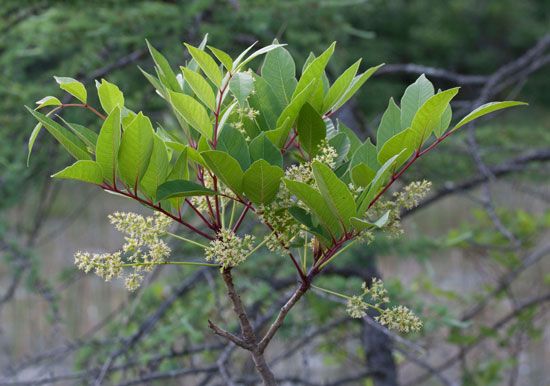
Poison sumac (Toxicodendron vernix) is a poisonous shrub or small tree native to the swampy, acidic soils of eastern North America. Belonging to the cashew…
What is poison sumac?
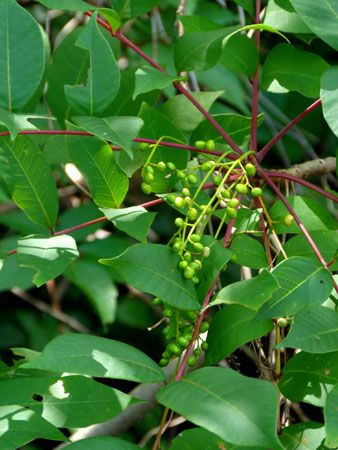
Poison sumac (Toxicodendron vernix) is a poisonous shrub or small tree native to the swampy, acidic soils of eastern North America1. Belonging to the cashew family, it is considered more allergenic than poison ivy or western poison oak.12
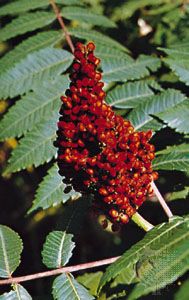
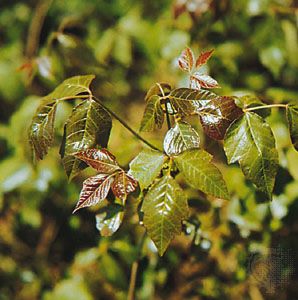
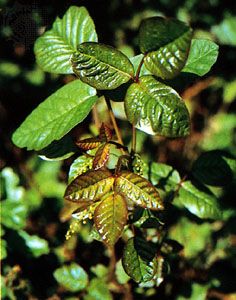
The plant’s clear sap contains urushiol, which causes contact dermatitis—a painful, itchy inflammation that can last for weeks. Unlike true sumacs (genus Rhus), which feature upright, fuzzy red fruit clusters, poison sumac produces drooping, whitish, waxy drupes. Its compound leaves consist of 7–13 smooth-margined leaflets that turn a vibrant red-orange in the autumn.21
It is important to exercise caution when identifying plants in wetland environments, as the sap remains toxic even after the plant has been damaged or has shed its leaves.2
What is urushiol and how does it affect the skin?
Urushiol is an oily, toxic substance found in the resinous juice of plants such as poison ivy, poison oak, and poison sumac. Chemically, it is a mixture of catechol derivatives with long carbon side chains.456
When urushiol contacts the skin, it triggers a Type IV hypersensitivity reaction, leading to contact dermatitis. The process occurs as follows:1
- Sensitization: Urushiol diffuses into the skin and binds to body proteins, altering them so the immune system perceives them as foreign antigens.1
- Immune Response: These protein complexes migrate to lymph nodes, where they stimulate specific T cells to multiply.1
- Inflammation: When these T cells encounter the antigen again at the site of contact, they induce a severe, itchy, and painful inflammatory response that can persist for days or weeks.516
Because urushiol is nearly nonvolatile, it can remain potent on clothing, tools, or animal fur for up to a year.5
How can you distinguish poison sumac from non-poisonous sumac species?
Distinguishing between poison sumac and non-poisonous sumac species (genus Rhus) is essential for safety, as poison sumac is highly allergenic. You can identify the differences primarily through their fruit and habitat:12
- Fruit Clusters: This is the most reliable indicator. True sumacs produce dense, upright clusters of fuzzy, reddish drupes. In contrast, poison sumac features loose, drooping clusters of whitish or greenish-white, waxy drupes.123
- Habitat: Poison sumac is specifically adapted to swampy, acidic soils in eastern North America. If you encounter a sumac-like plant in a wet, boggy area, exercise extreme caution.12
- Leaf Margins: Poison sumac leaves consist of 7–13 leaflets that have smooth, entire margins. While many non-poisonous sumacs also have compound leaves, they often exhibit different textures or serrated edges depending on the species.12
Always remember that poison sumac sap contains urushiol, which can cause severe contact dermatitis upon contact.12
What are some other common plants that cause contact dermatitis?
Beyond plants containing urushiol, several other species can cause painful skin reactions through different chemical mechanisms.
Plants That Cause Skin Irritation
- Manchineel: Native to Florida and the Caribbean, this tree contains a milky sap rich in phorbol. Contact with the sap can cause severe blistering, and even standing under the tree during rain can result in skin burns as the water collects the toxin.7
- Hogweed and Cow Parsnip: These plants contain furocoumarins. Contact with their sap leads to phytophotodermatitis, where the skin becomes hypersensitive to sunlight, resulting in severe blisters and potential scarring.789
- Gympie gympie: Found in Australia and Indonesia, this stinging tree is among the most dangerous in the world. Its leaves are covered in fine hairs that inject toxins, causing intense, long-lasting pain that can persist for months.7
- Stinging Nettle: This common plant features needle-like hairs that inject a mixture of formic acid, histamine, and other irritants, triggering a burning, itchy rash.710
- Tread-softly: Also known as noseburn, this herb is covered in stinging hairs that release irritant compounds upon contact, causing immediate stinging and itching.7
- Pain bush: Native to southern Africa, this shrub exudes a creamy sap containing heptadecyl catechols, which causes a swollen, blistered rash.7
Sources
- poison sumac — Encyclopædia Britannica
- poison sumac — Merriam-Webster
- sumac — Encyclopædia Britannica
- urushiol — Merriam-Webster
- poison ivy — Encyclopædia Britannica
- immune system disorder - Contact hypersensitivity and dermatitis — Encyclopædia Britannica
- 7 Dangerous Plants You Should Never Touch — Encyclopædia Britannica
- Stinging nettle — Encyclopædia Britannica
- cow parsnip — Encyclopædia Britannica
- hogweed — Encyclopædia Britannica
Published on · 3 min read