Hominidae
The family Hominidae comprises both humans and the great apes, categorized into two subfamilies: Homininae (humans, chimpanzees, bonobos, and gorillas) and…
How do the different genera within Hominidae (such as Homo, Pan, Gorilla, and Pongo) differ from each other?
The family Hominidae comprises both humans and the great apes, categorized into two subfamilies: Homininae (humans, chimpanzees, bonobos, and gorillas) and Ponginae (orangutans). While these genera share complex cognitive traits, such as self-recognition in mirrors, they are distinguished by significant anatomical and behavioral differences.123
Key Genera Differences
- Homo: Characterized by a relatively large cranial capacity, a habitual erect posture, and a striding bipedal gait. Members of this genus possess fully opposable thumbs and hands capable of precision grips, enabling the creation of sophisticated, standardized tools.4
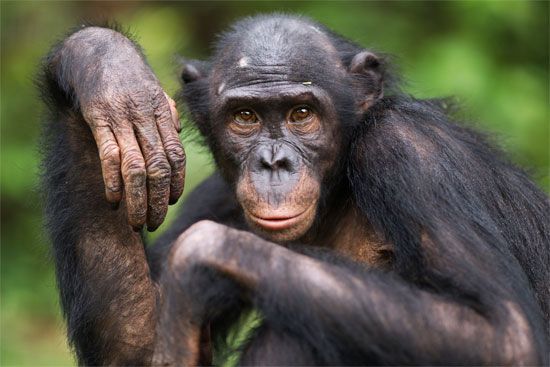
- Pan (Chimpanzees and Bonobos): These African great apes are the closest living relatives to humans. They are primarily arboreal and terrestrial, moving on the ground via quadrupedal knuckle-walking. They are highly social, living in large groups, and demonstrate the ability to reason abstractly and use simple tools.253
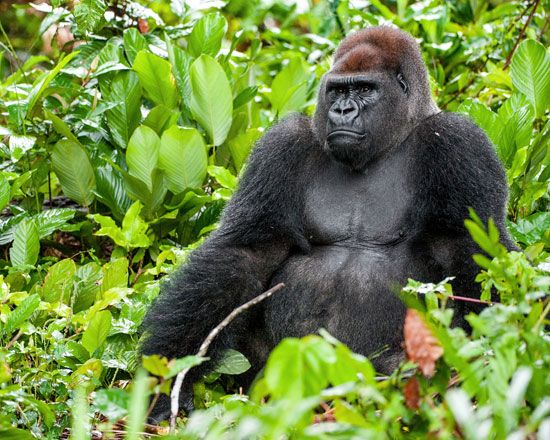
- Gorilla: Also members of the subfamily Homininae, gorillas are the largest of the great apes. Like Pan, they utilize knuckle-walking for ground locomotion. They are distinct in their social structure and physical size compared to other hominids.23
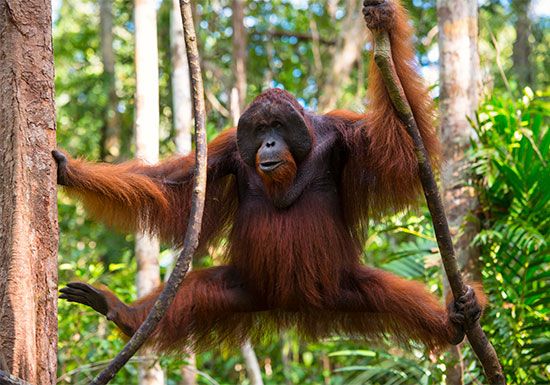
- Pongo (Orangutans): These Asian great apes are more distantly related to humans than the African apes and are placed in the subfamily Ponginae. They are primarily arboreal and are generally solitary compared to the more social African apes.123
What are some of the extinct species that belonged to the Hominidae family?
The family Hominidae includes a diverse array of extinct species that provide insight into the evolutionary history of the human lineage. These extinct members, often referred to as hominins, are known primarily through the fossil record discovered in Africa.17
Notable Extinct Hominid Genera and Species
- Australopithecus: A group of extinct primates that lived between 4.4 and 1.4 million years ago. Famous specimens include “Lucy” (A. afarensis) and A. sediba.89
- Homo: This genus includes several extinct species that are closely related to modern humans, such as:
- H. habilis: An early species associated with the development of stone tools.110
- H. erectus: Known for various regional forms, including Java man, Peking man, and Lantian man.19
- H. neanderthalensis: The well-known Neanderthals.19
- H. heidelbergensis: Known from specimens like the Heidelberg jaw.9
- H. naledi: A species discovered in the Rising Star cave complex.910
- H. floresiensis: A distinct, small-bodied species.9
- Paranthropus: Often called the “robusts,” these species (such as P. boisei) were characterized by massive jaws and large cheek teeth adapted for a vegetarian diet.897
- Ardipithecus: Includes early species like Ar. kadabba and Ar. ramidus, which exhibit a mix of apelike and bipedal traits.86
- Other Genera: Additional extinct groups include Sahelanthropus tchadensis, Orrorin, Kenyanthropus, Dryopithecus, Ramapithecus, and Sivapithecus.189
What is the evolutionary history of the Hominidae family, and when did it first appear?
The evolutionary history of the Hominidae family is a complex narrative centered in Africa, where natural selection shaped the lineage leading to modern humans (Homo sapiens).
Evolutionary Origins
The Hominidae family, which includes humans and the great apes, diverged from the superfamily Hominoidea approximately 18 million years ago. The specific lineage leading to modern humans separated from the lineage leading to chimpanzees and bonobos about 7 million years ago.124
Key Evolutionary Phases
Paleoanthropologists generally categorize the human evolutionary journey into several major phases:
- Early Hominins: The earliest known genus within the human lineage is Ardipithecus, which lived between 5.8 and 4.4 million years ago. Other early candidates for the base of the human family tree include Sahelanthropus and Orrorin) and Orrorin.131214
- Australopithecus: Appearing around 4.2 million years ago, this genus represents a fully bipedal phase of human evolution. Species such as Au. afarensis are considered pivotal ancestors.46
- Homo: Emerging between 3 and 2 million years ago, the genus Homo is defined by increased brain size, reduced tooth size, and the development of sophisticated tool use.65
This evolution was driven by significant climatic shifts during the Miocene Epoch, which transformed forests into open woodlands and grasslands, favoring adaptations like bipedalism adaptations like bipedalism.14
What are the main characteristics that define the Hominidae family?
The Hominidae family, commonly known as hominids, comprises human beings and the great apes—specifically gorillas, chimpanzees, bonobos, and orangutans.132
As members of the superfamily Hominoidea, all hominids share several fundamental physical characteristics:
- Erect Posture: The ability to stand or sit erect with great facility.13
- Skeletal Structure: Broad chests with shoulder blades positioned on the back, allowing for all-round rotatory movement at the shoulder.13
- Wrist Flexibility: A meniscus (fibrocartilage pad) between the ulna and carpal bones provides enhanced wrist mobility.13
- Spinal Adaptation: A shortened lumbar spine consisting of only four to six vertebrae.13
- Absence of Tail: Hominids lack an external tail; the remnant vertebrae are fused into an in-turned bony shelf known as the coccyx.13
Beyond physical traits, members of this family exhibit advanced cognitive attributes, most notably the ability to recognize themselves in mirrors, which is widely interpreted as an indicator of self-awareness.2
Sources
- hominin — Encyclopædia Britannica
- Hominidae — Encyclopædia Britannica
- ape — Encyclopædia Britannica
- Ardipithecus — Encyclopædia Britannica
- Homo — Encyclopædia Britannica
- Australopithecus - Quality of the fossil record — Encyclopædia Britannica
- Australopithecus — Encyclopædia Britannica
- Australopithecus - Ardipithecus kadabba and Ar. ramidus — Encyclopædia Britannica
- list of primates — Encyclopædia Britannica
- Australopithecus - Transition to Homo — Encyclopædia Britannica
- Homo sapiens - Evolution — Encyclopædia Britannica
- Ardipithecus - The puzzle of human origins — Encyclopædia Britannica
- Hominoidea — Encyclopædia Britannica
- human evolution - Background and beginnings in the Miocene — Encyclopædia Britannica
Published on · 4 min read