Hummingbird
Hummingbirds have evolved remarkable adaptations to thrive across diverse environments in the Americas, ranging from tropical regions to high-altitude…
How have hummingbirds adapted to different environments across the Americas?
Hummingbirds have evolved remarkable adaptations to thrive across diverse environments in the Americas, ranging from tropical regions to high-altitude mountains and temperate zones.12
Physiological and Behavioral Adaptations
- Flight Mechanics: Their unique wing structure, which articulates only at the shoulder, allows for hovering, backward, and vertical flight. This agility is essential for accessing nectar from various flower shapes.134
- Metabolic Control: To survive high energy demands, hummingbirds exhibit circadian torpor, a state of lowered metabolic rate that conserves energy during periods of inactivity or food scarcity.5
- Specialized Morphology: Their bills are highly adapted to specific floral sources, with shapes ranging from short and straight to long, slender, or curved, depending on the species’ primary food source.14
Environmental Distribution
While most species are concentrated in the tropics where flowers bloom year-round, some have adapted to temperate climates by extending their ranges into North America or occupying high-altitude habitats in the Andes. These adaptations allow them to exploit diverse ecological niches across the New World.124
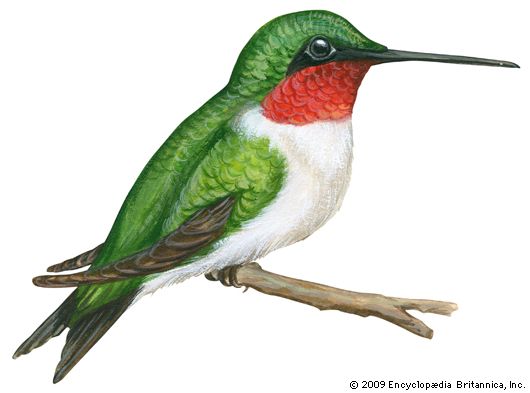
What is the smallest known species of hummingbird?
The smallest known species of hummingbird is the bee hummingbird (Mellisuga helenae), which is native to Cuba and the Isle of Pines.61
Measuring slightly more than 5.5 cm (2.2 inches) in length and weighing approximately 2 grams, this species holds the title of the smallest living bird in the world. It is also considered one of the smallest warm-blooded vertebrates, ranking alongside pygmy shrews in size. Because of its minute stature, the bee hummingbird possesses an extremely rapid wing-beat rate to maintain its flight and hovering capabilities.1
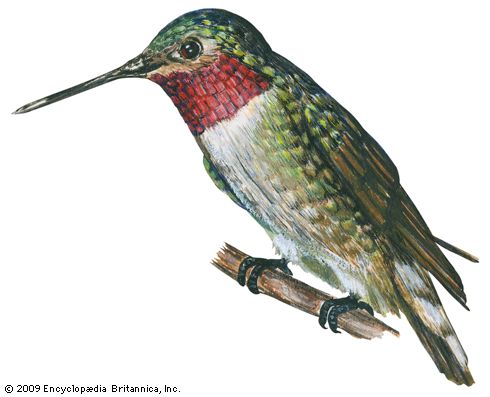
What is the typical diet of hummingbirds and how do they feed?
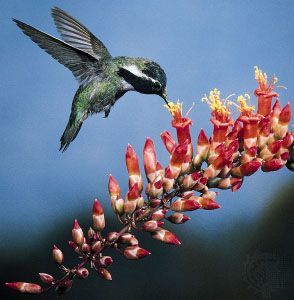
Hummingbirds have a high-energy lifestyle that requires frequent feeding to maintain their metabolism. Their diet consists primarily of nectar from flowers, supplemented by insects and spiders for essential nutrients. To meet their significant energy demands, a hummingbird may need to eat every 15 to 20 minutes and can visit up to 1,000 flowers in a single day.471
Feeding Mechanics
- Specialized Anatomy: Hummingbirds possess long, slender, and often tubular bills that are specifically adapted to extract nectar from various flower shapes. Their tongues are also specialized, often featuring brush-like tips or tube shapes to efficiently gather food.147
- Flight Agility: Because they typically feed while hovering, their unique wing structure—which connects to the body only at the shoulder—is critical. This allows them to maintain precise stability in the air, move in any direction, and maneuver around flowers to access nectar.84
- Foraging Behavior: They rely on their keen vision to locate flowers, which are often brightly colored (particularly red) and lack scent, as birds generally have a poorly developed sense of smell. While some hummingbirds defend their feeding territories aggressively, others may feed alongside different species in areas where food is abundant.745
What are some interesting facts about hummingbird nesting and reproduction?
Hummingbird reproduction is characterized by unique behaviors and specialized nesting techniques. Here are some interesting facts regarding their nesting and reproductive habits:
- Lack of Pair Bonds: Most hummingbird species do not form pair bonds. Instead, the male typically defends a territory and performs elaborate display flights—often involving swoops, dashes, and sudden stops—to attract females. In these displays, the male may hover in front of the female to showcase the iridescence of his gorget (throat feathers).1
- Nest Construction: Hummingbirds build tiny, cup-shaped nests using a combination of plant fibers, spider webs, lichens, and moss. These are typically attached to branches, twigs, or rock ledges. Some species, known as hermits, construct nests that hang from the undersides of cave roofs or ledges, using mud and careful weighting to keep the nest level.1
- Egg Characteristics: Hummingbirds lay the smallest eggs of any bird species. A clutch usually consists of two elliptical white eggs, which are proportionately equal to about 10 percent of the female’s body weight.1
- Parental Care: In the majority of species, the female assumes all parental duties. The young are hatched blind and naked and are fed by regurgitation. The time from laying to fledging is generally about three weeks, though this duration is often correlated with the availability of food.1
Sources
- Hummingbird — Encyclopædia Britannica
- Dormancy - Energy conservation — Encyclopædia Britannica
- Apodiform - Distribution and abundance — Encyclopædia Britannica
- How fast do hummingbirds fly? — Encyclopædia Britannica
- Apodiform - Ecology — Encyclopædia Britannica
- bee hummingbird — Merriam-Webster
- 11 Questions About Birds Answered — Encyclopædia Britannica
- Pollination - Birds — Encyclopædia Britannica
- Reproductive behaviour - Parental care — Encyclopædia Britannica
Published on · 4 min read