Hop
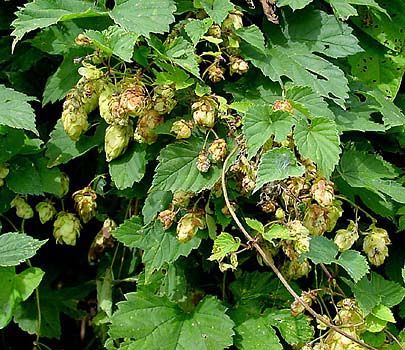
The hop plant belongs to the genus Humulus within the hemp family (Cannabaceae). There are two primary species of hops:
What is the scientific name and classification of the hop plant?
The hop plant belongs to the genus Humulus within the hemp family (Cannabaceae). There are two primary species of hops:12
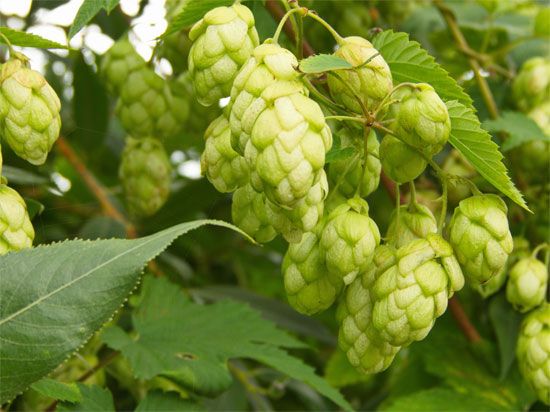
- Common hop (Humulus lupulus): This is the species widely cultivated in the brewing industry, where its dried female flower clusters, or cones, are used to provide bitterness and aroma.12
- Japanese hop (Humulus japonicus): This is a quick-growing annual species often utilized as a screening vine.12
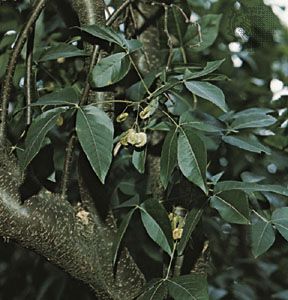
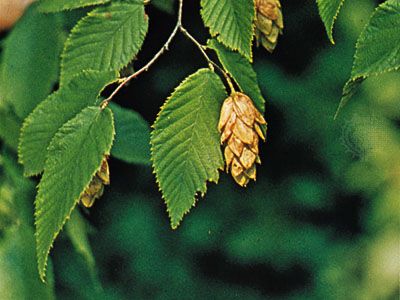
While the “hop tree” (Ptelea trifoliata) shares a similar name, it is a distinct plant belonging to the rue family (Rutaceae) and is not related to the brewing hop.3

How are hops used in the brewing industry, and what flavors do they impart to beer?
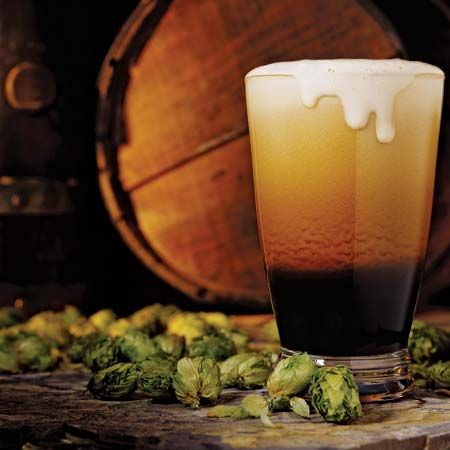
In the brewing industry, the dried female flower clusters, or cones, of the common hop (Humulus lupulus) are essential ingredients used for over 1,200 years. These cones contain glands filled with bitter resins and essential oils, which are extracted by boiling them in wort.14
Hops serve two primary functions in beer:
- Flavor and Aroma: The characteristic bitter flavor of beer is derived from α\alpha-acids found in the hop resins. During the boiling process, these acids are isomerized by heat into iso-α\alpha-acids. Additionally, the essential oils within the cones provide a delicate, distinct hop aroma.41
- Preservation: Beyond their sensory contributions, hop constituents act as a preservative, helping to maintain the quality and stability of the finished beverage.1
Brewers may add hops as whole dried cones, in a compressed powdered form for more efficient extraction, or as extracts processed with solvents like liquid carbon dioxide.4
How long does it take for a hop plant to mature and produce usable hops?
The common hop (Humulus lupulus) is a long-lived herbaceous perennial that produces new vines, or bines, each season. While the bines grow rapidly to reach lengths of up to 8 meters (26 feet) within a single growing season, they die back after reaching maturity and producing their flower clusters, known as cones.1
The plant requires a sturdy trellis system for support as it matures. Once the hop cones reach full maturity, they are harvested—either by hand or machine—and must be dried in kilns to reduce their high moisture content before they are suitable for use in the brewing industry.1
How are hops harvested and processed for commercial use?
Commercial hops are harvested when the female flower clusters, or cones, reach full maturity. This process is performed either by hand or through the use of specialized machinery.1
Because freshly picked hop cones have a high moisture content, they must undergo a specific post-harvest process to ensure they are suitable for the brewing industry:
- Drying: The cones are placed in kilns to reduce their moisture content.1
- Curing and Baling: Once dried, the hops are cured and baled, which prepares them for marketing and distribution.1
In the brewery, these processed hops are utilized in several forms:
- Whole Cones: Traditionally added directly to the boiling wort.4
- Compressed Hops: Often used in a powdered, compressed form to allow for more efficient extraction of bitter resins and essential oils.4
- Extracts: Hop components can be extracted using solvents, such as liquid carbon dioxide, and added to the wort or the finished beer.4
Sources
- Hop — Encyclopædia Britannica
- hop tree — Encyclopædia Britannica
- Cannabaceae — Encyclopædia Britannica
- Beer - Hops — Encyclopædia Britannica
- Beer - Yeast — Encyclopædia Britannica
- Beer - Maturation and packaging — Encyclopædia Britannica
Published on · 3 min read