Hop-hornbeam
The hop-hornbeam (genus Ostrya) is a group of approximately seven species of deciduous ornamental trees belonging to the birch family. Native to Eurasia and…
What is hop-hornbeam?
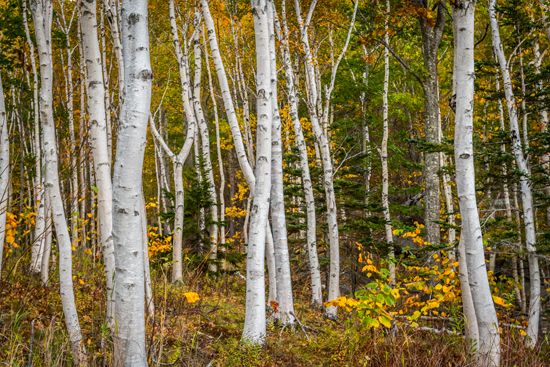
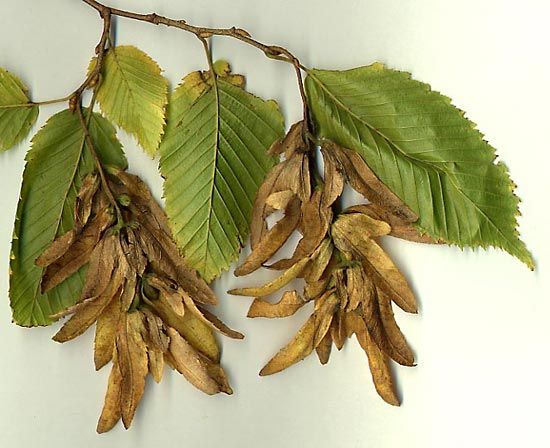
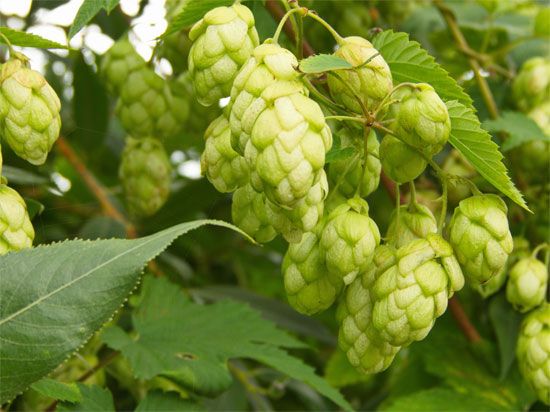
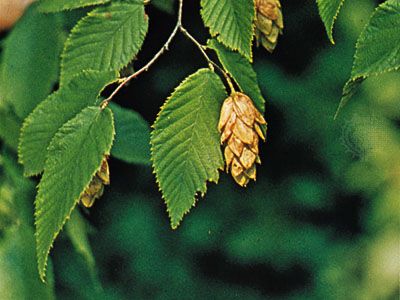
The hop-hornbeam (genus Ostrya) is a group of approximately seven species of deciduous ornamental trees belonging to the birch family. Native to Eurasia and North America, these trees are closely related to the hornbeam (Carpinus). Their name stems from their distinctive fruit clusters, which bear a resemblance to hops.1
Physically, these trees are characterized by shaggy, scaling bark and thin, translucent green leaves. They produce both male and female flowers on the same plant, with the fruit consisting of bladderlike scales containing small, flat nuts.1
One notable species, the eastern hop-hornbeam (Ostrya virginiana), is often called “ironwood” due to its exceptionally hard and heavy wood, which is frequently utilized for tool handles and fence posts.12
How does the American hop-hornbeam differ from the European species?
The primary difference between the American hop-hornbeam (Ostrya virginiana) and the European hop-hornbeam (Ostrya carpinifolia) lies in their physical stature. The European species is significantly larger, capable of reaching heights of up to 21 metres (70 feet). In contrast, the American hop-hornbeam is generally smaller, though it is notable for its exceptionally hard and heavy wood, a characteristic that has earned it the common name “ironwood” and led to its local use for items such as tool handles and fence posts.1
While both belong to the same genus within the birch family, the provided information does not detail further morphological distinctions between these two specific species. It is important to note that the term “ironwood” is also applied to the American hornbeam (Carpinus caroliniana), a distinct tree in a different genus, which should not be confused with the American hop-hornbeam.13
Why is the wood of the hop-hornbeam often called ironwood?
The eastern hop-hornbeam (Ostrya virginiana), also known as the American hop-hornbeam, is referred to as “ironwood” specifically because of its exceptionally hard and heavy wood. This density and durability have historically made the timber a preferred material for creating items that require significant strength, such as fence posts and tool handles.1
It is important to note that the name “ironwood” is a common term applied to various trees across different families that possess similarly tough or hard wood. For instance, the American hornbeam (Carpinus caroliniana)—a distinct species in a different genus—is also frequently called ironwood for the same reason. Because the term is used broadly to describe the physical properties of wood rather than a single botanical classification, it is helpful to identify the specific species when discussing these trees.34
What are some other trees in the birch family?
The Betulaceae family, commonly known as the birch family, consists of six genera and over 150 species of trees and shrubs primarily found in the Northern Hemisphere.67
Beyond the hop-hornbeam (Ostrya), other major genera and species within this family include:
- Birch (genus Betula): The largest genus in the family, including species such as gray birch, paper birch, river birch, sweet birch, and yellow birch.678
- Alder (genus Alnus): Known for producing timber of economic importance.67
- Hornbeam (genus Carpinus): Includes the European hornbeam and the American hornbeam, the latter of which is also frequently referred to as ironwood.63
- Hazelnut (genus Corylus): This genus is the source of the filbert, or hazelnut.67
- Ostryopsis: A genus within the subfamily Coryloideae.7
These plants are generally characterized by simple, alternate leaves and the production of male flowers in long, pendulous catkins.7
Sources
- hop-hornbeam — Encyclopædia Britannica
- hop hornbeam — Merriam-Webster
- hornbeam — Encyclopædia Britannica
- ironwood — Merriam-Webster
- white ironwood — Merriam-Webster
- list of plants in the family Betulaceae — Encyclopædia Britannica
- Betulaceae — Encyclopædia Britannica
- birch — Encyclopædia Britannica
Published on · 3 min read