Hornbeam
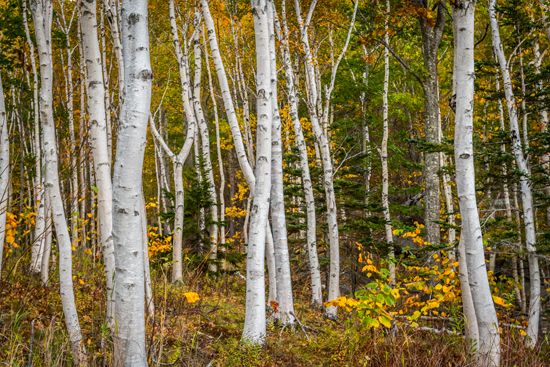
Hornbeam trees, belonging to the genus Carpinus within the Betulaceae family, are widely distributed throughout the Northern Hemisphere.
In which regions are hornbeam trees commonly found?
Hornbeam trees, belonging to the genus Carpinus within the Betulaceae family, are widely distributed throughout the Northern Hemisphere1.
These hardy, slow-growing trees are found across various regions, including:
- Europe: The European hornbeam is a common ornamental feature in Old World gardens, often utilized for hedges and covered walkways.1
- North America: The American hornbeam, also known as ironwood or blue beech, is native to the United States, where it thrives in areas providing partial shade and protection from the wind.1
- Asia: Several species are native to Asian regions, such as the heartleaf hornbeam (C. cordata), the Japanese hornbeam (C. japonica), and the Korean hornbeam (C. eximia).1
How long do hornbeam trees typically live, and how fast do they grow?
Hornbeam trees (genus Carpinus) are characterized as hardy, slow-growing trees within the Betulaceae family.1
While the provided information confirms that these trees are slow-growing, the specific lifespan of hornbeam trees is not detailed in the available records. Their growth rate is reflected in their physical development; for example, the European hornbeam can reach heights of up to 20 meters (65 feet), while the American hornbeam typically reaches between 12 and 18 meters (39 to 59 feet) depending on its environment.1
How are hornbeam trees used in landscaping and urban environments?
Hornbeam trees are highly valued in landscaping and urban environments due to their aesthetic appeal and structural versatility.
The European hornbeam (Carpinus betulus) is particularly popular as an ornamental choice for gardens. Its ability to branch profusely and withstand heavy pruning makes it an ideal candidate for creating formal hedges and covered walkways. Gardeners often shape these trees into distinctive, architectural forms to enhance landscape design.1
In contrast, the American hornbeam is less frequently used as an ornamental but is appreciated for its unique appearance, including its sinewy, muscular-looking trunk and vibrant autumn foliage that turns shades of scarlet or orange-yellow. Because it requires partial shade and protection from the wind, it is best suited for specific sheltered locations within an urban or garden setting rather than exposed areas.1
What are the distinguishing characteristics of hornbeam trees?
Hornbeam trees, belonging to the genus Carpinus within the Betulaceae family, are hardy, slow-growing trees found throughout the Northern Hemisphere. They are distinguished by several unique physical traits:
Physical Characteristics
- Bark and Trunk: They typically feature smooth or fissured grayish bark and a short, fluted trunk. The American hornbeam is particularly noted for its sinewy, muscular-looking trunk.1
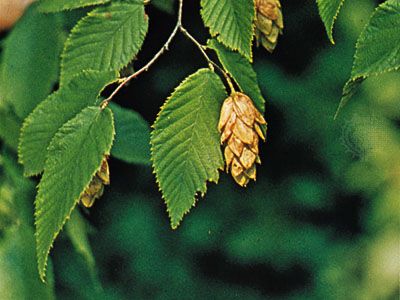
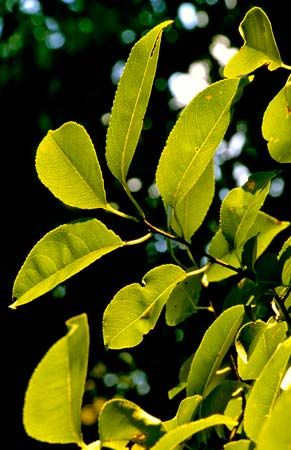
- Leaves: The leaves are generally egg- or lance-shaped with toothed edges and are arranged alternately along the stems. Some species may retain their leaves into the winter.1
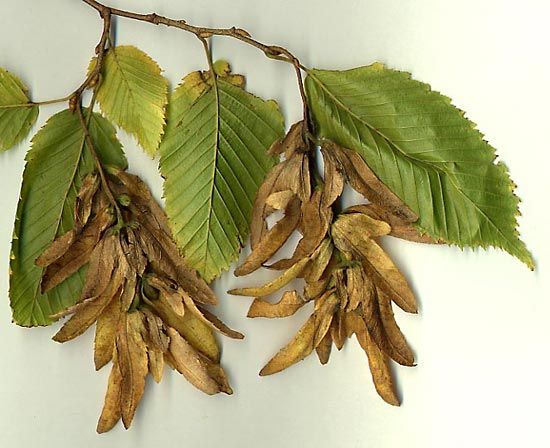
- Flowers and Fruit: Unlike other members of the birch family, male catkins form in the autumn but do not open until the following spring. The fruit is a small nutlet surrounded by a distinctive, leaflike three-lobed husk.1
- Wood: Known for having very hard, tough wood, the American hornbeam is frequently referred to as “ironwood.”12
These trees are widely recognized for their ornamental value and their dense, durable timber.1
Sources
- hornbeam — Encyclopædia Britannica
- Carpinus — Merriam-Webster
Published on · 2 min read