Horned Owl
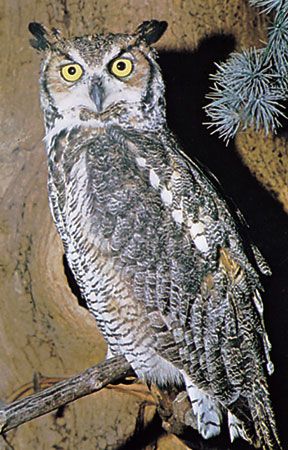
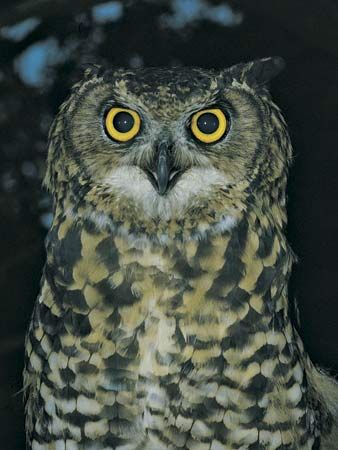
The term "horned owl" refers to a diverse group of 17 species within the genus Bubo, characterized by hornlike tufts of feathers on their heads. The most…
Where do horned owls typically live, and what is their habitat like?
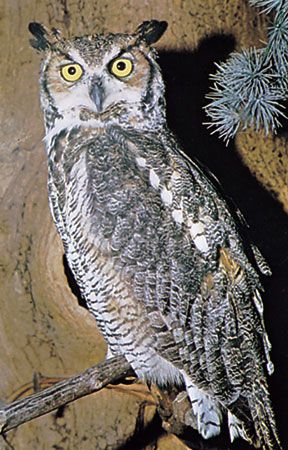
The term “horned owl” refers to a diverse group of 17 species within the genus Bubo, characterized by hornlike tufts of feathers on their heads. The most prominent member, the great horned owl, is widely distributed across the Americas, ranging from the Arctic tree limits south to the Strait of Magellan.12
Regarding their habitat, these owls are highly adaptable, thriving in environments ranging from dense forests to arid deserts. While they are found throughout much of the Americas, they are notably absent from the Amazon Rainforest. Other species in the genus, such as the Eurasian eagle owl, occupy varied landscapes across Europe, Asia, and northern Africa, with related species found in India, Myanmar, and the Indonesian archipelago. Generally, these birds are non-migratory, moving only when local food sources become scarce.21
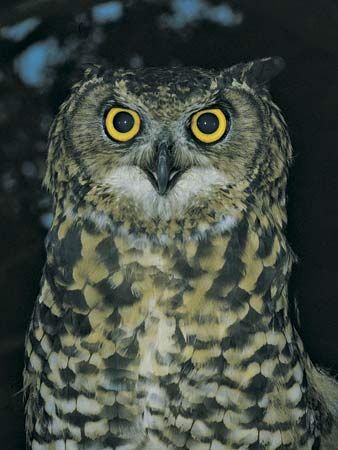
How do horned owls communicate and what sounds do they make?
Owls, including those with hornlike ear tufts, rely on a complex array of vocalizations and physical displays to communicate, as their nocturnal habits and camouflage often make visual contact difficult.45
Vocal Communication
Owl sounds are unique to each species in pitch, rhythm, and timbre. While often called “songs” in a biological sense, these sounds serve several critical functions:45
- Territorial Defense: Owls use hooting to mark and defend their territory, warning rivals to stay away.4
- Mating: Males hoot to attract females during the breeding season. Some species engage in duets to strengthen their pair bond.45
- Social Interaction: Calls are used to signal the presence of predators, locate food, or help parents and offspring find one another.45
Non-Vocal Communication
Beyond vocalizations, owls communicate through physical actions and other sounds:
- Physical Displays: The great horned owl bows deeply and raises its tail while singing. When threatened, many large owls spread their wings, raise their feathers, and rock their bodies to appear larger.5
- Mechanical Sounds: Owls produce sounds such as bill-snapping and wing-clapping, which can serve as warnings or defensive signals.5
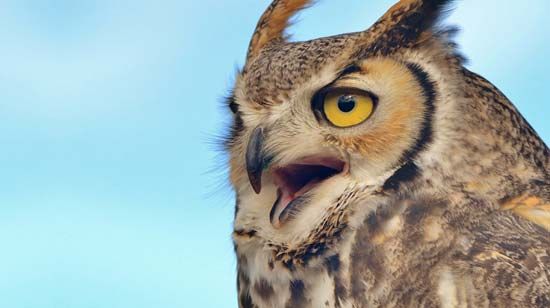
How do horned owls differ from other owl species?
Horned owls, belonging to the genus Bubo, are distinguished from other owl species primarily by their physical characteristics and predatory nature. While all owls share a common body plan—including large eyes, strong talons, and silent flight—horned owls possess specific traits that set them apart:
- Distinctive Ear Tufts: The most recognizable feature of the horned owl is the presence of prominent, hornlike tufts of feathers on the head. While many other owl species also possess these erectile tufts, they are a defining characteristic of the Bubo genus and serve to break the round outline of the head, aiding in camouflage against tree bark.28
- Size and Power: Horned owls, such as the great horned owl and the Eurasian eagle owl, are among the largest and most powerful owls. The great horned owl can exceed 60 cm in length with a wingspan of up to 2 meters, allowing it to hunt prey as large as hens, whereas many other owl species focus primarily on small rodents and insects.25
- Adaptability: These owls are highly adaptable, occupying diverse environments ranging from dense forests to arid deserts. Unlike some species that are restricted to specific habitats, horned owls are widely distributed across the Americas, Europe, Asia, and Africa.25
Are there any cultural or mythological references to horned owls?
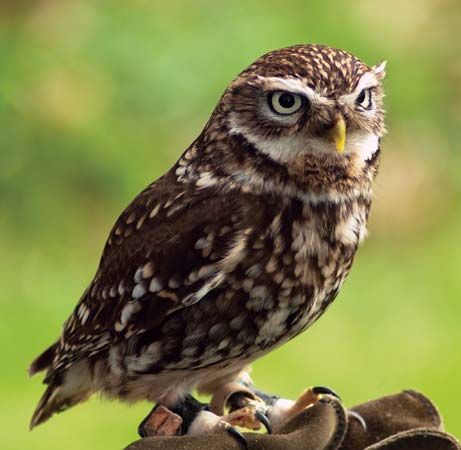
While the little owl is the species most famously associated with the Greek goddess Athena and Roman goddess Minerva as a symbol of wisdom, the great horned owl also appears in cultural narratives.21011
In literature and folklore, owls generally occupy a dual role. Because of their nocturnal nature and haunting calls, they have been viewed as symbols of the occult, the otherworldly, and ill omens in various traditions. Conversely, their association with wisdom stems from the belief that they could presage events.11
Specific to the great horned owl, indigenous storytelling reflects its status as a powerful figure. For example, a Penobscot story recounts how the Great Horned Owl disguised himself as a human to win the hand of a woman who would only marry the greatest hunter. While the “wise owl” archetype is most strongly linked to the little owl in Western history, the great horned owl remains a significant figure in North American cultural and literary contexts.1210
Sources
- Great horned owl — Encyclopædia Britannica
- Horned owl — Encyclopædia Britannica
- Owl - Reproduction and development — Encyclopædia Britannica
- Why do owls hoot? — Encyclopædia Britannica
- Owl - Behaviour — Encyclopædia Britannica
- hoot owl — Merriam-Webster
- hoot — Merriam-Webster
- Owl - Form and function — Encyclopædia Britannica
- Eagle owl — Encyclopædia Britannica
- Little owl — Encyclopædia Britannica
- Owl — Encyclopædia Britannica
- great horned owl — Merriam-Webster
- 9 Superb Owl Words | Owl — Merriam-Webster
Published on · 3 min read