Mallard
Mallards are abundant wild ducks native to the Northern Hemisphere. They breed throughout Europe, most of Asia, and northern North America. During the winter…
Where are mallard ducks typically found in the wild?
Mallards are abundant wild ducks native to the Northern Hemisphere. They breed throughout Europe, most of Asia, and northern North America. During the winter months, their range extends as far south as North Africa, India, and southern Mexico.1
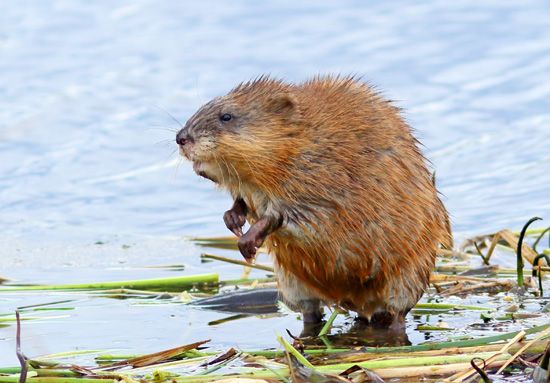
As typical dabbling ducks, mallards are primarily found in or near shallow water, such as ponds, marshes, lakes, and rivers, where they feed on aquatic vegetation, seeds, and small animals. When nesting, they typically select sites in fields, tall grass, or on muskrat lodges.12
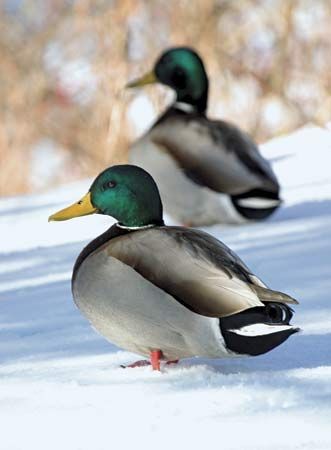
What are the distinctive physical characteristics of a mallard duck?
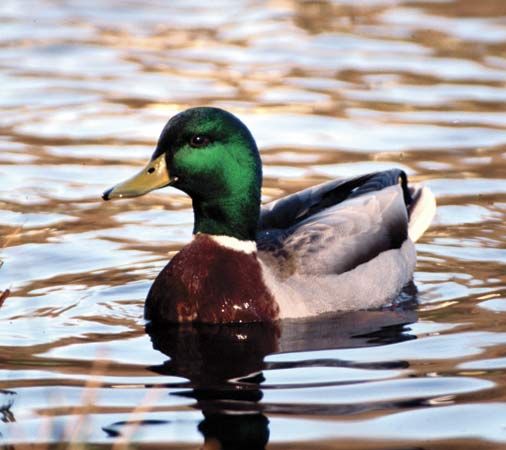
The mallard (Anas platyrhynchos) exhibits significant sexual dimorphism, meaning males and females have distinct appearances.13
Male (Drake)
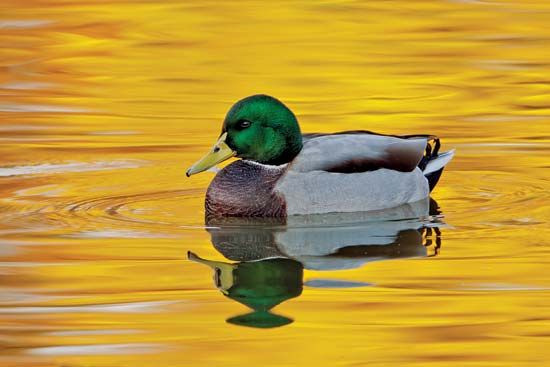
- Head: Features a distinctive, iridescent green head.1
- Neck: A white ring separates the green head from the chest.1
- Breast: Chestnut-colored.1
- Body: A combination of white, light gray, and black plumage.1
Female (Hen)
- Coloration: Displays a mottled appearance in dull and yellowish-brown tones, which provides camouflage.1
Shared Characteristics
- Bill: Both sexes possess a yellow bill.1
- Wings: Both feature a purplish-blue bar on the wing, which is bordered by white on both the front and rear edges.1
- Legs: Like other true ducks, they have overlapping scales on the skin of their legs and a body structure that results in a characteristic waddling gait.3
Beyond appearance, the sexes differ in their vocalizations: only females quack, while males produce whistles and nasal, aggressive calls.1
What is the typical diet of a mallard duck?
As omnivorous birds, mallards consume a varied diet consisting of both plant and animal matter. Their specific food intake is influenced by their habitat, the time of year, and available resources.2
As dabbling ducks, mallards typically forage in shallow water or on land. Their diet includes:21
- Aquatic Vegetation: They often feed on plants found in ponds, marshes, lakes, and rivers. To reach submerged vegetation, they perform a behavior known as “tipping up,” where they tilt their bodies forward to graze beneath the water’s surface without fully diving.241
- Seeds and Grasses: They frequently search for these food sources along the shorelines and in surrounding areas.21
- Small Animals: Mallards also consume small invertebrate animals, such as insects, which they find while foraging in shallow water or on land.21
Their ability to adapt their diet to changing environmental conditions is essential for their survival, particularly during migration.2
What are the main predators of mallard ducks?
Sorry, the Britannica knowledge base does not contain this information.
Sources
- Mallard — Encyclopædia Britannica
- What do ducks eat? — Encyclopædia Britannica
- Duck — Encyclopædia Britannica
- Dabbling duck — Encyclopædia Britannica
Published on · 2 min read