Eagle Owl
Owls utilize a diverse range of vocalizations to communicate, primarily to establish and defend their territory and to attract mates during the breeding…
How do eagle owls communicate and what sounds do they make?
Owls utilize a diverse range of vocalizations to communicate, primarily to establish and defend their territory and to attract mates during the breeding season. While specific calls vary by species, these sounds serve essential social functions, including identifying mates, coordinating pair bonds, and alerting others to the presence of predators.123
In addition to vocal calls, which range from deep hoots to chirps and whistles, owls employ nonvocal sounds for communication and defense. A common threat display among owls is bill snapping, which serves as an aggressive signal. While the provided information details general owl communication, it does not specify the unique vocal repertoire of the eagle owl specifically.2
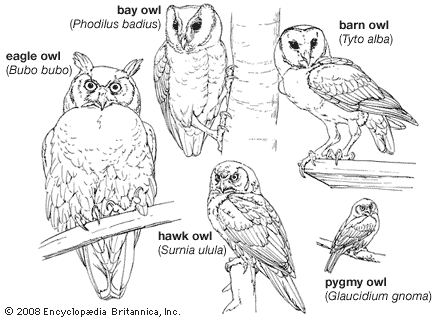
How do eagle owls compare in size to other owl species?
The eagle owl (Bubo bubo) is among the largest members of the owl family, typically reaching lengths of about 70 centimeters (approximately 2.3 feet). This size places it at the upper end of the spectrum for owls, which generally range from 13 to 70 centimeters in length.45
When compared to other species, the eagle owl is significantly larger than many common owls:
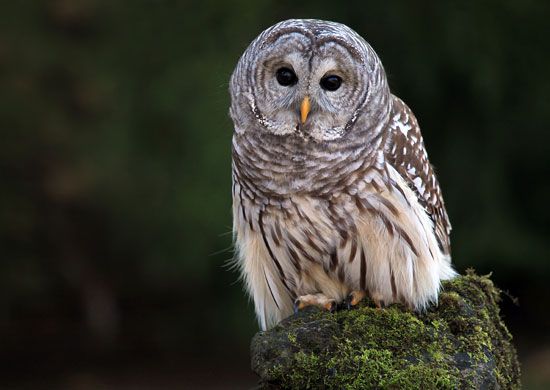
- Wood Owls: Species such as the barred owl and spotted owl are smaller, typically measuring between 40 and 50 centimeters.6
- Hawk Owls: The northern hawk owl is approximately 40 centimeters long, while the Oriental hawk owl is much smaller at about 20 centimeters.7
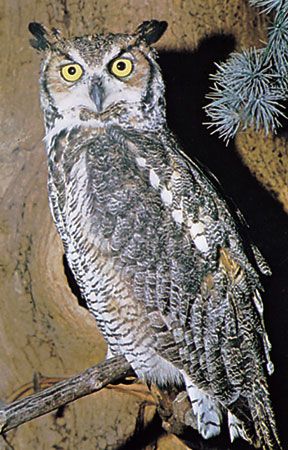
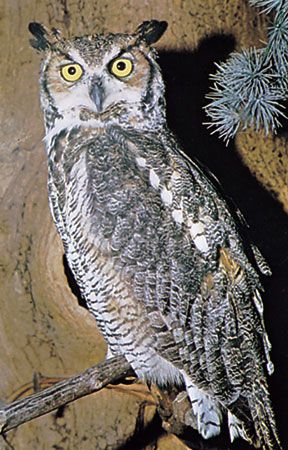
- Other Large Species: The great gray owl is comparable in size to the eagle owl, often exceeding 70 centimeters in length, though much of its bulk is attributed to its plumage. The great horned owl, a close relative of the eagle owl, is also a powerful predator, often measuring more than 60 centimeters.68
What are the distinguishing physical characteristics of eagle owls?
The eagle owl (Bubo bubo) is distinguished by several key physical characteristics that define its appearance:
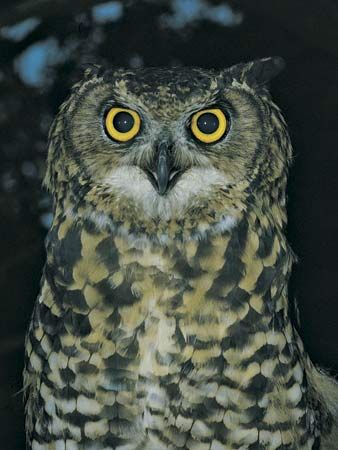
- Size: It is one of the largest owl species, often reaching a length of approximately 70 centimeters (about 2.3 feet).4
- Head Features: A prominent feature is the presence of two tufts of feathers on the head, commonly referred to as ear tufts.4
- Eyes: The species is characterized by large, striking orange eyes.4
- Plumage: The overall coloration is tawny and mottled with brown, appearing lighter on the underside of the body.4
While most larger owls in the Bubo genus possess juvenile plumage that closely resembles that of the adult, there are notable exceptions. For instance, the forest eagle owl (B. nipalensis) and the barred eagle owl (B. sumatranus) exhibit juvenile plumage that is mostly white, featuring a distinct pattern of black markings that differs from their adult appearance.11
Where are eagle owls typically found in the wild, and what habitats do they prefer?
The eagle owl (Bubo bubo), also known as the Eurasian eagle owl, is widely distributed across Europe, Asia, and northern Africa, though it is only a rare visitor in most of Great Britain.4
Regarding their preferred habitats, eagle owls are primarily associated with rugged and sheltered environments. They typically roost and breed within rocky niches or hollow trees, which provide necessary protection and nesting sites. While many owl species utilize various natural cavities—such as woodpecker holes or cliff crevices—the eagle owl’s reliance on rocky terrain and tree hollows is a defining aspect of its ecological niche. From these vantage points, they hunt at twilight, searching their territories for prey such as rodents, hares, rabbits, and large game birds.411
Sources
- Why do owls hoot? — Encyclopædia Britannica
- Bird - Sound — Encyclopædia Britannica
- sound reception - Uses of hearing in birds — Encyclopædia Britannica
- Eagle owl — Encyclopædia Britannica
- Wood owl — Encyclopædia Britannica
- Owl - General features — Encyclopædia Britannica
- Horned owl — Encyclopædia Britannica
- Hawk owl — Encyclopædia Britannica
- Spectacled owl — Encyclopædia Britannica
- eagle owl — Merriam-Webster
- Owl - Reproduction and development — Encyclopædia Britannica
- Owl - Annotated classification — Encyclopædia Britannica
Published on · 3 min read