Malcoha
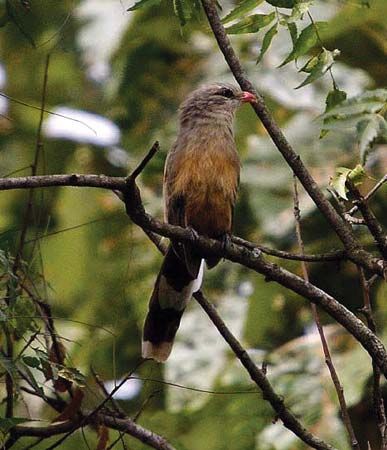
A malcoha is a type of cuckoo native to southern Asia, primarily belonging to the genus Rhopodytes (frequently classified under Phaenicophaeus).
What is Malcoha?
A malcoha is a type of cuckoo native to southern Asia, primarily belonging to the genus Rhopodytes (frequently classified under Phaenicophaeus).1
These forest-dwelling birds are characterized by several distinct physical features:
Malcohas are known for their unique movement, often navigating through thick vegetation by scurrying along branches in a manner similar to a squirrel.1
What other types of birds belong to the cuckoo family?
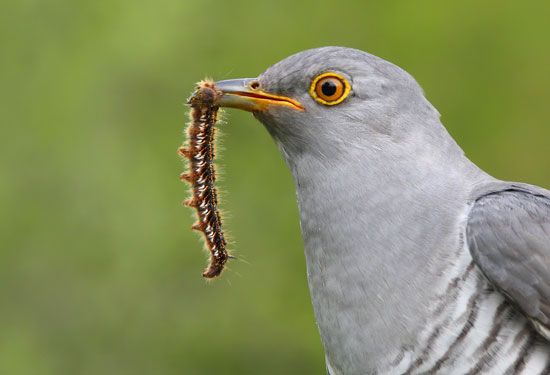
The family Cuculidae is a diverse group of approximately 140 species of birds. While the term “cuckoo” often refers to the arboreal members of the subfamilies Cuculinae and Phaenicophaeinae, the family encompasses a wide variety of specialized forms, including:23
- Roadrunners: Terrestrial birds of the Americas, such as the greater roadrunner (Geococcyx californianus), known for their ability to run along the ground and feed on insects, lizards, and snakes.45
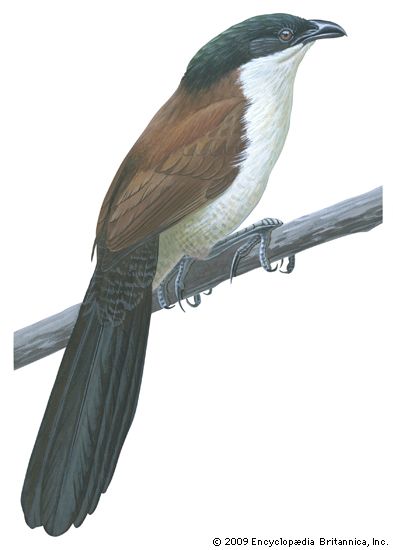
- Coucals: Largely terrestrial birds found in Africa, Asia, and Australia, often reaching lengths of up to 90 cm.65
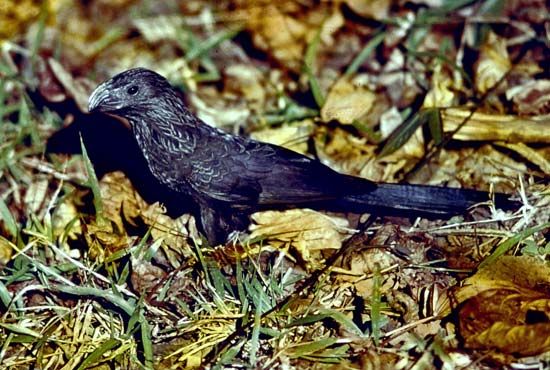
- Anis: Notable for their communal nesting habits, these birds belong to the subfamily Crotophaginae.62
- Guiras: Another group that builds communal nests.2
- Couas: A group of cuckoos limited to the Old World.62
- Ground Cuckoos: Members of the subfamily Neomorphinae, which includes the roadrunners and other terrestrial species.63
- Squirrel and Lizard Cuckoos: Specific groups like Piaya (squirrel cuckoos) and Saurothera (lizard cuckoos) found in the Americas.3
How do malcohas differ from other cuckoo species?
Malcohas differ from many other members of the cuckoo family primarily in their physical characteristics and nesting behavior. While many cuckoo species are famous for brood parasitism—laying their eggs in the nests of other birds—malcohas are distinct as they build their own nests to incubate their eggs and rear their young.1
Physically, malcohas are specialized for life in dense Asian forests. They are easily identified by:
- Distinctive Appearance: They possess a long tail, a stout bill with a bristly base, and characteristic bare skin surrounding the eyes.4
- Unique Locomotion: Unlike the terrestrial roadrunners or the more aerial cuckoos, malcohas are known for their agile, squirrel-like movement as they scurry along branches within thick vegetation.4
While they share the order Cuculiformes with other groups like coucals and anis, their specific adaptations reflect their niche as forest-dwelling, non-parasitic birds.41
What kind of forest habitats do these birds prefer?
Cuckoo species occupy a wide range of environments, though they are generally known as shy inhabitants of dense vegetation where they can remain inconspicuous. Their habitat preferences vary significantly by group:17
- Forest and Thicket Dwellers: Many cuckoos, including malcohas, prefer dense forest habitats and thickets, where they move agilely through the vegetation.81
- Open Woodland: Certain species, such as many in the genus Cuculus, favor more open woodland areas.1
- Savanna and Grassland: Some Old World genera, like Clamator and Chrysococcyx, as well as the South American guira, inhabit open savannas, provided that trees are present.1
- Scrub and Desert: Roadrunners are uniquely adapted to open scrub and cactus deserts, often thriving in areas that lack large vegetation entirely.1
While the family is distributed globally across temperate and tropical regions, they are most diverse in the Old World tropics.27
Sources
- Malcoha — Encyclopædia Britannica
- Cuculiform - Distribution — Encyclopædia Britannica
- Cuckoo — Encyclopædia Britannica
- Cuculiform — Encyclopædia Britannica
- Roadrunner — Encyclopædia Britannica
- Cuculiform - General features — Encyclopædia Britannica
- Cuculiform - Habitat utilization — Encyclopædia Britannica
- Cuculiform - Nonparasitic cuckoos — Encyclopædia Britannica
Published on · 3 min read