Horse Chestnut
The horse chestnut and the edible chestnut are distinct trees that belong to different botanical families and are not closely related, despite their similar…
How does the horse chestnut tree differ from the edible chestnut tree?
The horse chestnut and the edible chestnut are distinct trees that belong to different botanical families and are not closely related, despite their similar names.
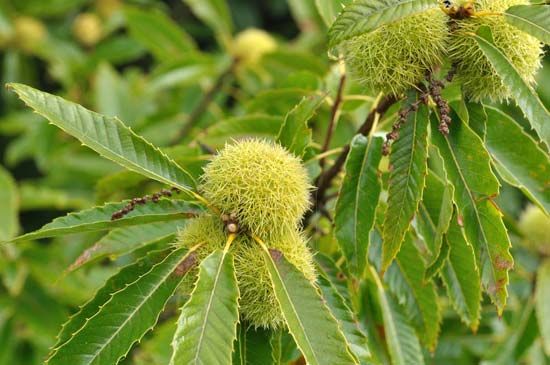
- Classification: The edible chestnut belongs to the genus Castanea in the beech family (Fagaceae). In contrast, the horse chestnut belongs to the genus Aesculus in the horse chestnut family (Hippocastanaceae).12
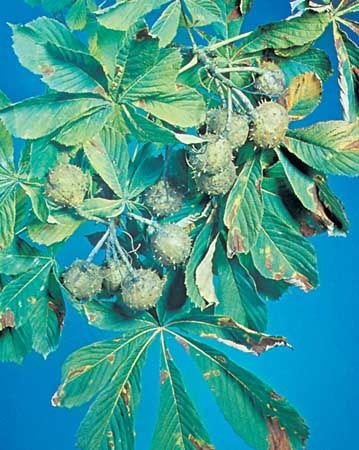
- Botanical Features: Edible chestnuts have lance-shaped to oval, toothed leaves and produce male flowers in long catkins. Horse chestnuts are characterized by palmately compound leaves and erect, cone-shaped flower clusters.12
- Fruit: While both produce nuts encased in prickly husks, the nuts of the Castanea genus are edible and commercially significant. The nuts of the horse chestnut are not typically consumed by humans and were historically fed to horses to treat respiratory issues.12
It is important to note that because they are different species, one should never assume a nut is edible based solely on the name “chestnut.”
Where are horse chestnut trees native to, and where are they commonly found now?
Horse chestnut trees (genus Aesculus) are native to the North Temperate Zone. Specifically, the common or European horse chestnut (A. hippocastanum) is native to southeastern Europe.14
Today, these trees are widely cultivated across the globe as ornamental and shade trees in urban environments, parks, and along streets. For example, they are famously planted in rows along the Champs-Élysées in Paris. Beyond their native range, they have also become naturalized in various regions where they have been introduced as escapes from cultivation.14
How tall can horse chestnut trees grow and what is their typical lifespan?
The height of a horse chestnut tree varies by species:
- Common (European) horse chestnut (A. hippocastanum): This species can grow to a height of 30 meters (100 feet).1
- Japanese horse chestnut (A. turbinata): This tree reaches heights comparable to the European species.1
- Red horse chestnut (A. × carnea): This hybrid typically grows up to 20 meters (65 feet).1
Regarding their typical lifespan, the provided search results do not contain information on the specific number of years these trees live.
What is the scientific name of the horse chestnut tree and what family does it belong to?
The horse chestnut belongs to the genus Aesculus. While it was historically classified in the family Hippocastanaceae, it is now recognized as part of the Sapindaceae family.156
Sources
- horse chestnut — Encyclopædia Britannica
- chestnut — Encyclopædia Britannica
- chestnut — Merriam-Webster
- horse chestnut — Merriam-Webster
- Sapindaceae — Merriam-Webster
- Aesculus — Merriam-Webster
Published on · 2 min read