How Old Is the Oldest Living Greenland Shark?
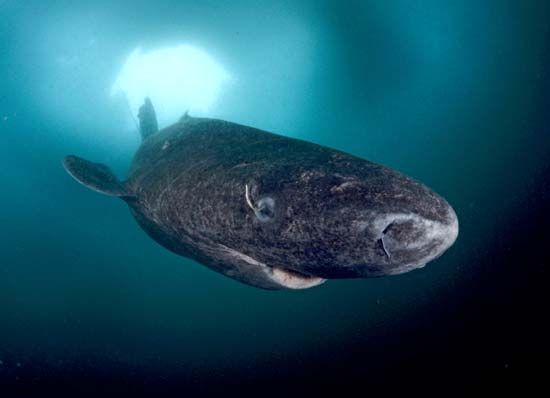
The Greenland shark is recognized as the longest-lived vertebrate known to science. While some research suggests that individuals of this species may reach…
How old is the oldest living Greenland shark?
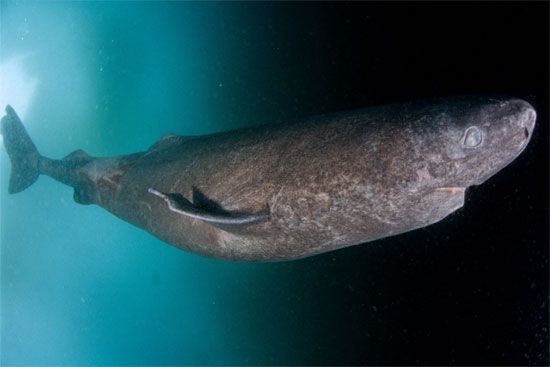
The Greenland shark is recognized as the longest-lived vertebrate known to science. While some research suggests that individuals of this species may reach ages exceeding 500 years, the oldest known living Greenland shark is estimated to be approximately 400 years old.12
Scientific estimates regarding their age are derived from radiocarbon dating of proteins within the eye lens nuclei. A 2016 study published in the journal Science indicated that the age of the oldest specimens could range from 272 to 512 years. Their extreme longevity is attributed to an exceptionally slow metabolism and growth rate, adaptations to the frigid, deep-water environments of the Arctic Ocean and North Atlantic. Recent genomic research has further identified specific genes related to DNA repair and inflammation regulation that may contribute to their ability to resist the typical effects of aging.12
How do scientists use eye lenses to determine a shark’s age?
Scientists determine the age of a Greenland shark by performing radiocarbon dating on proteins found within the nucleus of the lens of the shark’s eye.23
This method relies on the measurement of carbon-14, a radioactive isotope that decays at a constant, predictable rate. Because the proteins in the center of the eye lens are formed during the early stages of the shark’s life and remain metabolically inert—meaning they do not regenerate or exchange material with the rest of the body—they preserve a chemical record of the radiocarbon levels present in the environment at the time of the shark’s birth. By measuring the amount of residual radiocarbon remaining in these lens nuclei, researchers can estimate how much time has passed since the shark was born, allowing them to calculate its age.21
What other animals are known for having extremely long lifespans?
Beyond the Greenland shark, several other animals are recognized for their remarkable longevity. These species often share biological adaptations, such as slow metabolic rates, that contribute to their extended lifespans.
- Bowhead whales: These cetaceans are the longest-lived mammals, capable of surviving for more than 200 years. Evidence for this longevity has been supported by the discovery of antique harpoon points embedded in the blubber of harvested individuals.41
- Tortoises: Certain giant tortoise species are famous for living well over a century. Individuals like Jonathan, a Seychelles giant tortoise, have reached ages exceeding 190 years. While some historical claims of tortoises living 250 years or more have been questioned due to record-keeping inconsistencies, their ability to live past 100 years in protected environments is well-documented.5
- Other Mammals: While most small mammals have short lives, some species exhibit surprising longevity. For example, certain bats can live for nearly 20 years, a feat attributed to their ability to enter torpor, which significantly lowers their metabolic rate. Elephants and horses have also been recorded living into their 80s and 60s, respectively, particularly in captivity.61
How does the cold Arctic environment affect a shark’s metabolism?
The cold, deep-water environment of the Arctic and North Atlantic oceans plays a fundamental role in shaping the metabolism of the Greenland shark.22
Living in these frigid conditions results in a significantly reduced overall metabolic rate for the species. This slow metabolism is directly linked to the shark’s exceptionally slow growth and sluggish swimming speed, which typically remains below 3 km (about 2 miles) per hour. By maintaining such a low-energy pace, the shark is able to conserve energy and avoid the cellular damage often associated with a faster-paced existence, which scientists believe is a key factor contributing to the species’ extraordinary longevity.292
Unlike some other shark species that utilize regional endothermy to warm their bodies in cold water, the Greenland shark’s physiology is adapted to thrive in these extreme temperatures through this slow and steady approach to life.91011
Sources
- What animal has the longest life span? — Encyclopædia Britannica
- How old is the oldest living Greenland shark? — Encyclopædia Britannica
- carbon-14 dating — Encyclopædia Britannica
- How long do tortoises live? — Encyclopædia Britannica
- aging - Species differences in longevity and aging — Encyclopædia Britannica
- cetacean - Age and growth — Encyclopædia Britannica
- life span - Maximum and average longevity — Encyclopædia Britannica
- mammal - Populations — Encyclopædia Britannica
- reptile - Thermal relationships — Encyclopædia Britannica
- white shark: Top Questions — Encyclopædia Britannica
- Greenland shark — Encyclopædia Britannica
- Arctic - Marine fauna — Encyclopædia Britannica
- sea ice - The emerging impacts of recent changes to sea ice — Encyclopædia Britannica
- white shark - Body structure — Encyclopædia Britannica
Published on · 3 min read