Huaylas Valley
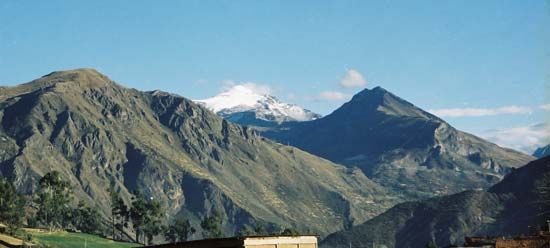
The Huaylas Valley, also known as the Callejón de Huaylas, is a scenic valley situated along the upper Santa River in the Ancash department of west-central…
What is Huaylas Valley?
The Huaylas Valley, also known as the Callejón de Huaylas, is a scenic valley situated along the upper Santa River in the Ancash department of west-central Peru.12
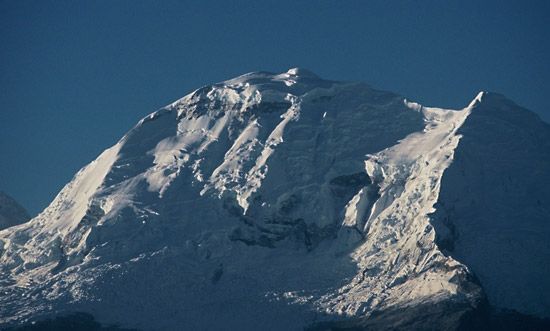
The region is defined by its dramatic topography, flanked to the west by the snowless Cordillera Negra and to the east by the snowcapped Cordillera Blanca, which includes Mount Huascarán, one of Peru’s highest peaks. Due to its cool climate and picturesque landscape, the valley is a significant tourist destination.1
The local economy relies on subsistence farming—cultivating crops like potatoes, barley, corn, and alfalfa—as well as mining for silver, lead, and copper. Major settlements in the valley include Huaraz, Yungay, and Caraz. The area has a history of natural disasters, most notably a devastating 1970 earthquake and associated landslides that caused widespread destruction and significant loss of life.12
What is the difference between the Cordillera Blanca and the Cordillera Negra?
The Cordillera Blanca and the Cordillera Negra are two distinct mountain ranges in west-central Peru that run parallel to each other, separated by the Santa River and the Huaylas Valley.456
The primary differences between the two ranges include:
- Glaciation and Appearance: The Cordillera Blanca (meaning “White Range”) is characterized by permanently snowcapped peaks and glaciers. In contrast, the Cordillera Negra (meaning “Black Range”) is significantly lower in elevation and is not covered by snow, which accounts for its name.456
- Elevation: The Cordillera Blanca contains some of the highest peaks in the Andes Mountains, including Mount Huascarán, which reaches an elevation of 22,205 feet (6,768 meters). The Cordillera Negra reaches a maximum elevation of approximately 14,764 feet (4,430 meters).465
- Geography: The Cordillera Blanca lies to the east of the valley, while the Cordillera Negra forms the western boundary.456
How do glacial lake outbursts occur in the Andes?
Glacial lake outbursts, or glacial lake outburst floods (GLOs), occur in the Andes when the natural barriers containing a glacial lake—typically moraine dams—are breached, releasing a sudden, catastrophic deluge of water and debris.7
A primary trigger for these events is the impact of an avalanche or falling ice block into a lake. This displacement creates massive waves that crash over and through the surrounding moraine, causing the dam to fail. Once the barrier is compromised, the rushing water often picks up additional detritus as it travels downstream, potentially triggering secondary floods if it breaches lower lakes along its path.7
While these events are distinct from jökulhlaups—which involve water stored within or behind a glacier being released due to internal drainage blockages—both phenomena represent significant natural hazards in glacier-covered mountain ranges. In the case of the 1941 disaster in Huaraz, such an outburst resulted in widespread destruction and significant loss of life, illustrating the persistent threat these events pose to high-altitude communities.27
What are some of the highest peaks found in the Cordillera Blanca?
The Cordillera Blanca is a prominent, snowcapped range in the Peruvian Andes known for hosting some of the highest peaks in the region.
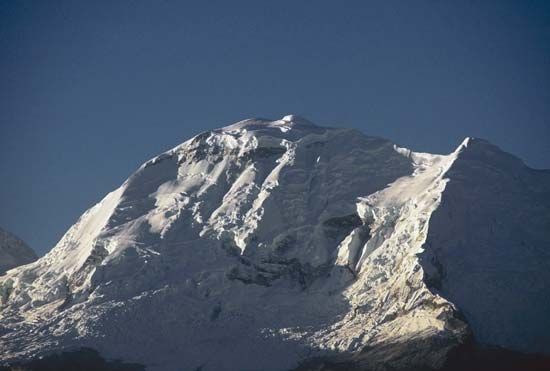
The most notable mountain in the range is Mount Huascarán, which serves as the highest peak in Peru. It reaches an elevation of 22,205 feet (6,768 meters) above sea level.496
While the range is defined by its complex highland geography and numerous permanently snowcapped summits, Mount Huascarán stands out as the primary representative of the extreme elevations found within this section of the Andes Mountains.46
Sources
- Huaylas Valley — Encyclopædia Britannica
- Huaraz — Encyclopædia Britannica
- Andes Mountains - Climate — Encyclopædia Britannica
- Cordillera Blanca — Encyclopædia Britannica
- Cordillera Negra — Encyclopædia Britannica
- Andes Mountains - Physiography of the Central Andes — Encyclopædia Britannica
- glacier - Glacier floods — Encyclopædia Britannica
- Chile - The Chilean Andes — Encyclopædia Britannica
- Mount Huascarán — Encyclopædia Britannica
Published on · 3 min read