Mount Huascarán
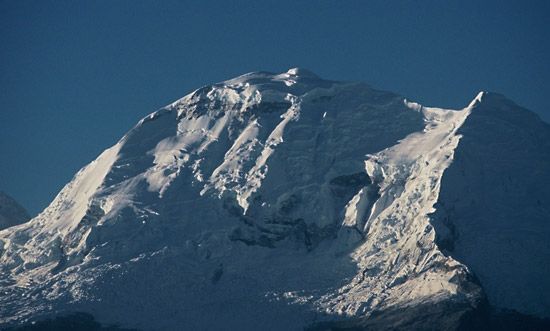
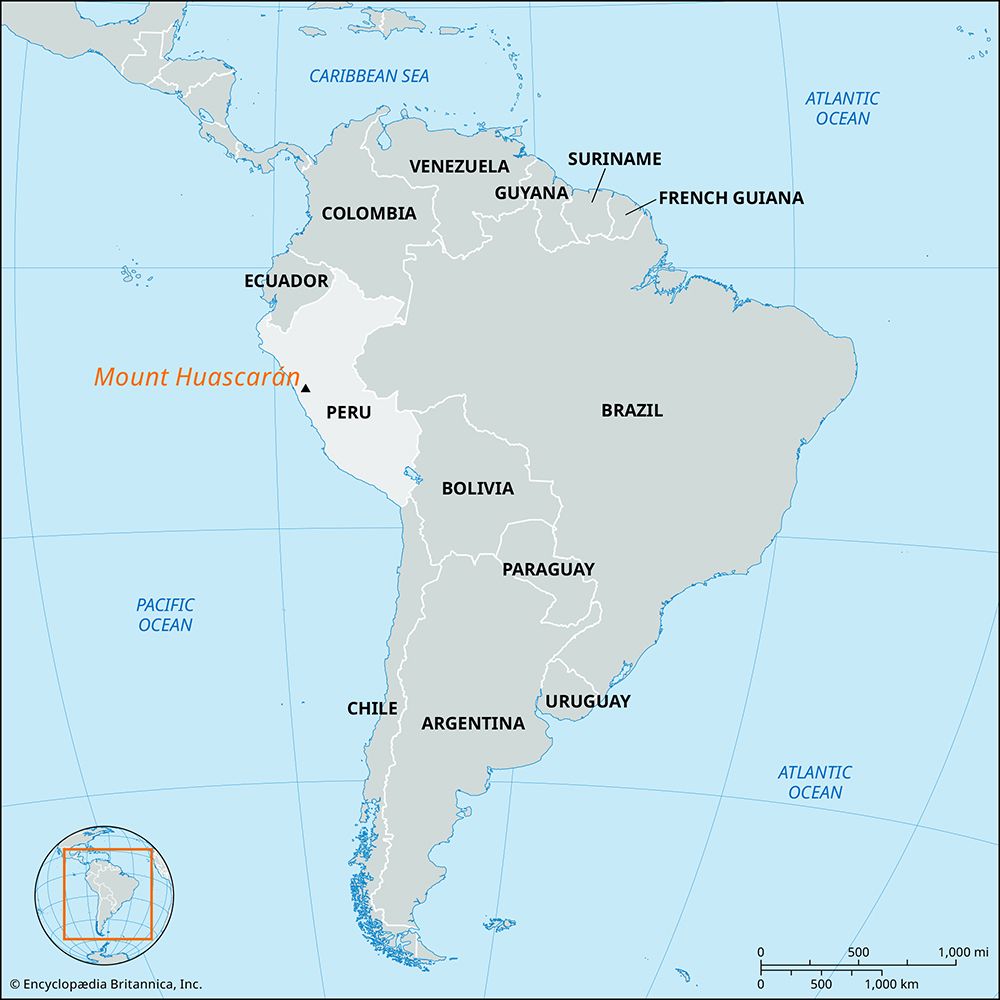
Mount Huascarán is the highest mountain in Peru, located in the Cordillera Blanca range of the Andes. It reaches an elevation of 22,205 feet (6,768 meters)…
What is Mount Huascarán?
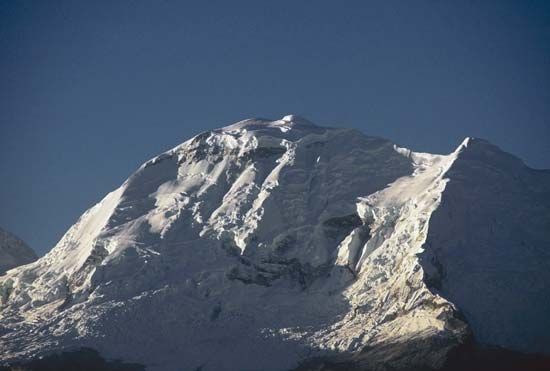
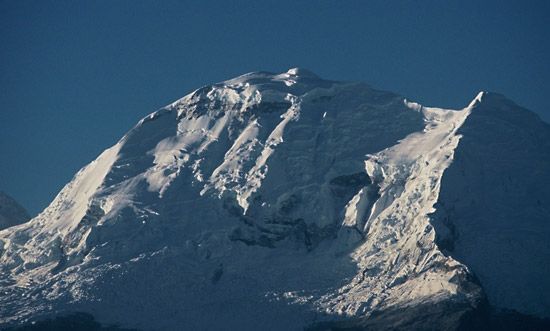
Mount Huascarán is the highest mountain in Peru, located in the Cordillera Blanca range of the Andes. It reaches an elevation of 22,205 feet (6,768 meters) above sea level.12
While the peak is a popular destination for mountaineers and tourists, it has been the site of catastrophic natural disasters. In 1962, a thaw triggered an avalanche that killed approximately 3,500 people. Furthermore, a severe earthquake in 1970 caused massive landslides that buried the town of Yungay and several other villages, resulting in the deaths of tens of thousands of people in one of the 20th century’s deadliest disasters.12
What is the Cordillera Blanca?
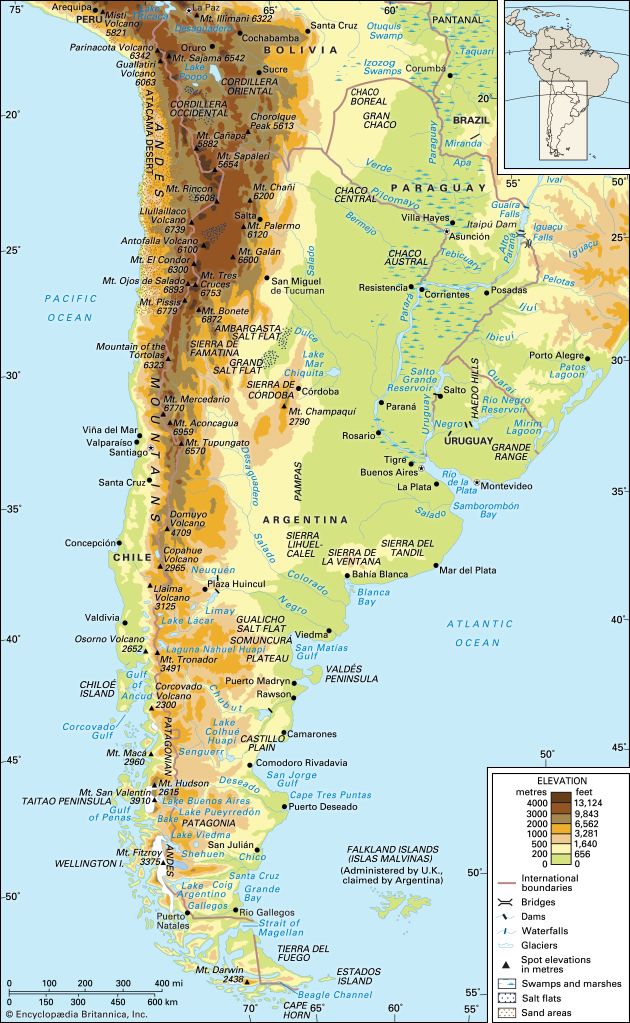
The Cordillera Blanca is the eastern section of the Cordillera Occidental of the Andes in west-central Peru. This snowcapped mountain range extends approximately 110 miles (180 km) in a southeast-to-northwest direction.34
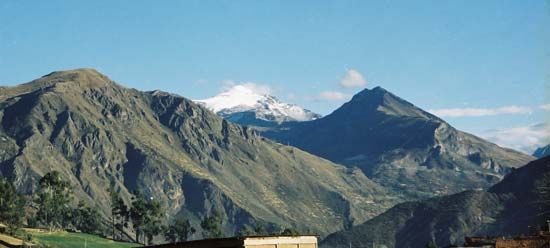
The range is characterized by its complex highland terrain and permanently snowcapped peaks, which include some of the highest in the Andes, such as Mount Huascarán. To the west, the Cordillera Blanca is separated from the Cordillera Negra—a lower, snow-free range—by the Santa River and the Callejón de Huaylas.43
Due to the high elevation of the range, glaciers are common; however, these can be unstable, and earthquakes have historically caused portions of glaciers to break off, resulting in devastating avalanches and landslides in the surrounding valleys.4
How do earthquakes trigger landslides in mountainous regions?
Landslides occur when the gravitational and shear stresses acting on a slope exceed the shear strength—or resistance to movement—of the materials forming that slope.56
Earthquakes act as a primary trigger for these events by imposing sudden, short-term stresses on mountainous terrain. These seismic shocks can destabilize slopes in several ways:56
- Mechanical Disturbance: The intense shaking can disrupt the sediment fabric of slope materials, particularly those that are loosely packed, causing them to weaken or collapse.6
- Liquefaction: In certain substrates, such as silt or loess, earthquake shock can induce liquefaction, where the material loses its structural integrity and behaves like a fluid, leading to lateral spreads.6
- Avalanche Mobilization: In high-relief areas, seismic activity can cause massive volumes of rock, debris, or ice to detach from steep faces. These materials may fall freely and trap air or snow, facilitating rapid, high-velocity flows known as avalanches or debris flows.6
A tragic example of this occurred during the Ancash earthquake of 1970, where seismic shocks triggered a massive landslide from Mount Huascarán, burying entire villages.7
What is the climate like in the Andes mountains?
The climate of the Andes Mountains is exceptionally diverse, shaped by a complex interplay of latitude, altitude, proximity to the sea, and the orographic barrier they present to prevailing winds.89
Vertical Climatic Zones
Temperature in the Andes is primarily dictated by elevation, creating distinct vertical zones:89
- Tierra Caliente (up to 4,900 feet): Tropical and warm, with hot daytime temperatures.89
- Tierra Templada (4,900–8,200 feet): Subtropical to mild; this is considered the most hospitable zone for human habitation and agriculture.89
- Tierra Fría (8,200–11,500 feet): Cool and dry, with marked differences between day and night temperatures.89
- Tierra Helada (above 11,500 feet): Cold to freezing conditions. The puna and páramo zones (roughly 13,500–15,700 feet) experience constant subfreezing temperatures at night, while peaks above 15,700 feet are polar with extreme cold and icy winds.89
Regional Variations
Precipitation patterns vary significantly based on location. The external slopes facing the Amazon basin generally receive heavy, seasonal rainfall, while the western slopes in Peru are notably dry due to the influence of the cold Peru (Humboldt) Current. In the south, the Andes act as a barrier to the mid-latitude westerlies, causing heavy orographic precipitation on the windward side and creating a rain shadow over Patagonia.89
Sources
- Mount Huascarán — Encyclopædia Britannica
- Huaylas Valley — Encyclopædia Britannica
- Cordillera Blanca — Encyclopædia Britannica
- Andes Mountains - Physiography of the Central Andes — Encyclopædia Britannica
- landslide: Top Questions — Encyclopædia Britannica
- Ancash earthquake of 1970 — Encyclopædia Britannica
- landslide — Encyclopædia Britannica
- Andes Mountains - Climate — Encyclopædia Britannica
- South America - Cold climates — Encyclopædia Britannica
- Andes Mountains - Plant and animal life — Encyclopædia Britannica
- South America - Factors influencing climate — Encyclopædia Britannica
Published on · 3 min read