Lake Champlain
Lake Champlain is a significant body of water situated in a broad valley between the Adirondack and Green mountains. It forms the boundary between Vermont…
What is the geographical location and size of Lake Champlain?
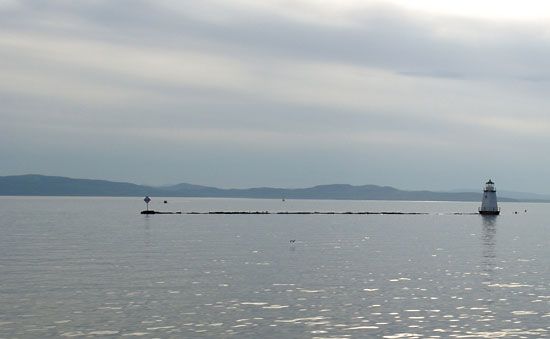
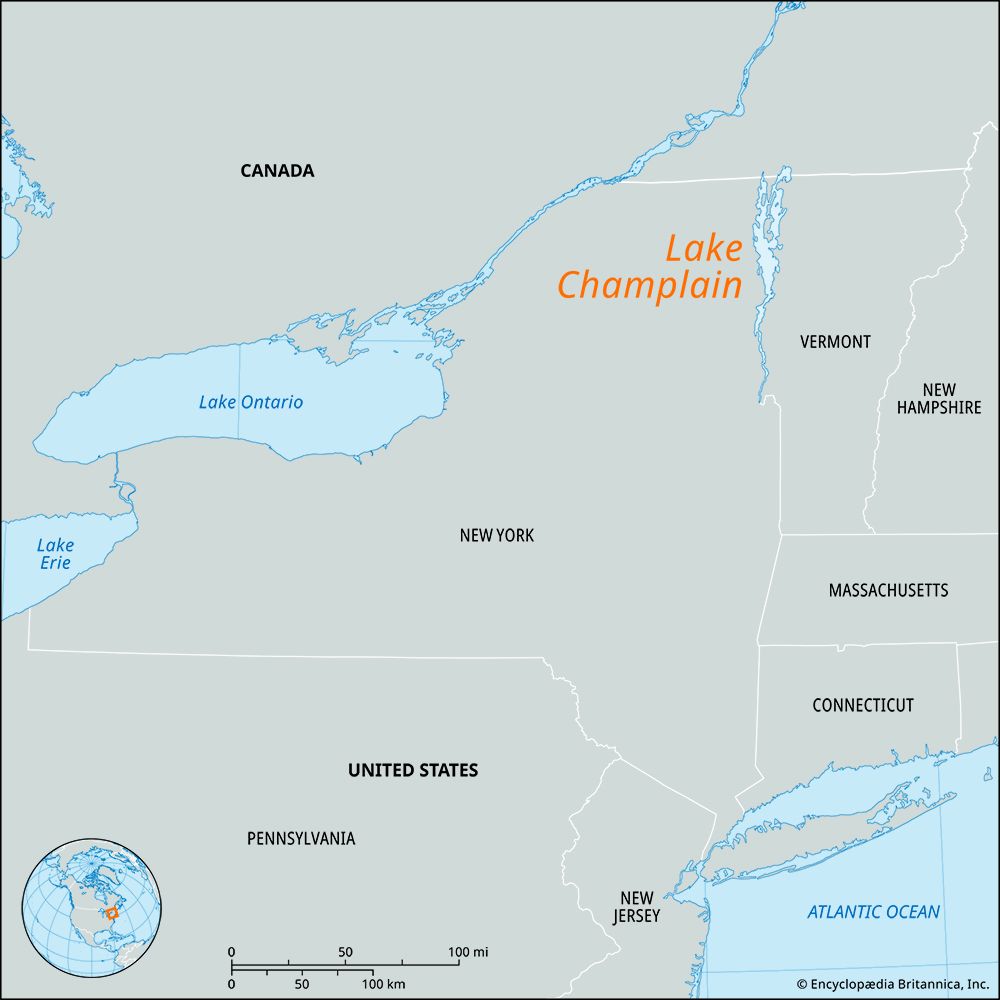
Lake Champlain is a significant body of water situated in a broad valley between the Adirondack and Green mountains. It forms the boundary between Vermont and New York for the majority of its length, extending southward from Missisquoi Bay and the Richelieu River in Quebec, Canada, to South Bay near Whitehall, New York1.1
Regarding its dimensions, the lake stretches approximately 107 to 125 miles in length and reaches a maximum width of 14 miles (23 km). It encompasses a total water surface area of about 435 square miles (1,127 square km), with an additional 55 square miles (142 square km) consisting of islands, such as Grand Isle and Isle La Motte. Its waters eventually empty into the St. Lawrence River via the Richelieu River.231
Are there any notable historical events or legends associated with Lake Champlain?
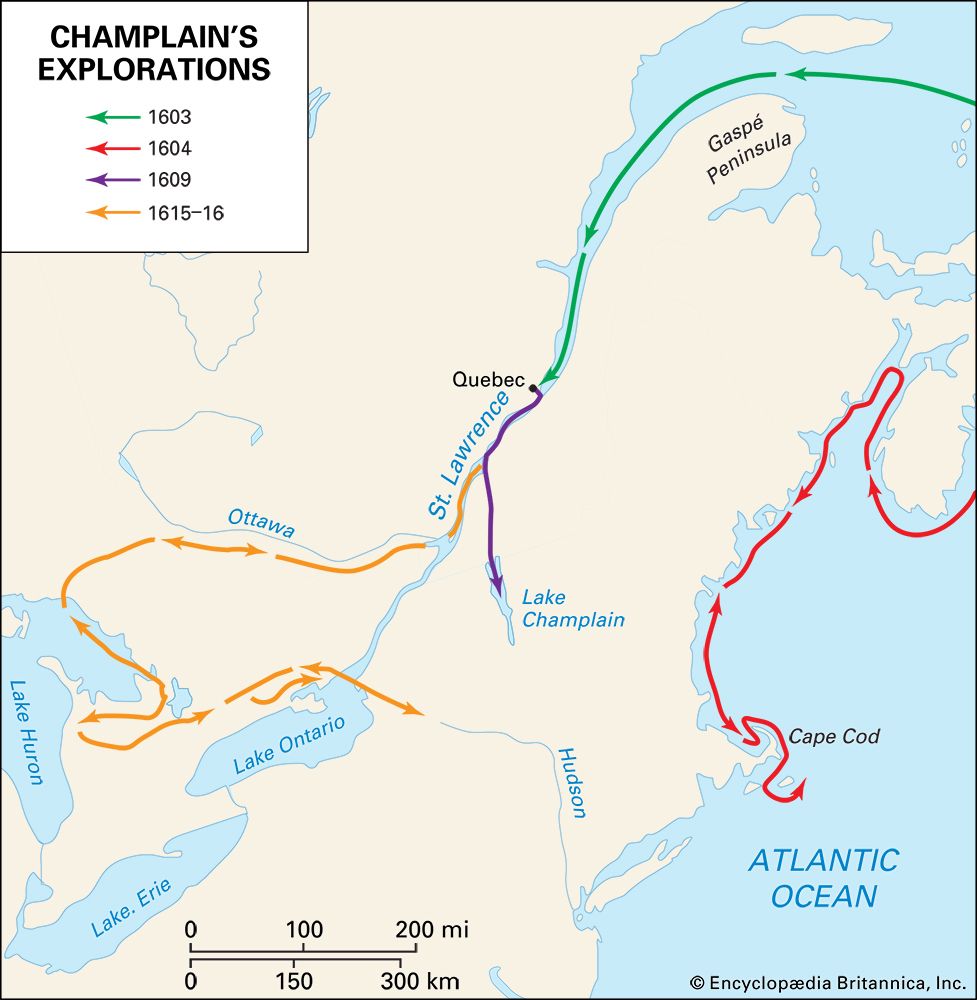
Lake Champlain has served as a vital strategic corridor throughout North American history. First visited by the French explorer Samuel de Champlain in 1609, the lake functioned as a primary gateway between French Canada and the English colonies.1
Its waters were the site of several pivotal military engagements:
- French and Indian Wars: The region saw significant conflict, with the French establishing strategic forts at Crown Point in 1731 and Ticonderoga in 1755.1
- American Revolution: On October 11, 1776, the Battle of Valcour Island took place, marking the first major naval encounter between American and British fleets.1
- War of 1812: The Battle of Plattsburgh in September 1814 was a decisive American victory. Commodore Thomas Macdonough defeated the British fleet in Cumberland Bay, effectively halting a British invasion of New York via the Hudson River valley.14
While the lake is rich in documented military history, the provided records do not contain information regarding local legends or folklore.
What is the significance of Lake Champlain in terms of transportation and trade between Canada and the United States?
Lake Champlain serves as a vital link in an international waterway connecting New York City’s harbor to the lower St. Lawrence River in Canada. This corridor facilitates navigation between the United States and Canada through a combination of rivers and canals.15
Key components of this transportation network include:
- The Southern Connection: The Champlain Canal connects the lake to the Hudson River at Waterford, New York, providing a route to the Atlantic coast.6
- The Northern Connection: The Richelieu River flows north from the lake into the St. Lawrence River. The Chambly Canal and the Saint-Ours Canal bypass rapids on the Richelieu, allowing shallow-draft vessels and barges to travel between the lake and the St. Lawrence.157
While historically significant for commercial shipping, including logging and trade, commercial use has declined since the 1980s due to the rise of rail and trucking. Today, the lake and its associated canals are primarily utilized for pleasure boating and recreational navigation.6517
What role did Lake Champlain play during the American Revolutionary War and the War of 1812?
Lake Champlain served as a critical strategic corridor during both the American Revolution and the War of 1812, acting as a gateway between Canada and the American colonies.1
American Revolutionary War
During the Revolution, the lake was the site of the Battle of Valcour Island on October 11, 1776. Although American forces under Benedict Arnold lost this engagement and a subsequent battle off Split Rock, their efforts were strategically vital. By constructing a fleet of small vessels, the Americans forced the British to delay their advance, ultimately postponing the attack on Fort Ticonderoga until the following spring. This delay contributed significantly to the British surrender at Saratoga in 1777.8
War of 1812
In the War of 1812, the lake was the setting for the decisive Battle of Plattsburgh on September 11, 1814. Commodore Thomas Macdonough led an American fleet to victory against the British in Cumberland Bay. This triumph halted a British invasion of New York via the Hudson River valley and helped the United States secure favorable terms in the Treaty of Ghent.149
Sources
- Lake Champlain — Encyclopædia Britannica
- Vermont - Drainage — Encyclopædia Britannica
- Champlain, Lake — Merriam-Webster
- Battle of Plattsburgh — Encyclopædia Britannica
- New York State Canal System — Encyclopædia Britannica
- Richelieu River — Encyclopædia Britannica
- Chambly Canal — Encyclopædia Britannica
- Thomas Macdonough — Encyclopædia Britannica
- American Revolution - Early engagements and privateers — Encyclopædia Britannica
Published on · 3 min read