Hyacinth
The term "hyacinth" refers to several distinct types of plants, though it most commonly describes the genus Hyacinthus.
What is Hyacinth?
The term “hyacinth” refers to several distinct types of plants, though it most commonly describes the genus Hyacinthus.
True Hyacinths
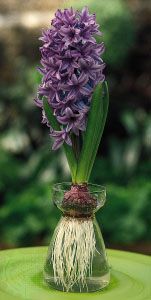
The genus Hyacinthus consists of bulbous herbs in the family Asparagaceae. Native to the Mediterranean and tropical Africa, these plants are popular spring ornamentals. They feature narrow leaves and intensely fragrant, densely arranged flowers that grow in a raceme cluster. Note that their bulbs contain oxalic acid and are inedible, potentially causing skin irritation.1
Other Plants Named “Hyacinth”
Several other plants share the name due to their appearance or growth habits:
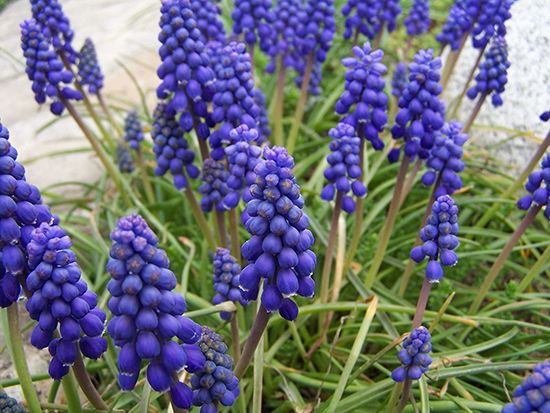
- Grape Hyacinth: Members of the genus Muscari, these are small, bulbous perennials known for their dense, urn-shaped flowers for their dense, urn-shaped flowers.2
- Water Hyacinth: Aquatic plants of the genus Eichhornia. The common water hyacinth is known for its spongy leafstalks and its tendency to clog waterways.2
- Hyacinth Bean: A twining vine (Dolichos lablab) grown as an ornamental, sometimes used for fodder or food.3
What is the difference between a common hyacinth and a grape hyacinth?
While both plants belong to the Asparagaceae family and are popular spring-flowering bulbs, they belong to different genera and possess distinct physical characteristics.
Key Differences
Feature
Common Hyacinth (
Hyacinthus
)
Grape Hyacinth (
Muscari
)
Genus
Hyacinthus
Muscari
Flower Shape
Densely arranged in a raceme cluster; each flower has a small bract below it.
Dense, urn-shaped flowers.
Fragrance
Known for being intensely fragrant.
Some species have a musky odor.
Leaves
Typically four to six narrow, untoothed leaves.
Long and narrow leaves.
The common hyacinth, derived from Hyacinthus orientalis, is prized for its dense, highly fragrant spikes of flowers. In contrast, the grape hyacinth consists of about 50 species that are generally smaller and characterized by their distinct, urn-shaped blooms. Additionally, while common hyacinth bulbs are known to contain oxalic acid and can cause skin irritation, grape hyacinths are often noted for their ability to naturalize easily in garden settings.251
Are hyacinth bulbs poisonous to humans or pets?
Yes, hyacinth bulbs are considered poisonous to both humans and pets.
The bulbs of the hyacinth (genus Hyacinthus) are inedible because they contain oxalic acid. In addition to the risk of ingestion, handling the bulbs can cause skin irritation in humans. It is important to keep these bulbs out of reach of children and animals to prevent accidental poisoning.
What is the myth of Hyacinthus in Greek mythology?
In Greek mythology, Hyacinthus was a youth of exceptional beauty from Amyclae in Laconia. He was beloved by the god Apollo, who accidentally killed him while teaching him to throw the discus. According to another version of the legend, the wind god Zephyrus (or Boreas), driven by jealousy, deflected the discus to strike Hyacinthus on the head, resulting in his death.6
Following his death, a flower—the hyacinthos—was said to have sprung from his blood. The petals of this flower were marked with the mournful cry “AI, AI” (“Alas”). While often associated with the modern hyacinth, the original flower was likely a fritillary.6
The myth was central to the Hyacinthia, a significant three-day Spartan festival that transitioned from mourning the death of the vegetation deity Hyacinthus to celebrating the majesty of Apollo. This ritual marked the seasonal shift from the verdure of spring to the heat of summer.6
Sources
- hyacinth — Encyclopædia Britannica
- grape hyacinth — Encyclopædia Britannica
- hyacinth bean — Merriam-Webster
- water hyacinth — Encyclopædia Britannica
- hyacinth — Merriam-Webster
- Hyacinthus — Encyclopædia Britannica
- Hyacinthus — Merriam-Webster
Published on · 2 min read