Venus’s Looking Glass
Venus’s looking glass (Legousia or Specularia) is an annual herb belonging to the bellflower family (Campanulaceae). Native to the sunny, sandy regions of…
What is Venus’s looking glass?
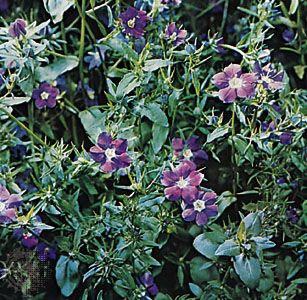
Venus’s looking glass (Legousia or Specularia) is an annual herb belonging to the bellflower family (Campanulaceae). Native to the sunny, sandy regions of the Mediterranean, this plant is frequently cultivated as a garden ornamental for its striking, wide-open flowers that bloom in shades of blue, violet, or white.12
The plant typically grows to a height of about 22 cm (9 inches) and features egg-shaped basal leaves with narrower stem leaves. Its unique common name is derived from its long calyx—a collection of fused sepals—which bears a resemblance to the handle of a mirror.1
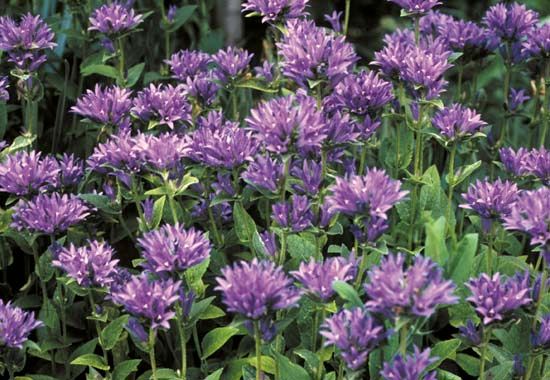
What other plants belong to the bellflower family?
The Campanulaceae family, commonly known as the bellflower family, encompasses approximately 84 genera and 2,400 species of mostly herbaceous plants. While the genus Campanula is the most well-known, the family includes a diverse array of other plants:34
- Ladybell (Adenophora): Includes 60 species native to Europe and Asia, typically featuring blue, bell-shaped flowers in spikes or clusters.3
- Canarian bellflower (Canarina): Notable for producing berries rather than capsules and having six-lobed flowers.3
- Bonnet bellflower (Codonopsis): A genus of sprawling perennials from Asia with pendent, bell-shaped flowers.3
- Trailing bellflower (Cyananthus): Dainty, mat-forming perennials from the Himalayas with wide-open, blue bell tubes.34
- Grassy bellflower (Edraianthus): Low-growing perennials from the Balkans that often bear clustered, upward-facing bells.3
- Dart bellflower (Michauxia): Distinguished by its 7 to 10 deep-parted lobes and a conspicuous, dartlike central column.3
- Giant bellflower (Ostrowskia): A fleshy-rooted perennial native to Central Asia that produces large, pale-lilac bells.3
- Ring bellflower (Symphyandra): Named for its joined ring of anthers, this genus includes perennials and biennials with nodding, long-tubed bells.3
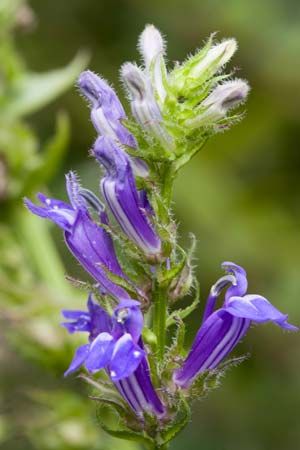
- Lobelioids (Subfamily Lobelioideae): Formerly the family Lobeliaceae, this group includes the large genus Lobelia, as well as Centropogon, Siphocampylus, and Burmeistera, many of which are adapted for hummingbird pollination.34
How do annual herbs differ from perennial plants?
The primary difference between annual and perennial plants lies in the duration of their life cycles and their growth patterns.
Annual Plants
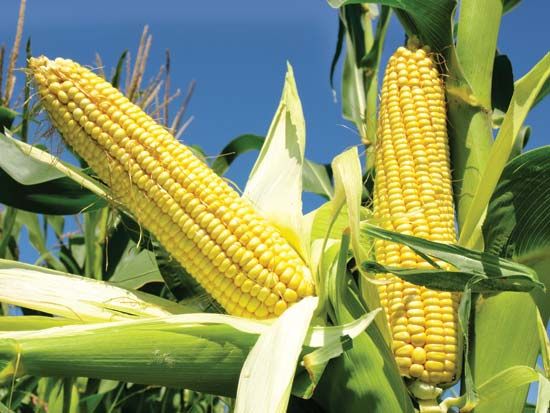
Annuals are plants that complete their entire life history—germinating from seed, maturing, flowering, and producing new seeds—within a single growing season. Once this cycle is complete, the plant dies. Common examples include corn, wheat, peas, beans, and squashes9.789
Perennial Plants
Perennials are plants that live for an indefinite number of years, often flowering annually. While all trees and shrubs are perennials, many herbaceous plants also fall into this category. In temperate climates, the aboveground portions of herbaceous perennials typically die back in autumn, but the plant survives the winter through subterranean structures such as bulbs, rhizomes, corms, tubers, or stolons, allowing them to produce new growth the following season.98107
In summary, while annuals must be replanted each year to continue a garden’s display, perennials are designed to persist and regrow from year to year.98
What are some other flowers named after figures in mythology?
Many flowers have names or origins rooted in mythology, often stemming from stories of metamorphosis where a figure is transformed into a plant. Here are some notable examples:
- Narcissus: Perhaps the most famous example, this flower is named after the beautiful youth Narcissus from Greek mythology. According to legend, after he fell in love with his own reflection and died, the flower sprang up where he perished.141516
- Iris: The name of this flower is borrowed from the Greek word for “rainbow.” In mythology, Iris was the personification of the rainbow and a messenger of the gods.1718
- Hyacinth: In Greek myth, the youth Hyacinthus was accidentally killed by Apollo during a discus-throwing lesson. A flower is said to have grown from his blood, though it is noted that this mythological plant may have been a fritillary rather than the modern hyacinth.16
- Laurel: While a tree rather than a typical garden flower, the laurel is central to the myth of Daphne, who was transformed into a laurel tree to escape the unwanted advances of Apollo.1619
These stories reflect a common theme in ancient mythology where the natural world is intimately connected to the lives and fates of divine or heroic figures.2016
Sources
- Venus’s looking glass — Encyclopædia Britannica
- Venus's looking-glass — Merriam-Webster
- Campanulaceae — Encyclopædia Britannica
- Campanulaceae — Merriam-Webster
- Bellflower — Encyclopædia Britannica
- Asterales - Campanulaceae — Encyclopædia Britannica
- Perennial — Encyclopædia Britannica
- Is That Plant 'Perennial' or 'Annual'? — Merriam-Webster
- Angiosperm - General features — Encyclopædia Britannica
- Plant - Classification of angiosperms — Encyclopædia Britannica
- herb — Merriam-Webster
- Growth - Pressure — Encyclopædia Britannica
- Plant development - Environmental control of development — Encyclopædia Britannica
- Narcissus — Encyclopædia Britannica
- Narcissus: Top Questions — Encyclopædia Britannica
- Flower Etymologies For Your Spring Garden | Iris — Merriam-Webster
- iris — Merriam-Webster
- Flora — Encyclopædia Britannica
- myth - Relationships of similarity — Encyclopædia Britannica
- Greek mythology - Other types — Encyclopædia Britannica
- religious symbolism and iconography - Phytomorphic motifs — Encyclopædia Britannica
Published on · 3 min read