Mariposa Lily
Mariposa lilies, belonging to the genus Calochortus, are native to western North America. These perennial plants are found in a variety of habitats across…
In which regions or habitats are mariposa lilies typically found?
Mariposa lilies, belonging to the genus Calochortus, are native to western North America. These perennial plants are found in a variety of habitats across the region, ranging from dry soils to wildflower meadows.1
Specific habitat examples include:
- Dry soils: Species such as the sego lily (Calochortus nuttallii) are native to dry soil environments stretching from South Dakota to Washington and south to Oregon and CaliforniaOregon-state) and California.1
- Wildflower meadows: The white mariposa lily (C. eurycarpus) is known to form masses in the meadows of northwestern North America.1
- Arid regions: The sagebrush mariposa lily (C. macrocarpus) is one of the most common species found in the arid regions of the western United States.1
How many species of mariposa lilies exist, and what are some notable examples?
The genus Calochortus, commonly known as the mariposa lily, consists of approximately 40 species of tuliplike perennial plants within the lily family (Liliaceae). These plants are native to western North America and are characterized by their showy, often spotted flowers that rise from underground corms.1
Several species are notable for their appearance and historical significance:
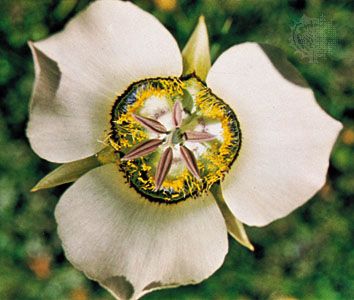
- Sego lily (Calochortus nuttallii): Native to dry soils across the western United States, this species features white flowers marked with yellow, purple, and lilac. Its edible corms were historically used as a food source by early Mormon settlers and Native Americans.1
- White mariposa lily (C. eurycarpus): Found in the wildflower meadows of northwestern North America, this species is recognized by the large purple spot on each of its white petals.1
- Sagebrush mariposa lily (C. macrocarpus): A common species in arid regions, it typically displays purple petals accented with a green stripe.1
How do mariposa lilies differ from other members of the Calochortus genus?
The term “mariposa lily” is the common name used to refer to the entire genus Calochortus. Therefore, mariposa lilies do not differ from other members of the genus; rather, they are synonymous with the genus itself.1
The genus Calochortus consists of approximately 40 species of tuliplike perennial herbs within the lily family (Liliaceae). While individual species within the genus exhibit variations in their specific habitat preferences, flower coloration, and markings, they all share the following defining characteristics:13
- Botanical Structure: They grow from corms (modified underground stems) and feature simple or branched stems ranging from 15 to 130 cm (0.5 to 4 feet) in height.1
- Floral Anatomy: The flowers typically consist of three sepals and three large, broad petals. These petals, which measure 2.5 to 5 cm in length, often feature a conspicuous basal gland.13
- Appearance: The flowers are known for being showy and are frequently white, yellow, lilac, or bluish, often with distinct spots or markings in the center.1
What are the main differences between corms and bulbs?
While both corms and bulbs are specialized underground storage organs that help plants survive unfavorable conditions, they differ significantly in their internal structure and composition.
Key Differences
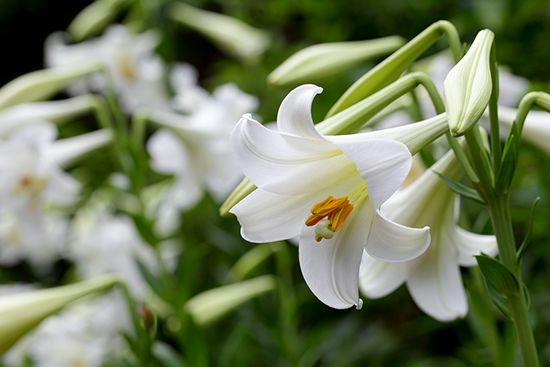
- Internal Composition: A bulb is essentially a large, globe-shaped bud composed of a short stem base surrounded by fleshy, overlapping leaves that store food. In contrast, a corm is a solid, fleshy underground stem that lacks these fleshy leaves. When a corm is cut in half, it appears solid, whereas a bulb reveals distinct, concentric rings of leaf layers.456
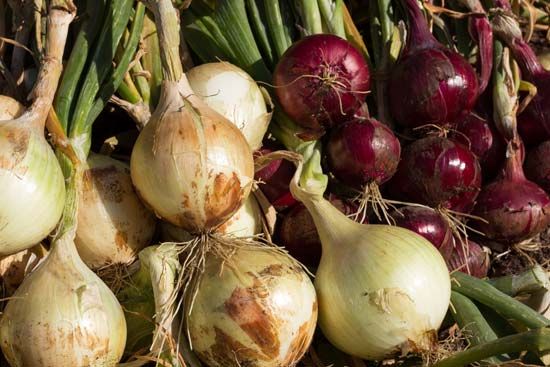
- External Covering: Corms are typically enclosed in a fibrous, papery covering known as a tunic. While some bulbs (like the onion) also have a papery tunic, others—such as true lilies—are “scaly,” meaning their storage leaves are naked and unprotected.45
- Growth and Propagation: Both structures produce offshoots for vegetative reproduction. Corms produce smaller structures called cormels, while bulbs produce bulblets or offsets from the axils of their fleshy leaves.46
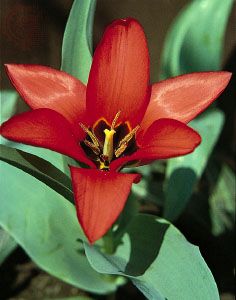
Common examples of plants that grow from corms include the crocus, gladiolus, and taro, while narcissus, tulip, and hyacinth are classic examples of bulbous plants.45
Sources
- mariposa lily — Encyclopædia Britannica
- Calochortus — Merriam-Webster
- fungus - Annotated classification — Encyclopædia Britannica
- Corm — Encyclopædia Britannica
- Bulb — Encyclopædia Britannica
- horticulture - Vegetative structures — Encyclopædia Britannica
Published on · 3 min read