Grape Hyacinth
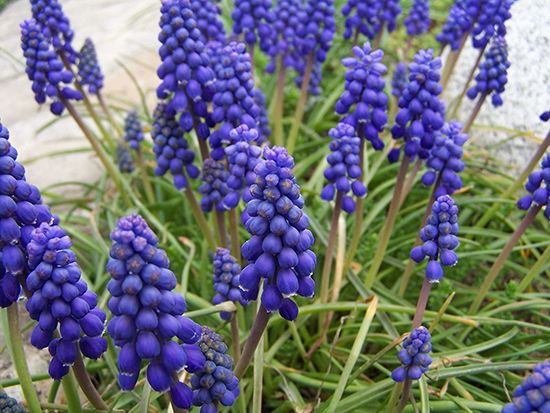
The grape hyacinth (genus Muscari) is a group of approximately 50 species of small, bulbous perennials native to the Mediterranean region. These plants…
What is Grape hyacinth?
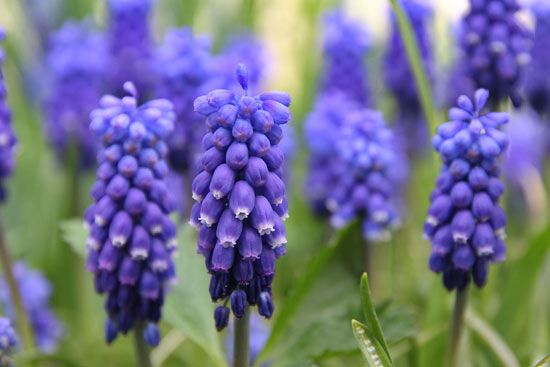
The grape hyacinth (genus Muscari) is a group of approximately 50 species of small, bulbous perennials native to the Mediterranean region. These plants belong to the Asparagaceae family and are widely cultivated as spring-flowering garden ornamentals.12
Key characteristics include:
- Flowers: They feature dense, urn-shaped flowers in shades of blue, white, yellow, or pink, which grow in clusters at the top of a leafless stalk. Some species are known for a musky scent.1
- Structure: The plants grow from an underground bulb and produce long, narrow leaves.1
- Growth: While popular in gardens, some species can naturalize easily and may become weedy in certain environments.1
The genus is classified within the order Asparagales and the division Angiosperm.1
What are some other plants in the Asparagaceae family?
The Asparagaceae family is a diverse group of flowering plants comprising approximately 153 genera and 2,500 species. Because the family is united primarily by genetic relationships rather than physical appearance, it includes a wide variety of plants ranging from desert succulents to popular houseplants and garden ornamentals.34
Some notable plants within this family include:
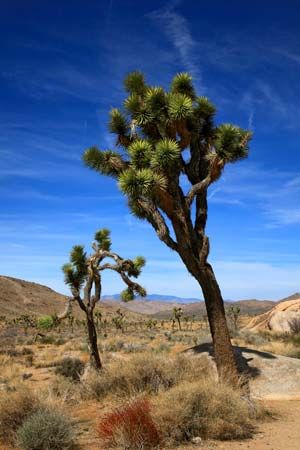
- Succulents and Desert Plants: Various species of the genus Agave, such as the century plant, sisal, and blue agave, as well as the Joshua tree (genus Yucca).345
- Houseplants: The spider plant, hostas, and various species of Dracaena, including the snake plant3.4
- Garden Ornamentals: Hyacinths, lily of the valley, bluebells, and tuberose.34
- Other Notable Genera: Butcher’s broom, squill, and the ti plant.34
How do bulbous plants survive through the winter?
Bulbous plants survive the winter by entering a state of dormancy, utilizing their specialized underground structures to endure periods when water is unavailable or conditions are unfavorable for growth.7
A bulb is essentially a modified stem that functions as a resting stage for certain perennial plants. These structures consist of a globe-shaped, underground bud featuring fleshy leaves or expanded leaf bases. These fleshy components serve as vital food reserves, providing the energy necessary for the plant to remain dormant throughout the winter and to resume active growth once favorable conditions return in the spring.7
While the term “bulb” is often used broadly in horticulture, it technically refers to specific botanical structures. Other similar food-storing organs that allow plants to survive dormant periods include solid corms and elongated rhizomes.7
What does it mean for a plant to naturalize in a new environment?
For a plant, the process of becoming naturalized refers to a non-native species establishing itself in the wild within a new environment. A plant is considered naturalized when it is able to grow and reproduce successfully in its new habitat without any ongoing human intervention.8
While many species are introduced to new regions—often through human activities like global commerce—most do not survive long-term because they lack the necessary adaptations to thrive in their new surroundings. However, those that do successfully naturalize have managed to integrate into the local ecosystem. In some regions, these naturalized “aliens” can become quite common, sometimes making up a significant portion of the total local plant population.9810
It is important to distinguish naturalization from the behavior of invasive species. While all invasive species are non-native, they are specifically defined by their ability to significantly modify or disrupt the ecosystems they colonize, often by outcompeting indigenous species.9
Sources
- grape hyacinth — Encyclopædia Britannica
- grape hyacinth — Merriam-Webster
- list of plants in the family Asparagaceae — Encyclopædia Britannica
- Asparagales - Organization and taxonomy — Encyclopædia Britannica
- Asparagaceae — Encyclopædia Britannica
- agave — Encyclopædia Britannica
- Bulb — Encyclopædia Britannica
- naturalized — Merriam-Webster
- naturalization — Merriam-Webster
- United States - Plant life — Encyclopædia Britannica
- Plant - Succession and zonation — Encyclopædia Britannica
- invasive species — Encyclopædia Britannica
Published on · 3 min read