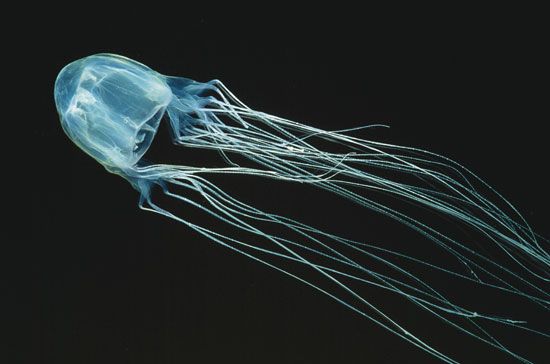
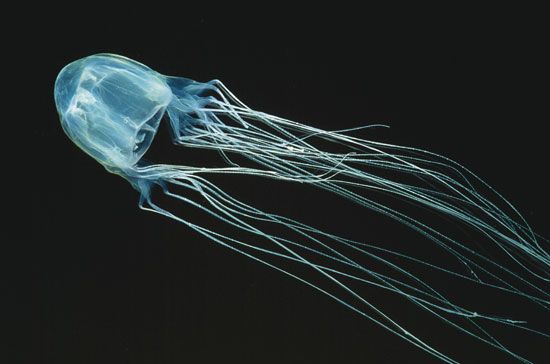
Hydra
A Hydra is a genus of small, freshwater invertebrate animals belonging to the class Hydrozoa. While most members of the class Hydrozoa are marine-dwelling…
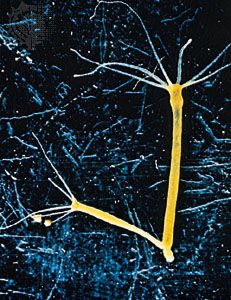
What is a hydra and how does it differ from other hydrozoan species?
A Hydra is a genus of small, freshwater invertebrate animals belonging to the class Hydrozoa. While most members of the class Hydrozoa are marine-dwelling, colonial organisms, Hydra is distinct in several key ways.12
Unlike the majority of hydrozoans, which typically exist as branched, colonial polyps that often produce free-swimming medusae (jellyfish), Hydra is strictly solitary and lacks a medusa stage entirely in its life cycle. While other hydroids grow through vegetative expansion into complex colonies connected by a common living tube, Hydra reproduces through budding or sexual reproduction, releasing offspring as miniature, independent individuals. Physically, Hydra consists of a simple, translucent tube with a mouth surrounded by tentacles, and it is capable of unique locomotion, such as “looping” or creeping on its base.123
What is the basic structure of a hydra and how does it function?
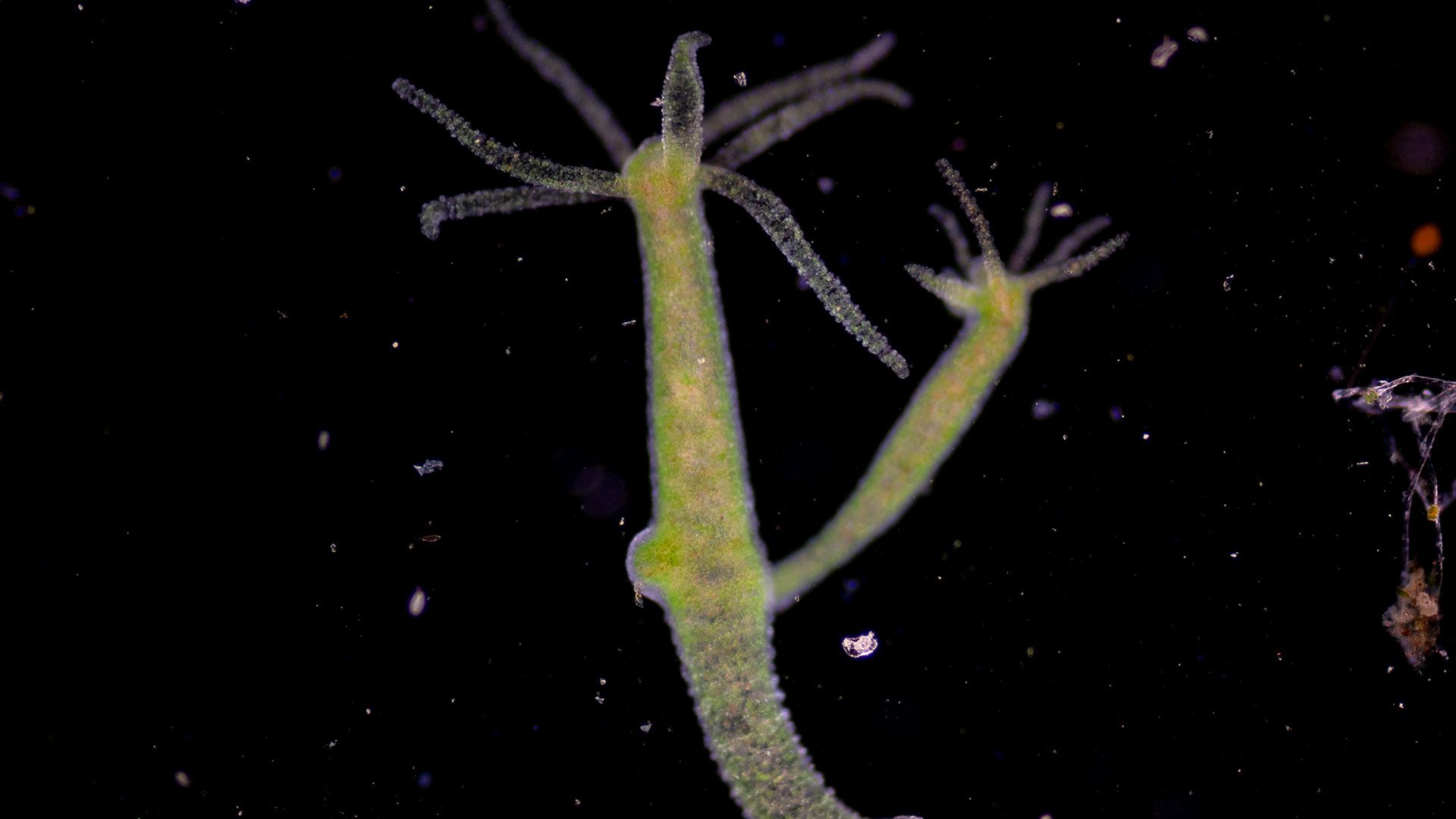
The Hydra is a small, freshwater invertebrate characterized by a simple, radially symmetrical body structure.25
Physical Structure
The body is a thin, translucent tube measuring up to 30 millimeters in length, composed of two primary cell layers separated by a structureless layer of connective tissue called the mesoglea. The upper end features a mouth surrounded by a circlet of 4 to 25 tentacles, while the lower end serves as an adhesive base for attachment.2
Functional Systems
- Digestive System: Hydra utilizes a gastrovascular cavity for digestion. Food is ingested through the mouth, where it undergoes partial extracellular digestion by enzymes secreted by the inner gastrodermis. The remaining particles are engulfed by cells and digested intracellularly within vacuoles. The same opening serves as an anus to eject residue.52
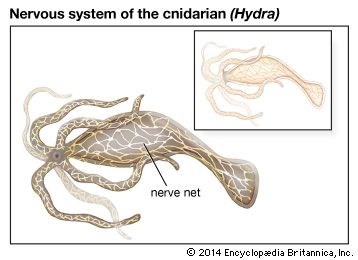
- Nervous System: It possesses a nerve net—a diffuse, meshlike system of neurons dispersed throughout the body. This system lacks a centralized brain, though neurons are slightly more concentrated near the mouth and the pedal disk. It coordinates behavior and responses to stimuli, despite being relatively slow compared to more complex nervous systems.6
How do hydras feed and what type of prey do they typically consume?
Hydra are predatory freshwater invertebrates that primarily consume other small aquatic animals, such as crustaceans.2
Feeding Process
The feeding process relies on the Hydra’s specialized anatomy and predatory behavior:
- Capture: When prey comes into contact with the Hydra’s tentacles, the animal uses specialized stinging cells to immobilize its target.68
- Ingestion: Once captured, the prey is moved by the tentacles toward the mouth, which is located at the upper end of the body.26
- Digestion: The prey is passed into the gastrovascular cavity. Here, the inner layer of cells (the gastrodermis) secretes enzymes to begin extracellular digestion, which is largely limited to the partial breakdown of proteins.6
- Absorption: After the food is partially disintegrated, the gastrodermal cells engulf the remaining fragments through phagocytosis. Digestion is then completed intracellularly within food vacuoles.6
- Egestion: The same opening used for ingestion serves as an anus, allowing the Hydra to eject any indigestible residue back out through the mouth.26
What are the different species of hydra and how are they classified?
The genus Hydra consists of approximately 25 recognized species, which are primarily distinguished by variations in their physical characteristics, including body color, the length and number of their tentacles, and the size and positioning of their gonads.2
Classification
Hydra are classified within the following biological hierarchy:210
- Phylum: Cnidaria
- Class: Hydrozoa
- Order: Hydroida
- Genus: Hydra
Unlike most other members of the class Hydrozoa, which are typically marine, colonial, and possess a life cycle that includes a medusa (jellyfish) stage, Hydra are unique for being solitary, freshwater-dwelling organisms that lack a medusa stage entirely. They exist exclusively in the polyp form, which is a simple, tubular body structure.21
Sources
- hydroid — Encyclopædia Britannica
- Hydra — Encyclopædia Britannica
- Reproductive behaviour - Coelenterates — Encyclopædia Britannica
- Hydra — Merriam-Webster
- nervous system - Diffuse nervous systems — Encyclopædia Britannica
- Invertebrate digestive system — Encyclopædia Britannica
- cnidarian - Nervous system and organs of sensation — Encyclopædia Britannica
- cnidarian - Ecology and habitats — Encyclopædia Britannica
- Hydra — Encyclopædia Britannica
- cnidarian - Annotated classification — Encyclopædia Britannica
Published on · 3 min read