Hydrocharitaceae
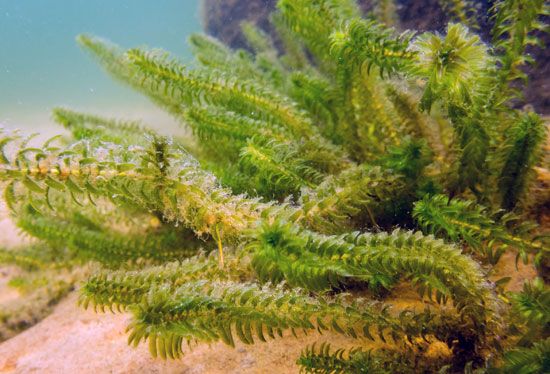
Plants within the Hydrocharitaceae family, particularly the genus Elodea, are frequently utilized in scientific and educational settings as experimental…
How have Hydrocharitaceae plants been used in scientific research?
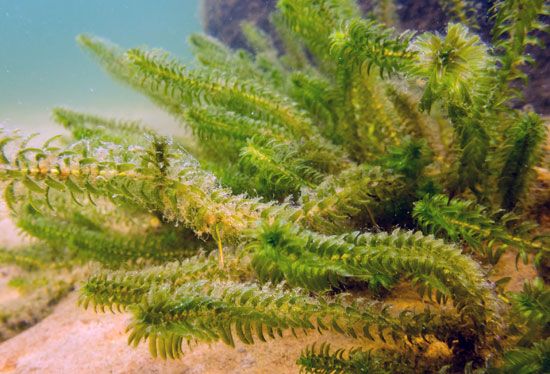
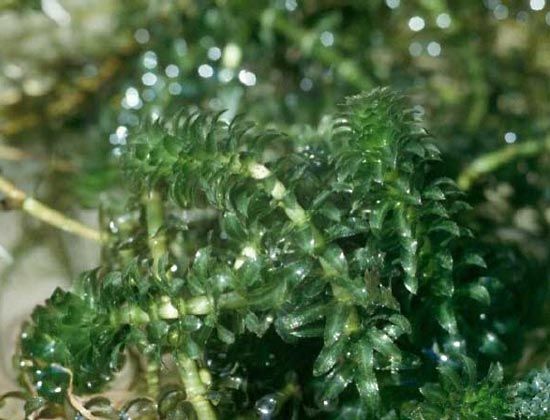
Plants within the Hydrocharitaceae family, particularly the genus Elodea, are frequently utilized in scientific and educational settings as experimental models for demonstrating fundamental biological processes.12
Because of their accessibility and clear cellular structure, these plants are commonly used in laboratory demonstrations to observe:
- Cellular structures: Researchers and students use them to visualize chloroplasts and nuclei under a microscope.2
- Physiological processes: They serve as effective models for demonstrating photosynthesis, specifically the production of oxygen by aquatic plants.2
Beyond their role as experimental subjects, members of this family are valued in aquarium systems for their rapid growth and ability to contribute to the health of the environment through high oxygen production. While some species are prized for these scientific and ornamental uses, others, such as Hydrilla verticillata, are recognized as significant aquatic weeds in various regions.12
What is the geographical distribution of Hydrocharitaceae plants?
The Hydrocharitaceae family, commonly known as the frog’s-bit family, is cosmopolitan in its distribution, meaning its members are found in aquatic environments throughout the world. These plants inhabit a variety of freshwater, brackish, and marine ecosystems.152
The geographical and environmental range of the family includes:
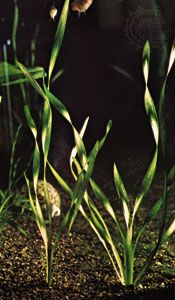
- Fresh and Brackish Waters: Many genera, such as the nearly cosmopolitan Najas (water nymph), are native to fresh or brackish waters worldwide. Others have more specific origins; for example, Elodea (waterweed) is native to the Western Hemisphere, specifically South America, though it has naturalized as an invasive species in regions including Asia, Africa, Australia, and Europe. Vallisneria (tape grass) is native to both the Eastern and Western hemispheres.123
- Marine Environments: Marine members of the family, such as Thalassia (turtle grass), Halophila, and Enhalus, are found in clear, warm temperate and tropical waters globally, typically occurring at depths of up to 30 meters (about 100 feet).2
- Tropical and Temperate Regions: While many species are found in temperate regions, the family is well-represented in the tropics, with genera like Ottelia having a primary center of distribution in the Paleotropics.2
How does the Hydrocharitaceae family differ from other aquatic plant families?
The Hydrocharitaceae family, a member of the order Alismatales, is distinguished from other aquatic plant families primarily by its unique floral anatomy and specialized reproductive strategies.17
Key Distinctions
- Ovary Position: The most significant structural difference is that Hydrocharitaceae flowers possess an inferior ovary—an ovary positioned below the attachment point of the sepals and petals—which is unique within the order Alismatales.7
- Pollination Mechanisms: While other Alismatales families often rely on insects for pollination, Hydrocharitaceae has evolved highly specialized methods using water as a transfer vector. In many species, male flowers detach and float on the surface, acting like small “boats” that are blown by the wind until they encounter the meniscus created by a female flower, facilitating pollen transfer. In marine species, pollen is released in chains that drift with water currents to contact stigmas.71
- Floral Arrangement: Flowers are often enclosed within a spathe—a fleshy modified leaf or two connate leaves—which develops on a stalk from the leaf axis. These stalks can elongate significantly to reach the water’s surface or remain short to keep flowers submerged.7
- Reproductive Diversity: The family exhibits a wide range of sexual systems, including dioecious (separate male and female plants) and monoecious arrangements, as well as the ability to reproduce asexually through rhizomes, stolons, or specialized buds called turions.17
What economic or ornamental uses do Hydrocharitaceae plants have?
Members of the Hydrocharitaceae family serve several economic and ornamental purposes, primarily within the aquarium trade and scientific education.
Ornamental and Practical Uses
- Aquarium Trade: Many species are highly valued for aquariums due to their rapid growth and ability to oxygenate water, which supports the health of aquatic systems. Popular choices include Elodea, Vallisneria spiralis, V. americana, and Egeria densa.125
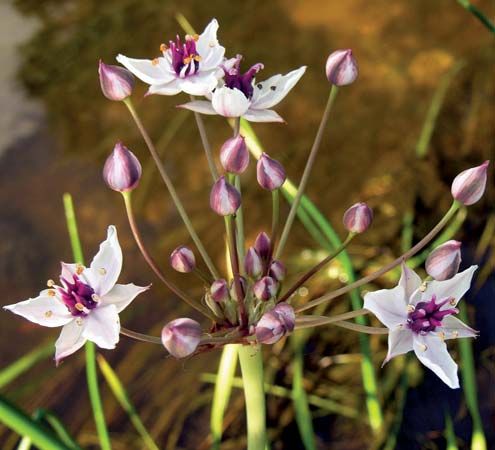
- Ornamental Gardening: The common frog’s-bit (Hydrocharis morsus-ranae) is cultivated for its attractive, three-petaled white flowers and floating leaves, while the water soldier (Stratiotes aloides) is used for its unique rosette structure.1
- Educational Research: Elodea and Brazilian elodea are frequently used in schools and laboratories to demonstrate biological processes, such as photosynthesis, oxygen production, and cellular structures like chloroplasts.12
- Agricultural Use: Marine species like turtle grass (Thalassia) are often collected after washing ashore following storms and utilized as [fertilizer].1
While these plants provide significant benefits, some, such as Hydrilla verticillata and certain Elodea species, are considered troublesome invasive species that can obstruct waterways.12
Sources
- Hydrocharitaceae — Encyclopædia Britannica
- Elodea — Encyclopædia Britannica
- Hydrocharitaceae — Merriam-Webster
- Hydrocharis — Merriam-Webster
- Alismatales - Hydrocharitaceae — Encyclopædia Britannica
- Hydrocleys — Encyclopædia Britannica
- Alismatales - Order characteristics — Encyclopædia Britannica
Published on · 3 min read