Impatiens
The genus Impatiens is widely distributed across Asia, Africa, and North America. While the provided information does not explicitly detail specific soil or…
Where are Impatiens plants commonly found in nature, and what are their preferred habitats?
The genus Impatiens is widely distributed across Asia, Africa, and North America. While the provided information does not explicitly detail specific soil or light requirements, it notes that various species are native to diverse environments ranging from the tropics of Asia to temperate regions.1
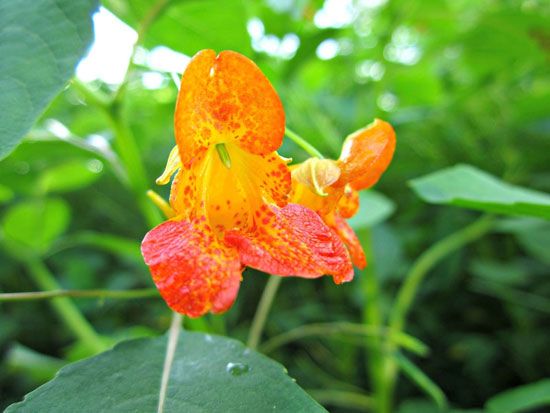
For instance, the garden balsam (Impatiens balsamina) is native to tropical Asian climates, whereas species such as the spotted jewelweed (I. capensis) and pale touch-me-not (I. pallida) are common in eastern North America. Additionally, the western touch-me-not (I. noli-tangere) is found across a broader range, including western North America, Europe, and Asia. These plants are well-known for their unique seed dispersal mechanism, where ripe seedpods burst under slight pressure to scatter seeds.1
How have Impatiens plants spread globally, and are any species considered invasive?
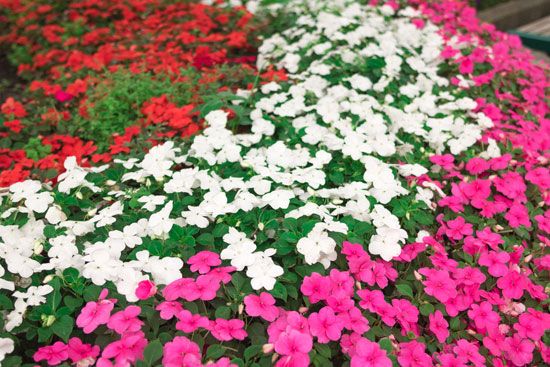
Impatiens plants have spread globally primarily through long-term human cultivation, as many species are popular ornamental garden plants. For example, the garden balsam (Impatiens balsamina), which is native to the tropics of Asia, has been introduced and grown in temperate regions worldwide for centuries.1
Regarding your question about invasive species, the provided information does not identify any specific Impatiens species as invasive. While some species, such as the spotted jewelweed (I. capensis) and pale touch-me-not (I. pallida), are described as common weeds in their native regions of eastern North America, the text does not categorize them or other members of the genus as invasive in non-native environments.1
What are the defining characteristics of plants in the Impatiens genus?
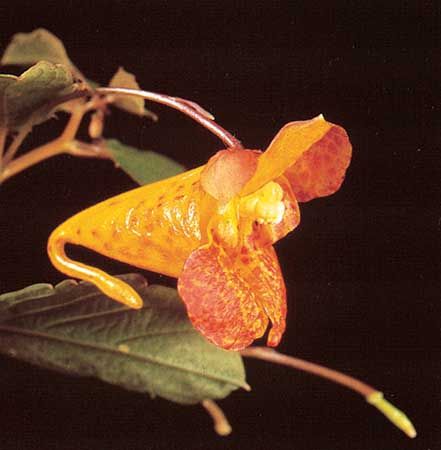
Plants in the Impatiens genus, commonly known as the touch-me-not family, are characterized by their fleshy, herbaceous structure and unique reproductive features.12
Key Characteristics
- Foliage: These plants typically bear simple leaves that are toothed and usually arranged alternately along the stem, though upper leaves often appear in whorls.12
- Flowers: The flowers are strongly zygomorphic (irregular in shape) and often held upside down. They feature a spur—a modified sepal—that secretes nectar to attract pollinators like bees. The floral structure typically consists of three petal-like sepals and five petals, with two pairs of petals joined at their bases.2
- Seed Dispersal: The genus name, meaning “impatient,” refers to the plant’s explosive seed dispersal mechanism. When the ripe seedpod (capsule) is touched, it dehisces—or bursts—with slight pressure, throwing the seeds a significant distance.12
These plants are widely distributed across Asia, Africa, and North America, thriving in diverse environments ranging from tropical regions to temperate zones.12
How many species of Impatiens are there, and which are the most popular for gardening?
The Impatiens genus is a large group of herbaceous plants within the family Balsaminaceae, though the provided information does not specify an exact count of the total number of species.1
Regarding popular garden varieties, the garden balsam (Impatiens balsamina) is the most prominent example mentioned. Native to the tropics of Asia, it has been cultivated globally in temperate regions for a long time. It is a versatile annual that reaches approximately 75 cm (30 inches) in height and is available in a wide array of horticultural forms featuring nearly every flower color except blue.1
While other species like the spotted jewelweed (I. capensis), pale touch-me-not (I. pallida), and western touch-me-not (I. noli-tangere) are well-known, they are typically identified as native weeds rather than primary ornamental garden selections.1
Sources
- Impatiens — Encyclopædia Britannica
- Ericales - Balsaminaceae — Encyclopædia Britannica
Published on · 3 min read