Hypocoly
It appears there may be a slight confusion between the botanical term "hypocotyl" and the bird species known as the "hypocolius."
What is Hypocoly?
It appears there may be a slight confusion between the botanical term “hypocotyl” and the bird species known as the “hypocolius.”
The hypocolius (Hypocolius ampelinus) is a slim, grayish songbird native to the Middle East. Often classified as the sole member of the family Hypocoliidae, it is sometimes associated with the waxwing family. Measuring about 18 cm in length, the bird is characterized by a black mask, a slight crest, and black wings tipped with white. It typically inhabits semiarid or cultivated regions in Iraq and surrounding areas, though it may wander as far as Afghanistan and India during the nonbreeding season.1
In contrast, a hypocotyl is a botanical term referring to the portion of a plant embryo or seedling axis located directly below the cotyledons.2
What are the physical characteristics of a waxwing?
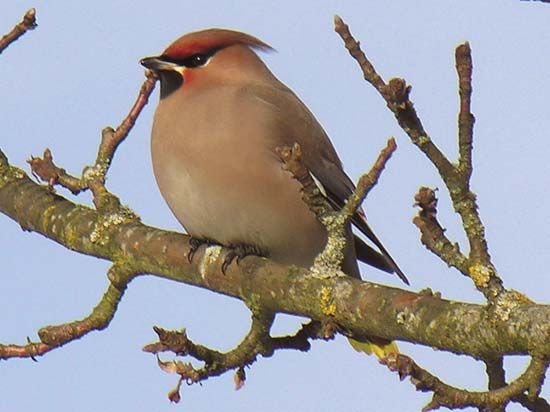
Waxwings are elegant songbirds belonging to the family Bombycillidae. They are characterized by several distinct physical features:
- Coloration: All species are primarily gray-brown in color.34
- Crest: They possess a prominent, tapering crest on their heads.34
- Wing Markings: They are named for the unique, shiny red, waxlike beads found on the tips of their secondary wing feathers.354
- Tail: They typically feature a yellow band at the tip of the tail.4
There are three species of waxwings, which vary slightly in size and additional markings:
- Bohemian waxwing (Bombycilla garrulus): This is the larger species, measuring approximately 20 cm (8 inches) in length. In addition to the red wing tips, it displays yellow and white markings on its wings.3
- Cedar waxwing (B. cedrorum): This species is smaller and generally less colorful than the Bohemian waxwing.3
How do songbirds typically migrate during the nonbreeding season?
Songbirds and other migratory birds utilize highly efficient, evolved behaviors to navigate long distances during the nonbreeding season, driven by a combination of internal physiological rhythms and external environmental cues.78
Physiological Preparation
Before migration, birds undergo significant metabolic changes, often triggered by the pituitary gland in response to decreasing day length. This process includes the accumulation of fat in body tissues, which serves as a vital energy reserve for the journey.910
Flight Patterns and Navigation
- Routes: While some species follow well-defined flyways, many travel along broad fronts across vast territories. Routes are influenced by geographical features like coastlines and river systems, as well as meteorological conditions such as wind direction.7
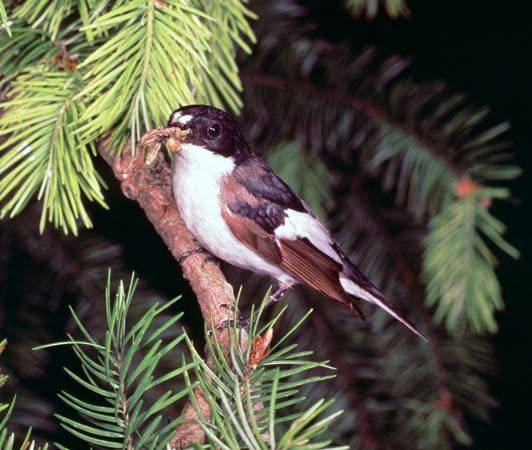
- Timing: Many songbirds, including thrushes, warblers, and flycatchers, are nocturnal migrants, with peak flight activity typically occurring between 10 pm and 1 am.7
- Navigation: Birds often return to precise locations using a combination of familiar landmarks—such as mountain ranges and coastlines—and an innate ability to orient themselves geographically.11
- Social Behavior: Although many species are solitary during other times of the year, most birds become gregarious during migration, often traveling in flocks to save energy.7
What does the term ‘passeriformes’ mean in bird classification?
The term Passeriformes refers to the largest order of birds, representing the dominant avian group on Earth today. Often called “true perching birds,” they are considered the most highly evolved of all avian orders, having undergone rapid evolutionary radiation to adapt to virtually all terrestrial environments across every continent except Antarctica.1415
Key characteristics of passeriforms include:
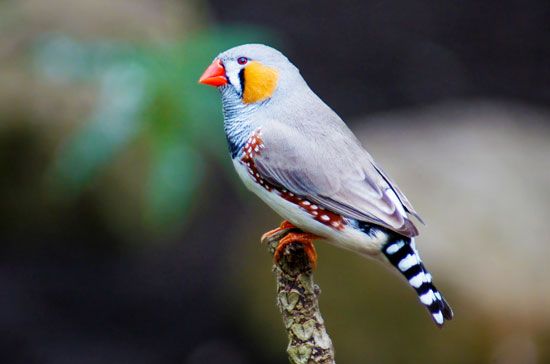
- Foot Structure: They possess a specialized “perching” foot with four toes—three directed forward and one backward (the hallux)—which allows them to grip branches securely.1416
- Taxonomy: The order is generally divided into two suborders: Tyranni (often called “suboscines”) and Passeri (often called “oscines” or songbirds).14
- Diversity: With approximately 5,700 species, they account for about 60 percent of all bird species worldwide. They exhibit significant behavioral plasticity, large brain sizes, and complex nest-building behaviors, which have contributed to their evolutionary success.15
Sources
- hypocotyl — Merriam-Webster
- Hypocoly — Encyclopædia Britannica
- Waxwing — Encyclopædia Britannica
- Passeriform - Plumage and pterylosis — Encyclopædia Britannica
- Bohemian waxwing — Merriam-Webster
- waxwing — Merriam-Webster
- Migration - Modes of migration — Encyclopædia Britannica
- Migration - Navigation and orientation — Encyclopædia Britannica
- Migration - Physiological stimulus of migration — Encyclopædia Britannica
- Migration - In Europe — Encyclopædia Britannica
- How do birds know when to fly south? — Encyclopædia Britannica
- Migration - Birds — Encyclopædia Britannica
- Migration - Origin and evolution of migration — Encyclopædia Britannica
- Passeriform — Encyclopædia Britannica
- Passeriform - Evolution and paleontology — Encyclopædia Britannica
- Passeriform - Size range and structural diversity — Encyclopædia Britannica
- Passeriform - Feet and legs — Encyclopædia Britannica
- Passeriform - Distinguishing taxonomic features — Encyclopædia Britannica
Published on · 3 min read