Ichneumon Wasp
The term "ichneumon" originates from the Greek word ichneumōn, meaning "tracker," which is derived from ichneuein (to track) and ichnos (footprint).…
What is the etymology of the name ‘ichneumon’ and its significance in relation to these insects?
The term “ichneumon” originates from the Greek word ichneumōn, meaning “tracker,” which is derived from ichneuein (to track) and ichnos (footprint). Historically, the name was first applied to the mongoose (Herpestes ichneumon), an animal known for its hunting behavior.1
In relation to the ichneumon wasp, the name reflects the insect’s role as a highly effective hunter of other arthropods. Unlike the mongoose, which tracks prey on the ground, these wasps are parasitoids that “track” and locate hosts—such as the larvae or pupae of moths, butterflies, and beetles—to lay their eggs on or within them.2
This behavior is central to their ecological significance. By developing as larvae inside a host and eventually killing it, these wasps serve as critical natural regulators of insect populations. Because of this, many species are utilized in biological control to manage agricultural pests, effectively “tracking down” and reducing the impact of invasive species.2
What are some common misconceptions about ichneumon wasps, and how do they differ from other wasps?
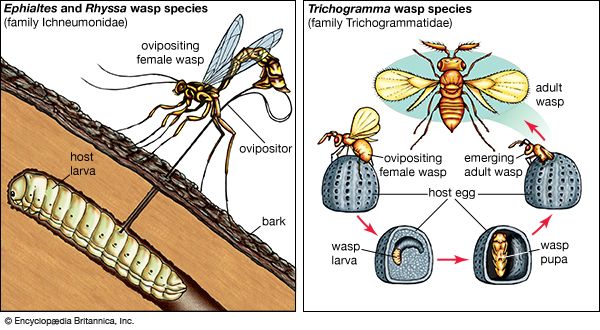
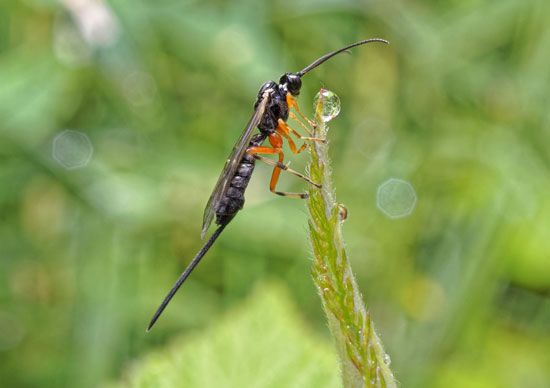
Common misconceptions about ichneumon wasps often stem from their appearance and their status as parasitoids. Because they are often large and possess a long, needle-like organ extending from their abdomen, people frequently mistake them for aggressive, stinging wasps. In reality, this organ is an ovipositor—a specialized tool used for laying eggs—and only a very small number of species are capable of using it defensively to sting vertebrates.
Ichneumon wasps differ significantly from other, more familiar wasps in several ways:
- Nesting Habits: Unlike social wasps (such as yellow jackets) that build elaborate paper nests and live in colonies with a caste system, ichneumon wasps are solitary. They do not build nests to provision with paralyzed prey; instead, they deposit their eggs directly in or on a host arthropod.
- Physical Structure: They typically possess longer antennae with more segments than stinging wasps. While they share the characteristic narrow waist of the order Hymenoptera, their overall morphology is adapted for their unique parasitic lifestyle rather than colony defense.
- Ecological Role: While many wasps are predators, ichneumon wasps function as parasitoids. Their larvae consume the host from the inside out, which makes them vital for regulating insect populations in both natural and agricultural ecosystems.
What is the lifespan of a typical ichneumon wasp?
The provided search results do not contain specific information regarding the typical lifespan of an adult ichneumon wasp. While the literature details their complex life cycle—including their development as larvae within or upon a host, their pupation in silken cocoons, and their emergence as adults—data on the duration of their adult stage is not explicitly provided in the available text.35
What are the key characteristics that distinguish ichneumon wasps from other insect species?
Ichneumon wasps, belonging to the family Ichneumonidae, are distinguished from other insect species and stinging wasps by several key characteristics:
- Parasitoid Lifestyle: Unlike many other wasps that are predators or scavengers, ichneumon wasps are parasitoids. They do not build nests to provision with paralyzed prey. Instead, females deposit their eggs directly in or on the larvae or pupae of other arthropods, such as moths, butterflies, and beetles. The developing larvae consume the host from the inside out.13
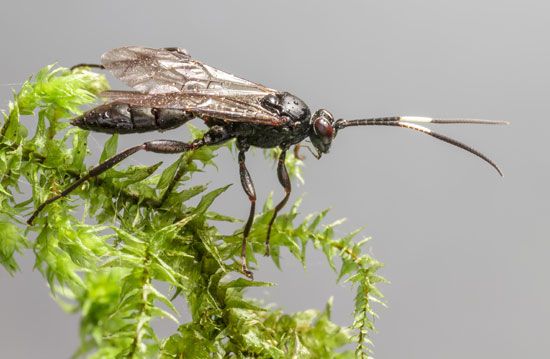
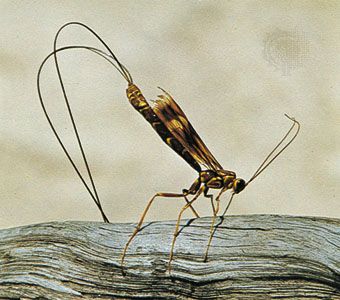
- Morphology: While they share the narrow waist typical of the order Hymenoptera, they generally possess longer antennae with more segments than stinging wasps. They are also characterized by a long, slender, curved abdomen.1
- The Ovipositor: A defining feature is the ovipositor, an egg-laying organ that is often longer than the wasp’s body. In some species, this organ is highly specialized, functioning as a drill capable of penetrating solid wood to reach hosts hidden deep within plant tissues.1
- Ecological Role: They are vital for the natural regulation of insect populations, including many agricultural pests. Because they kill their hosts, they are frequently utilized as biological control agents.1
Sources
- ichneumon wasp — Merriam-Webster
- ichneumon — Merriam-Webster
- ichneumon wasp — Encyclopædia Britannica
- ichneumonid — Merriam-Webster
- Hymenoptera - Solitary forms — Encyclopædia Britannica
- yellow jacket — Encyclopædia Britannica
- Ichneumonidae — Merriam-Webster
Published on · 3 min read