Parasitoid
A parasitoid is an insect whose larvae develop on or within the body of a single host arthropod, eventually killing it. This distinguishes parasitoidism from…
What is parasitoid?
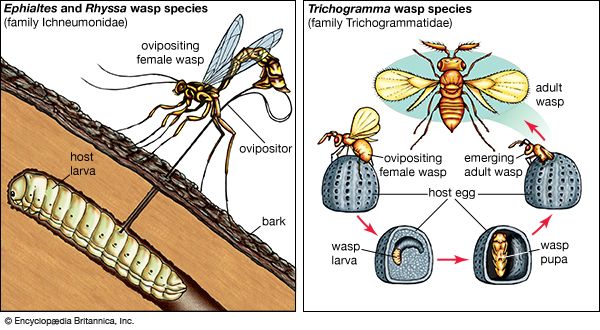
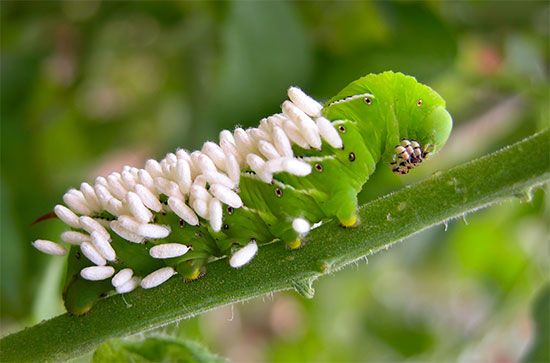
A parasitoid is an insect whose larvae develop on or within the body of a single host arthropod, eventually killing it. This distinguishes parasitoidism from typical parasitism, where the parasite does not necessarily kill its host.12
Most known parasitoids are wasps, though the strategy has also evolved in certain flies, beetles, moths, lacewings, and one caddisfly speciesewing), and one caddisfly species. Scientists estimate there are approximately 800,000 species of parasitoids, though only about 68,000 have been formally named and described. Because they effectively destroy their hosts, some parasitoids are utilized in biological control to manage pest populations.123
What is the main difference between a parasite and a parasitoid?
The primary difference between a parasite and a parasitoid lies in the ultimate fate of the host organism.
- Parasitism: In a parasitic relationship, one organism (the parasite) benefits at the expense of another (the host). While the parasite may harm the host, it does not necessarily kill it. Parasites often evolve toward varying levels of virulence depending on ecological factors like host density and transmission rates; they may even evolve to be less harmful over time to ensure the host survives long enough for the parasite to spread to new hosts.13
- Parasitoidism: A parasitoid is a specific type of organism—typically an insect—whose larvae develop on or within a single host. Unlike a typical parasite, a parasitoid almost invariably kills its host as part of its developmental process.516
Because parasitoids effectively destroy their hosts, they are frequently utilized in biological control programs to manage populations of injurious pests.56
How do scientists use parasitoids for biological pest control?
Scientists use parasitoids as a key component of biological control, a strategy that employs natural enemies to manage pest populations and reduce reliance on chemical pesticides. Because parasitoid larvae develop on or within a single host and inevitably kill it, they are highly effective at suppressing specific pest species.2789
The application of parasitoids in pest management generally follows these approaches:
- Introduction and Augmentation: Natural enemies, such as specific chalcid wasps, are introduced into an environment where a pest has become problematic. If the parasitoid is already present, scientists may encourage its population to multiply to increase its effectiveness in reducing pest numbers.2
- Integrated Control: Modern practice often utilizes integrated control, which combines the release of parasitoids with other methods—such as using pest-resistant crop varieties, pheromone traps, or minimal, targeted applications of insecticides that do not harm the beneficial parasitoids.781
- Environmental Safety: Before releasing any parasitoid, scientists must carefully evaluate the potential impact to ensure the organism does not become an invasive species that disrupts the local ecosystem2.
What are some examples of insects that act as parasitoids?
Many insects have evolved to be parasitoids, a group primarily composed of wasps, though it also includes certain flies, beetles, moths, and lacewings.10
Common Parasitoid Insects
- Tachinid Flies (Tachinidae): These flies are significant in controlling destructive insects like caterpillars and beetle larvae. Notable examples include Ceromasia sphenophori, which targets the sugarcane beetle borer, and Compsilura concinnata, which parasitizes over 200 species of caterpillars.1
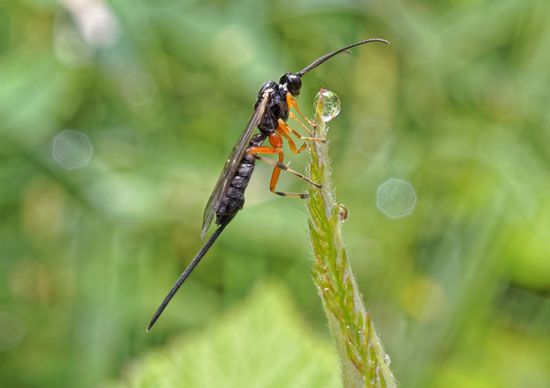
- Ichneumon Wasps (Ichneumonoidea): These wasps are well-known for depositing their eggs in or on the larvae or pupae of other insects. Their larvae feed on the host’s body fats and fluids until they are fully grown.11
- Braconids: These wasps are valuable control agents that parasitize many Lepidoptera and wood-boring beetles.12
- Chalcids and Trichogrammatids: These groups are frequently used to parasitize a variety of orchard pests.12
- Spider Wasps (Pompilidae): These wasps construct cells in the ground or wood, provisioning them with paralyzed spiders to serve as food for their developing larvae.11
- Tiphiids and Scoliids: These are primarily parasites of beetle grubs found in the soil.1112
While most parasitoids are beneficial in managing pest populations, their life cycles are highly specialized, often involving complex methods of locating and infecting their specific hosts.111
Sources
- parasitoid — Encyclopædia Britannica
- Biological control — Encyclopædia Britannica
- parasitism — Encyclopædia Britannica
- parasitic disease - Parasite life cycles — Encyclopædia Britannica
- Lepidoptera - Environmental hazards — Encyclopædia Britannica
- community ecology - Parasite - host interactions — Encyclopædia Britannica
- Pest — Encyclopædia Britannica
- insecticide - Environmental contamination and resistance — Encyclopædia Britannica
- Agricultural technology - Biological controls — Encyclopædia Britannica
- tachinid fly — Encyclopædia Britannica
- Hymenoptera - Social parasitism — Encyclopædia Britannica
- Hymenoptera - Solitary forms — Encyclopædia Britannica
- Hymenoptera - Economic importance — Encyclopædia Britannica
Published on · 3 min read