Icteridae
Icteridae is a diverse family of songbirds within the order Passeriformes, comprising approximately 100 species native to the Americas. These birds, often…
What is Icteridae?
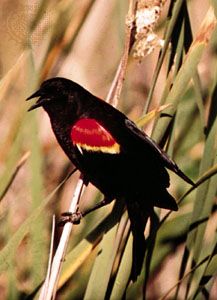
Icteridae is a diverse family of songbirds within the order Passeriformes, comprising approximately 100 species native to the Americas. These birds, often called icterids, vary significantly in size—ranging from 16 to 54 cm—and are characterized by their conical bills, strong feet, and long, pointed wings. Most species exhibit black plumage to varying degrees.1
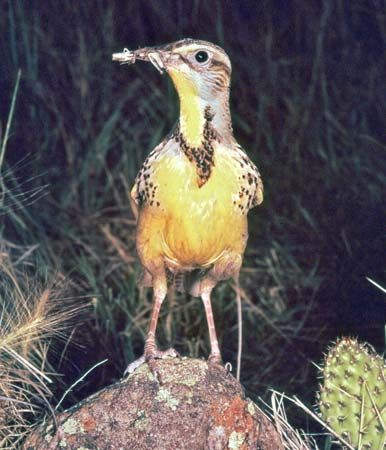
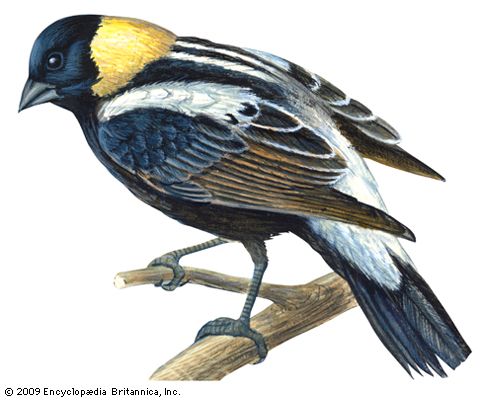
The family includes well-known birds such as blackbirds, grackles, orioles, meadowlarks, cowbirds, and bobolinks, as well as tropical species like troupials, oropendolas, and caciques.12
Their reproductive behaviors are highly varied. Some, like oropendolas, are colonial nesters, while certain cowbirds are brood parasites, laying their eggs in the nests of other species to be raised by foster parents.2
What is brood parasitism in cowbirds?
Brood parasitism is a form of social parasitism in which a bird lays its eggs in the nest of another species, providing no parental care to its own offspring.34
Cowbirds, which belong to the family Icteridae, are well-known for this behavior. A female cowbird may lay up to 40 eggs in a single season, often removing an egg from the host’s nest before depositing her own. This strategy forces the host species to expend energy raising the cowbird chick, which often outcompetes or displaces the host’s own nestlings for food.56
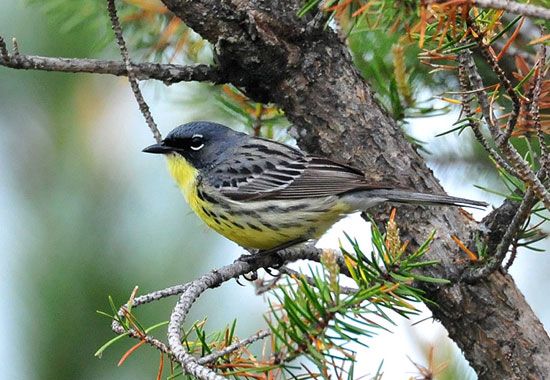
The impact on host populations can be severe, contributing to the decline of various songbirds. In response, some species, such as the Kirtland’s warbler, have evolved defensive behaviors, including the ability to recognize foreign eggs and build new nests over the parasitized ones.56
How do oropendolas build their unique nests?
Oropendolas are renowned for constructing elaborate, hanging nests that can reach lengths of up to 2 meters (6.6 feet). These structures are shaped like windsocks and are built exclusively by the female of the species.7
The birds typically breed in colonies, with some trees hosting as many as 100 nests hanging from branches or fronds. To protect their offspring from arboreal predators like monkeys, the colony members strategically select large, isolated trees for their nesting sites.7
While the females are responsible for the intricate weaving of the nest and the subsequent incubation and feeding of the young, the males play a role in guarding the colony during the day. Males also monitor the progress of nest construction, which helps them track when females are receptive to mating.7
What are the main differences between blackbirds and orioles?
It is important to clarify that “blackbird” and “oriole” are not mutually exclusive categories in the New World; both are members of the same family, Icteridae, which includes a diverse range of birds such as grackles, meadowlarks, and cowbirds.8
The primary distinctions between them involve their classification and appearance:
- Classification: New World orioles belong to the genus Icterus, while birds commonly referred to as blackbirds belong to genera such as Agelaius. Additionally, there is a separate family of Old World orioles (Oriolidae) that is distinct from the New World icterids.18
- Appearance: New World orioles are typically characterized by striking black-and-yellow or black-and-orange plumage, with females often appearing plainer. In contrast, while many icterids show black in varying degrees, the term “blackbird” is generally applied to species that are predominantly black in color.18
- Behavior: Both groups are perching birds (Passeriformes), but they exhibit diverse nesting and foraging habits common to the Icteridae family, ranging from solitary nesting to colonial behavior.82
Sources
- Icteridae — Encyclopædia Britannica
- Passeriform - Territoriality and courtship — Encyclopædia Britannica
- brood parasitism — Merriam-Webster
- Cowbird — Encyclopædia Britannica
- Kirtland’s warbler: Top Questions — Encyclopædia Britannica
- kleptoparasitism: Top Questions — Encyclopædia Britannica
- Oropendola — Encyclopædia Britannica
- Oriole — Encyclopædia Britannica
Published on · 3 min read