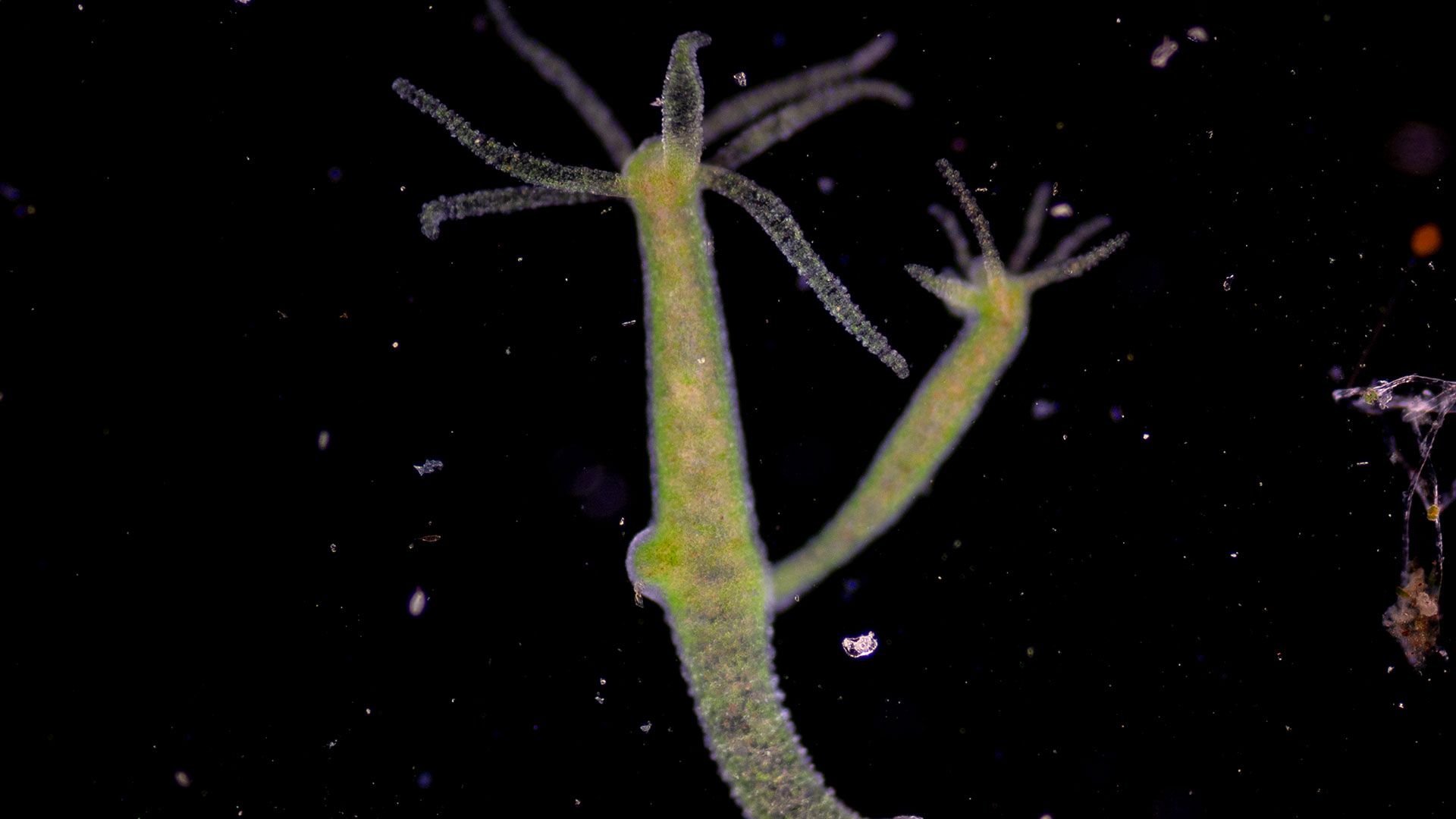
Immortal Jellyfish
The "immortal jellyfish" (Turritopsis dohrnii) is not a true jellyfish but a hydrozoan renowned for its unique ability to evade death. While most cnidarians…
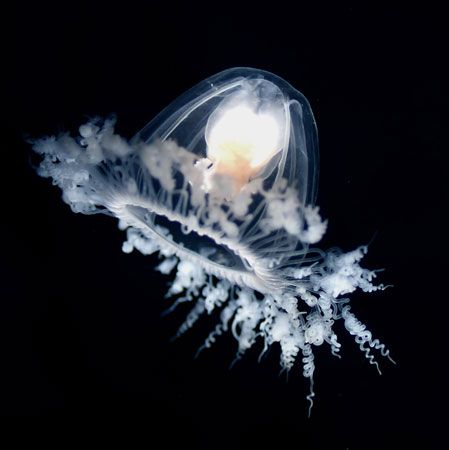
What is an immortal jellyfish?
The “immortal jellyfish” (Turritopsis dohrnii) is not a true jellyfish but a hydrozoan renowned for its unique ability to evade death. While most cnidarians die after mating, this species can revert its life cycle when faced with physical damage, old age, or environmental stress.1
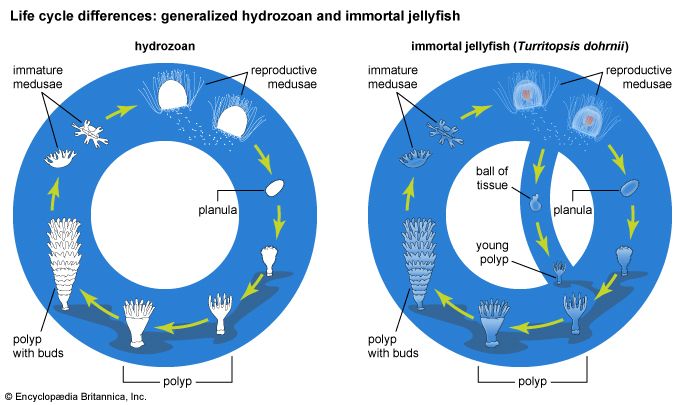
Through a process called transdifferentiation, the adult medusa’s specialized cells transform into an undifferentiated mass of stem cells. This mass settles on the ocean floor and develops into a new colony of polyps, which eventually bud into genetically identical medusae. This cycle can theoretically repeat indefinitely, allowing the organism to avoid biological aging.1
Despite this, the jellyfish is not truly invincible; it can still be killed by predators, disease, or unfavorable environmental conditions. Native to the Mediterranean Sea, it has spread globally via ship ballast water and is now considered an invasive species in many coastal regions. Scientists are currently studying this remarkable biological process to better understand the mechanisms of aging in humans.1
Where is the immortal jellyfish found in the world?
The immortal jellyfish (Turritopsis dohrnii) is native to the Mediterranean Sea. However, during the early 21st century, it was introduced to marine habitats worldwide, likely through the ballast water of ships.1
Today, the species has established populations in various warmer coastal regions across the globe, where it is considered an invasive species. Notable locations include:
- North America: Coastal areas including California, Florida, and Panama.1
- Asia: Along the coasts of Okinawa and other southern Japanese islands.1
Researchers have observed that despite its widespread presence, the expansion of its geographic range has not yet resulted in significant negative ecological or economic impacts.1
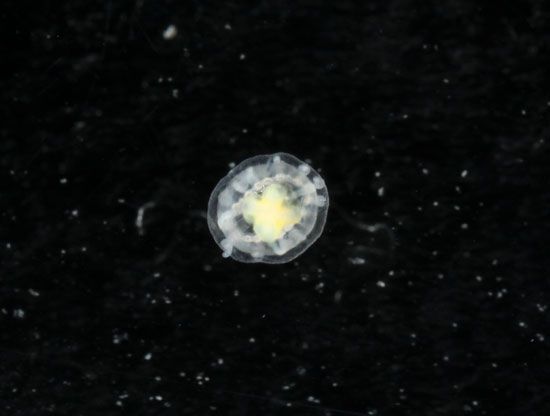
Why is it called the ‘immortal’ jellyfish?
The “immortal” jellyfish (Turritopsis dohrnii) earns its name from its extraordinary ability to bypass biological death. Unlike most cnidarians, which die after mating, this hydrozoan can revert its life cycle when faced with physical damage, old age, or environmental stress.1
When threatened, the adult medusa undergoes a process called transdifferentiation. Its specialized cells transform into an undifferentiated mass of stem cells, which then settles on the ocean floor to develop into a new colony of polyps. These polyps eventually bud into new, genetically identical medusae. Because this cycle can theoretically repeat indefinitely, the organism is capable of avoiding the typical aging process.1
It is important to note that the jellyfish is not truly immortal in a literal sense; it remains vulnerable to disease, predation by animals like sea turtles or penguins, and other external threats.1
How does the immortal jellyfish reverse its life cycle?
The immortal jellyfish (Turritopsis dohrnii) reverses its life cycle through a remarkable biological process known as transdifferentiation. When the adult medusa faces physical damage, old age, or environmental stressors—such as changes in water temperature, salinity, or food scarcity—it initiates a transition back to an earlier developmental stage.1
The process unfolds in several key steps:
- Contraction: The medusa’s bell contracts, its tentacles deteriorate, and it loses the ability to swim.1
- Cyst Formation: The organism becomes a ball of tissue that settles onto the ocean floor.1
- Cellular Transformation: During this cyst stage, specialized adult cells disappear, leaving behind an undifferentiated mass of stem cells.1
- Regeneration: Over the next 24–36 hours, these stem cells differentiate into the specific cells required for the polyp stage. These polyps eventually develop buds that detach and mature into new, genetically identical medusae.1
Because this cycle can repeat indefinitely, the jellyfish can effectively avoid biological aging, provided it is not consumed by predators or killed by disease.1
Sources
- immortal jellyfish — Encyclopædia Britannica
Published on · 3 min read