Indigo
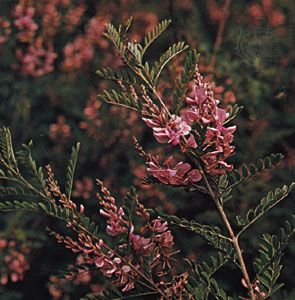
Indigo refers to both a valuable dyestuff and a large genus of plants (Indigofera) in the pea family (Fabaceae).
What is Indigo?
Indigo refers to both a valuable dyestuff and a large genus of plants (Indigofera) in the pea family (Fabaceae).12
Historically, the dye was extracted from plants like Indigofera tinctoria and Isatis, which were cultivated extensively in regions such as India until the early 20th century. The natural precursor, indican, is converted into the blue pigment through hydrolysis and oxidation. By the late 1890s, a synthetic manufacturing process—involving the fusion of sodium phenylglycinate—was developed, which largely replaced natural indigo production. Today, the dye is primarily used for coloring cotton, such as in work clothes.12
The Indigofera genus itself comprises over 750 species of shrubs, trees, and herbs native to tropical and subtropical regions. These plants are characterized by compound leaves and clusters of rose, purple, or white flowers.2
How does synthetic indigo differ from natural plant-based dye?
Natural and synthetic indigo are chemically identical, as both consist of the same molecular structure. The primary difference lies in their origin and production methods rather than their final chemical properties.1
- Natural Indigo: Historically, this dye was extracted from plants of the genera Indigofera and Isatis. The process relies on the hydrolysis of indican, a colorless precursor found in the plants, which is then converted into the blue pigment through oxidation, typically by exposure to air.1
- Synthetic Indigo: Developed following the elucidation of indigo’s chemical structure by Adolf von Baeyer in 1883, synthetic production became commercially feasible by the late 1890s. This method involves the synthesis of indoxyl through the fusion of sodium phenylglycinate in a mixture of caustic soda and sodamide.1
While synthetic methods replaced the labor-intensive plant-based extraction process, the resulting dye is applied to textile fibres using the same fundamental chemical reduction process—converting the dye into soluble yellow leucoindigo before reoxidizing it to the final blue color.1
What is the significance of Tyrian purple in ancient history?
Tyrian purple was the most celebrated dye of the ancient world, prized for its deep crimson-to-violet hue and its status as a symbol of imperial and royal rank. Produced primarily in the Phoenician cities of Tyre and Sidon, the dye was extracted from the glands of predatory sea snails, specifically the Bolinus brandaris and Stramonita haemastoma (formerly Purpura).56
The significance of the dye in antiquity was defined by several key factors:
- Exclusivity and Status: Because the dye was extremely costly to produce—requiring vast quantities of mollusks to yield small amounts of pigment—it was reserved for the elite. Wearing garments colored with it became a mark of high social standing, leading to the expression “born in the purple” to denote royal birth.56
- Cultural Legacy: The dye was possibly the first to be permanently fixed on wool or linen be permanently fixed on wool or linen. Its influence persists in modern language and tradition; for instance, “promotion to the purple” refers to the elevation of a cardinal within the Roman Catholic Church.65
- Chemical Nature: Chemically related to indigo, the principal component of the dye was identified in 1909 as 6,6’-dibromoindigo.75
How is indigo used in the modern denim industry?
In the modern denim industry, indigo remains the primary dyestuff used to achieve the iconic blue color associated with denim. Because indigo is insoluble in water, it must undergo a specific chemical process to be applied to textile fibres.1
The application process involves reducing indigo into a soluble, yellow form known as leucoindigo. In this state, the dye can penetrate the cotton yarns. Once the fabric is exposed to air, the leucoindigo undergoes oxidation, reverting to its characteristic blue pigment and bonding to the fibers.1
In the production of denim, this dyeing process is applied selectively: only the lengthwise, or warp, yarns are dyed, while the crosswise, or weft, yarns remain undyed. This technique creates the fabric’s signature appearance, featuring a deep blue face and a lighter, white underside. While modern denim may incorporate synthetic fibers for added stretch or softness, the use of indigo to create this durable, twill-woven fabric remains a standard practice in the clothing industry. standard practice in the clothing industry.9
Sources
- indigo — Encyclopædia Britannica
- indigo — Encyclopædia Britannica
- inde blue — Merriam-Webster
- dye - Anthraquinone dyes — Encyclopædia Britannica
- Tyrian purple — Encyclopædia Britannica
- purple — Encyclopædia Britannica
- Dress - Ancient Rome — Encyclopædia Britannica
- Tyrian purple — Merriam-Webster
- denim — Encyclopædia Britannica
- What’s the difference between jeans and denim? — Encyclopædia Britannica
Published on · 3 min read