Indigo Snake
The indigo snake (Drymarchon corais) is a large, nonvenomous member of the Colubridae family, recognized as the largest snake species in the United States.
What are the physical characteristics of indigo snakes?
The indigo snake (Drymarchon corais) is a large, nonvenomous member of the Colubridae family, recognized as the largest snake species in the United States1.
Its physical characteristics include:
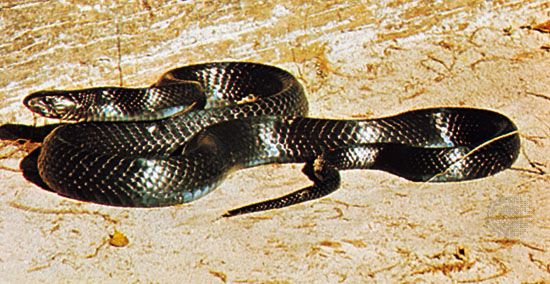
- Size: It can reach a record length of 2.6 meters (8.5 feet), making it one of the largest of all colubrids.1
- Coloration: In the United States, the snake is typically blue-black in color. As the species is found further south toward the tropics, individuals may exhibit brown foreparts, leading them to be commonly referred to as brown snakes in those regions.12
Despite its impressive size, the indigo snake is known for being docile. When threatened, it typically hisses and vibrates its tail rather than striking.1
Where are indigo snakes typically found in the wild?
Indigo snakes (Drymarchon corais) have a broad geographic range in the wild, spanning from the southeastern United States through Texas and southward into Central and South America, reaching as far as Argentina.12
Within their range, these snakes are often associated with specific environments and behaviors. In the United States, they are frequently referred to as gopher snakes because they are known to share burrows with the gopher tortoise (Gopherus), which provides them with shelter. Due to habitat loss and other pressures, the indigo snake has been listed as a threatened species under the Endangered Species Act in the United States since 1978.1
Are indigo snakes venomous, and how do they defend themselves?
Indigo snakes (Drymarchon corais) are nonvenomous members of the Colubridae family1. Despite their ability to prey on other venomous snakes, they do not possess venom themselves; instead, they kill their prey by crushing them with their powerful jaws and the weight of their coils.1
When faced with a threat, the indigo snake is generally docile and reluctant to strike. Its primary defense mechanisms include:1
- Hissing: The snake will emit a hissing sound to deter potential predators.1
- Tail Vibration: It vibrates its tail, a behavior often intended to signal distress or warn off threats.1
How do indigo snakes differ from other snake species in their genus?
The indigo snake (Drymarchon corais) is a prominent member of the genus Drymarchon, which is characterized by its large size and nonvenomous nature. While the term “indigo snake” specifically refers to D. corais, members of this genus exhibit notable variations in appearance across their geographic range.12
Key distinctions within the genus include:
- Coloration: In the United States, the indigo snake is recognized for its distinct blue-black coloration. However, as the range extends southward into the tropics, members of the genus often display brown foreparts, leading them to be commonly referred to as “brown snakes” in those regions.1
- Size: The indigo snake is noted as one of the largest members of the Colubridae family, with record lengths reaching up to 2.6 meters (8.5 feet).1
- Terminology: While D. corais is the primary species associated with the name, the genus as a whole is sometimes referred to by regional names, such as “gopher snake” in the United States, due to its habit of sharing burrows with the gopher tortoise.12
Sources
- indigo snake — Encyclopædia Britannica
- indigo snake — Merriam-Webster
Published on · 2 min read