Reptile
Reptiles exhibit a vast range of sizes, from tiny lizards to massive crocodiles and sea turtles.
What are some of the largest and smallest reptile species, and where are they found?
Reptiles exhibit a vast range of sizes, from tiny lizards to massive crocodiles and sea turtles.
Largest Reptiles
The largest living reptiles are typically measured by total length:
- Saltwater Crocodiles (Crocodylus porosus): Found in the East Indies and surrounding regions, these can exceed 7 metres (23 feet) in length.1
- Reticulated Pythons (Python reticulatus): Native to Southeast Asia and the East Indies, these snakes have been recorded at lengths over 10 metres.1
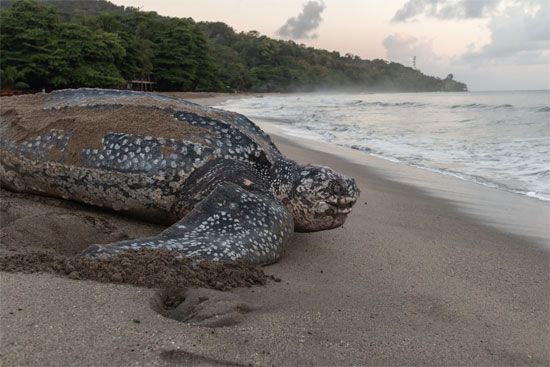
- Leatherback Sea Turtles (Dermochelys coriacea): The largest living turtles, reaching about 2.7 metres (9 feet) in length and weighing up to 680 kg.1
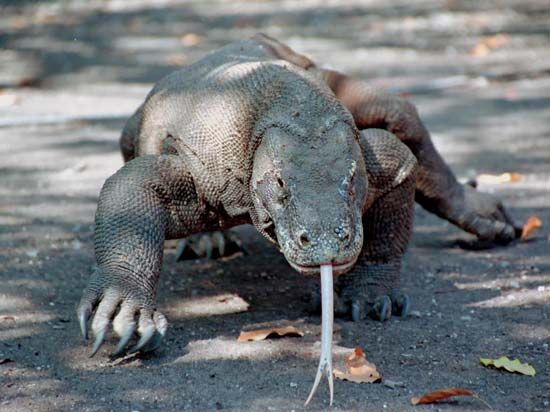
- Komodo Dragons (Varanus komodoensis): The largest modern lizard, found in the East Indies, reaching up to 3 metres (10 feet).1
Smallest Reptiles
- Nano-chameleon (Brookesia nana): Currently recognized as the smallest living reptile, with adults measuring as small as 21.6 mm (0.9 inch).1
- Barbados Threadsnake (Leptotyphlops carlae): The smallest known snake, measuring approximately 10.4 cm (4.1 inches).2
Reptiles are primarily found in temperate and tropical regions, though some species have adapted to live near the Arctic Circle.3
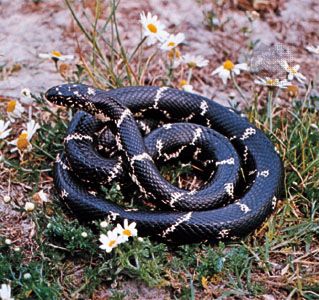
What are the defining characteristics of reptiles that distinguish them from other animals?
Reptiles are a diverse group of air-breathing vertebrates belonging to the class Reptilia. They are distinguished from other animals by several key evolutionary and physiological characteristics:
- Amniotic Development: Reptiles are defined by their amniotic development, meaning their embryos are encased in an amnion—a fluid-filled sac that protects the embryo from drying out. This adaptation allowed them to become the first truly terrestrial vertebrates, as they no longer require an aqueous environment for larval development.456
- Epidermal Scales: Most reptiles possess a continuous covering of epidermal scales composed primarily of keratin. These scales, which contain a unique type called beta keratin, help prevent desiccation by reducing water loss through the skin.65
- Physiology: The majority of modern reptiles are ectothermic, or “cold-blooded,” meaning they rely on external heat sources to regulate their body temperature rather than generating heat internally.47
- Reproduction: Reptiles utilize internal fertilization. While some species retain embryos internally, most reproduce by laying shelled eggs on land.45
- Anatomical Features: Reptilian anatomy includes a single occipital condyle where the skull attaches to the spine, and a lower jaw composed of several bones. Additionally, they possess a single auditory bone, the stapes, to transmit sound.5
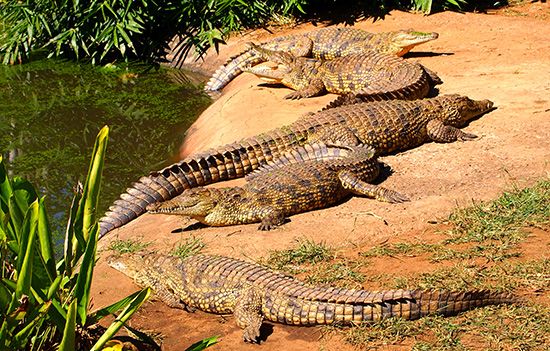
How do reptiles regulate their body temperature, and why is this important?
Reptiles are ectothermic animals, meaning they rely on external heat sources rather than internal metabolic processes to regulate their body temperature. This strategy is highly energy-efficient, as it allows them to maintain a low metabolic rate and survive on significantly less food than endothermic (warm-blooded) animals of similar size.71011
Methods of Thermoregulation
Reptiles utilize a combination of behavioral and physiological strategies to manage their thermal environment:
- Behavioral Strategies: To raise their body temperature, reptiles bask in the sun or lie on warm surfaces. Conversely, they retreat to shade or cooler areas to avoid overheating. They may also reorient their bodies toward the sun or flatten themselves to maximize surface area exposure.710
- Physiological Adjustments: When absorbing heat, reptiles can dilate peripheral blood vessels and increase their heart rate to distribute warmth. To conserve heat, they may constrict blood vessels, slow their heart rate, and minimize their exposed surface area.10
- Environmental Avoidance: In extreme conditions, reptiles may seek shelter in burrows or enter states of dormancy or estivation to survive seasonal fluctuations or water shortages.1110
Importance
This reliance on external heat is critical for survival, as it allows reptiles to thrive in environments where food resources are scarce. By avoiding the high energy costs of internal heat production, they can endure long periods without eating. Furthermore, precise thermoregulation is essential for maintaining optimal body temperatures required for vital activities such as hunting and escaping predators.7
What are the main groups or orders of reptiles, and can you give examples of each?
There are four main orders of living reptiles, which together account for over 12,500 species. While reptilian classification is complex and subject to change based on new fossil data and phylogenetic research, the following groups are widely recognized:1213
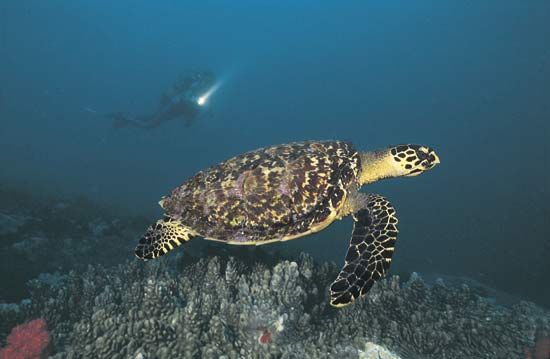
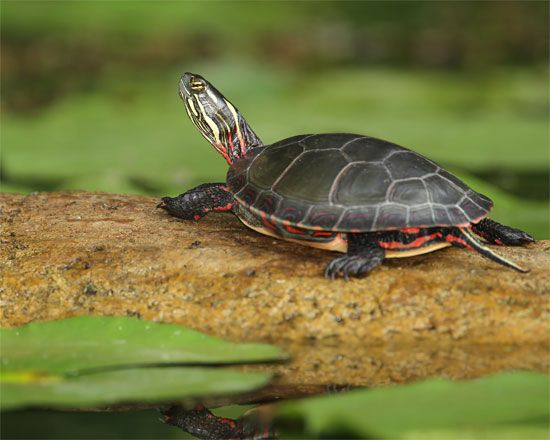
- Order Testudines (Turtles): These are armored reptiles characterized by a shell that encases the body, consisting of an upper carapace and a lower plastron. Examples include sea turtles, tortoises, and snapping turtles.1314
- Order Squamata (Lizards and Snakes): This is the most diverse group of living reptiles. They are distinguished by features such as fused parietals and a transverse cloacal opening. This order includes all lizards, snakes, and amphisbaenians (worm lizards).12135
- Order Crocodylia (Crocodiles): These are large, carnivorous, and generally amphibious reptiles with thick, plated skin and powerful jaws. This order includes “true” crocodiles, alligators, caimans, and gavials.15
- Order Rhynchocephalia (Tuatara): Represented today by only one genus (Sphenodon) endemic to New Zealand, the tuatara is the sole survivor of an ancient lineage. They are lizardlike in appearance but are distinct from squamates due to specific skull and dental characteristics.1613
Sources
- reptile - Size range — Encyclopædia Britannica
- Queen Mab’s Stable: 7 of the Smallest Animals — Encyclopædia Britannica
- reptile - Distribution and ecology — Encyclopædia Britannica
- Integument - Reptiles — Encyclopædia Britannica
- reptile — Encyclopædia Britannica
- reptile - General features — Encyclopædia Britannica
- Why are reptiles cold-blooded? — Encyclopædia Britannica
- Animal development - Adaptations in animals other than mammals — Encyclopædia Britannica
- reptile - Circulatory system — Encyclopædia Britannica
- Ectotherm — Encyclopædia Britannica
- Biosphere - Temperature — Encyclopædia Britannica
- crocodile — Encyclopædia Britannica
- reptile - Annotated classification — Encyclopædia Britannica
- tuatara — Encyclopædia Britannica
- Squamata — Merriam-Webster
- turtle - Classification — Encyclopædia Britannica
Published on · 4 min read